Follow us on Instagram @goldomallc
Free shipping on orders over $53 USD
Handcrafted with love
New home décor collection available now
Use code GOLDOMA15 for 15 % off
Follow us on Instagram @goldomallc
Free shipping on orders over $53 USD
Handcrafted with love
New home décor collection available now
Use code GOLDOMA15 for 15 % off


The Ultimate Wooden Pizza Board Buying Guide
Buying Guide
Find Your Perfect Wooden Pizza Board
A wooden pizza board is more than just a serving platter—it’s a kitchen staple that brings warmth and functionality to your pizza nights. Whether you’re a home cook or a seasoned entertainer, choosing the right board can elevate your experience.
Size Matters Wood Types Care Tips
Why Choose a Wooden Pizza Board?
A wooden pizza board offers a natural, heat-resistant surface that’s gentle on your pizza stone or peel. Unlike metal or plastic, wood absorbs moisture, helping to keep your crust crisp. Plus, it’s beautiful enough to go from oven to table. The porous nature of wood also provides a slight grip, making it easier to slide your pizza onto a hot stone.
Key Features to Look For
Size and Thickness
Consider how many pizzas you typically make. A board that’s too small will crowd your pie, while one too large may not fit your oven. Thickness matters for durability; a thicker board resists warping over time. Common sizes range from 12 to 16 inches in diameter.
Wood Material
Hardwoods like maple, beech, or acacia are ideal because they’re dense, non-porous, and resist bacteria. Avoid softwoods like pine, which can scratch easily and absorb odors. For more on wood types, see this Wikipedia article on hardwood.
How to Use a Wooden Pizza Board
Use it as a pizza peel to launch your pizza into the oven, or as a serving board directly at the table. Some boards double as a cutting surface for slicing. Always dust with flour or cornmeal to prevent sticking. For baking, preheat the board in the oven for a few minutes to mimic a pizza stone effect.
Caring for Your Board
Never soak a wooden pizza board in water. Hand wash with mild soap and dry immediately. Apply food-grade mineral oil monthly to maintain its luster and prevent cracks. Avoid dishwasher and prolonged exposure to heat or moisture.
Versatility Beyond Pizza
A wooden pizza board isn’t just for pizza. Use it as a charcuterie board, a bread platter, or a base for appetizers. Its natural look complements rustic and modern decor alike. Some boards come with a groove to catch juices from meats or fruits.
Comparing Wooden vs. Other Materials
Wooden boards provide better insulation than metal, keeping your pizza warm longer. They’re lighter than stone but still durable. However, they require more care than synthetic materials. For the best of both worlds, consider a board with a built-in pizza stone insert.
Making the Right Choice
Think about your cooking style: if you often bake multiple pizzas, a larger board with handles may be useful. If you entertain frequently, a board that doubles as a serving platter saves space. Always check for a smooth finish without splinters.
Worth a look
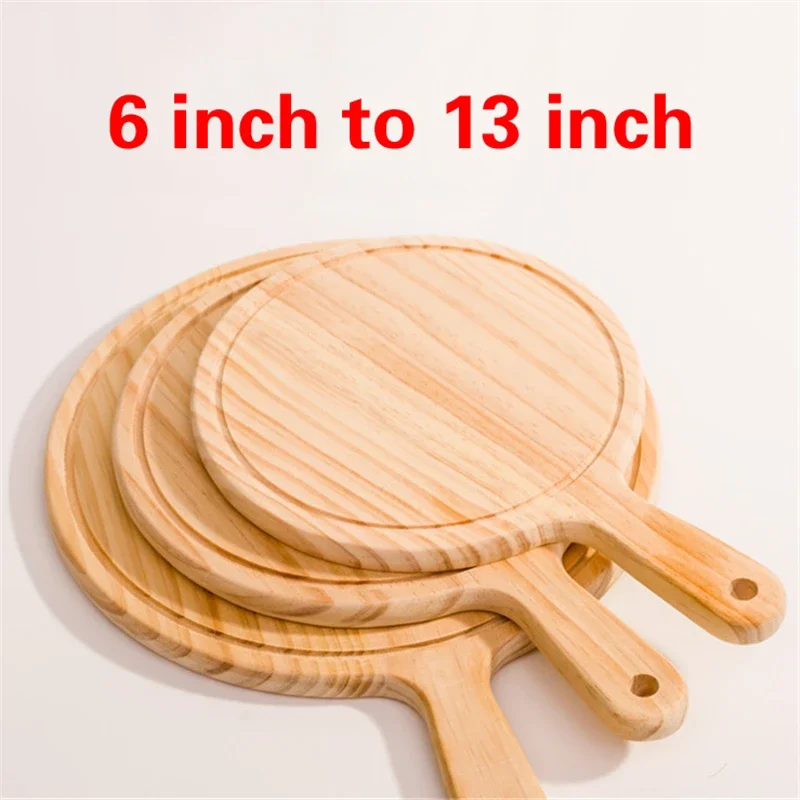
6 to 13inch Wooden Round Pizza board with Hand Pizza Baking Tray Stone Cutting Board Platter Pizza Stone Cake Bakeware
For a versatile option, consider the Goldoma 6 to 13inch Wooden Round Pizza Board with Hand Pizza Baking Tray Stone Cutting Board Platter Pizza Stone Cake Bakeware, which combines a wooden board with a pizza stone for optimal heat retention.
Frequently asked questions
Can I use a wooden pizza board in the oven?
Yes, many wooden pizza boards are oven-safe up to a certain temperature (usually around 400°F). Check the manufacturer’s guidelines. Always preheat gradually to avoid cracking.
How do I season a new wooden pizza board?
Seasoning involves applying a food-grade mineral oil or beeswax to the wood. Rub a generous amount, let it absorb for a few hours, then wipe off excess. Repeat a few times before first use.
Is wood or bamboo better for a pizza board?
Hardwood like maple or acacia is denser and more durable than bamboo, which can be prone to splitting. Both are good choices, but hardwood tends to last longer.
Why does my pizza stick to the wooden board?
Sticking often happens if the board isn’t dusted with enough flour or cornmeal. Also, ensure the dough isn’t too wet. A well-seasoned board naturally reduces sticking.