
Blog
The Ultimate Guide to Stainless Steel Cookware
Kitchen Essentials
Your Complete Guide to Stainless Steel Cookware
Stainless steel cookware is a staple in professional and home kitchens alike, prized for its durability, even heating, and sleek appearance. Whether you’re a seasoned chef or a beginner, this guide will help you choose the right pieces for your cooking style.
Why Choose Stainless Steel Cookware?
Stainless steel cookware offers unmatched durability and resistance to rust, corrosion, and staining. Unlike nonstick pans, stainless steel can withstand high heat and is safe for use with metal utensils. It’s also non-reactive, meaning it won’t alter the flavor of acidic foods like tomatoes or citrus. For these reasons, many chefs prefer it for browning, searing, and deglazing.
Types of Stainless Steel Cookware
Not all stainless steel cookware is created equal. The key differences lie in the construction and layers.
- Tri-Ply (Clad): Three layers: stainless steel on the outside and an aluminum or copper core for even heat distribution. This is the most common and recommended type.
- 5-Ply: More layers for even better heat retention and distribution, but heavier and pricier.
- Disc-Bottom: A thick aluminum or copper disc bonded to the bottom. Cheaper but heats less evenly up the sides.
Which Type Should You Buy?
For most home cooks, tri-ply stainless steel cookware offers the best balance of performance and cost. It heats evenly and is suitable for all stovetops, including induction.
Pros and Cons of Stainless Steel Cookware
- Pros: Durable, non-reactive, oven-safe, dishwasher-safe (usually), works on all cooktops, and lasts a lifetime.
- Cons: Food can stick, requires proper preheating and oil, heavier than nonstick, and can show water spots.
If you’re used to nonstick, there’s a learning curve. But with practice, you’ll achieve excellent sears and fond for sauces.
How to Choose the Right Stainless Steel Cookware Set
When shopping for stainless steel cookware, consider the following:
- Number of pieces: A basic set includes a skillet, saucepan, stockpot, and lids. More pieces add versatility.
- Induction compatibility: Most stainless steel works on induction, but check for a magnetic base.
- Weight and balance: Heavier pans heat more evenly but are harder to handle. Look for comfortable handles.
- Oven-safe temperature: Most are safe up to 500°F, but check the lid handles too.
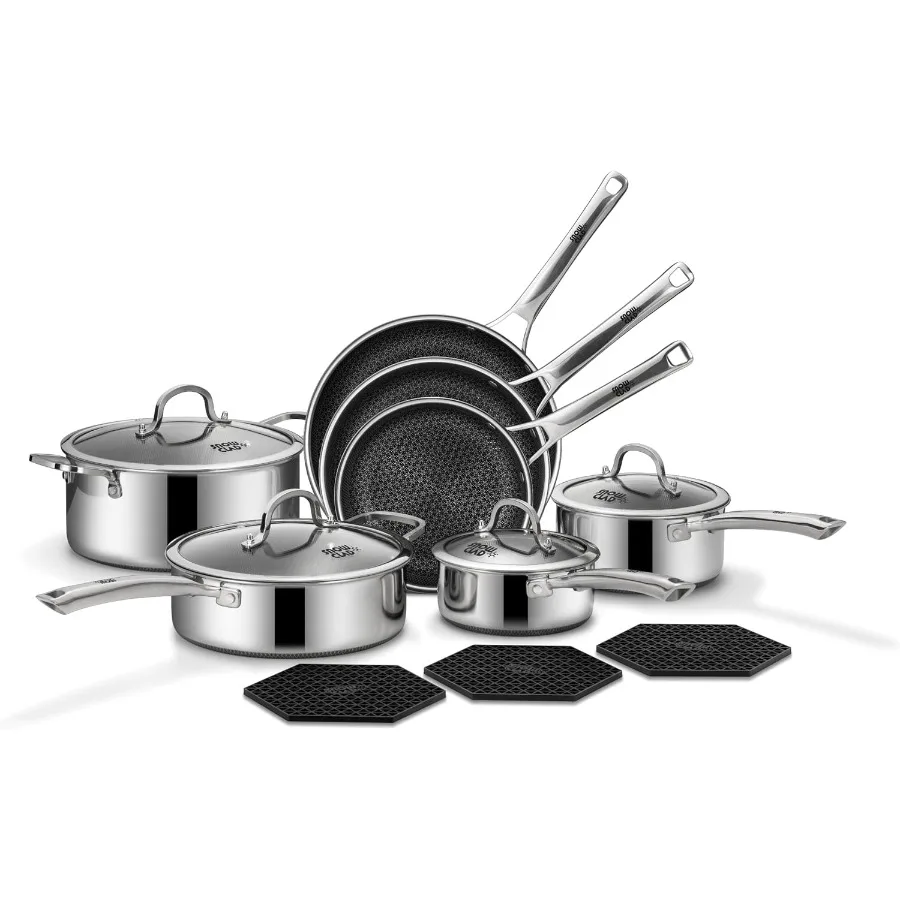
For a comprehensive set that combines durability and nonstick convenience, consider the SNOWCLAD Pots and Pans Set Non Stick 14 Pcs Hybrid Stainless Steel Cookware Sets. It features a hybrid design that minimizes sticking while retaining the benefits of stainless steel.
Caring for Stainless Steel Cookware
To keep your stainless steel cookware looking new, follow these tips:
- Preheat the pan before adding oil to prevent sticking.
- Use moderate heat; high heat can cause discoloration.
- Avoid thermal shock (don’t plunge a hot pan into cold water).
- Clean with a non-abrasive sponge and mild detergent. For stubborn stains, use a stainless steel cleaner or vinegar.
Stainless Steel vs. Other Cookware Materials
Here’s how stainless steel compares to other popular materials:
- Nonstick: Easier to clean and requires less oil, but wears out faster and can’t handle high heat.
- Cast Iron: Excellent heat retention but heavy and requires seasoning.
- Copper: Superior heat conductivity but expensive and requires polishing.
Stainless steel strikes a middle ground, offering durability and versatility without high maintenance.
Top Brands and What to Look For
While many brands offer stainless steel cookware, focus on construction quality rather than brand name. Look for thick-gauge stainless steel, tight-fitting lids, and riveted handles. For a reliable option that balances performance and value, the SNOWCLAD set mentioned above is a great choice.
For more detailed information on stainless steel cookware, you can visit Wikipedia’s cookware page.
SNOWCLAD Pots and Pans Set Non Stick 14 Pcs Hybrid Stainless Steel Cookware Sets Non Stick Frying Pans Saucepans Saute Pan and
For a versatile and durable option that minimizes sticking, the SNOWCLAD Pots and Pans Set Non Stick 14 Pcs Hybrid Stainless Steel Cookware Sets is a solid choice.
Frequently asked questions
Is stainless steel cookware safe for health?
Yes, stainless steel is non-reactive and does not leach chemicals into food. It’s considered one of the safest cookware materials.
Can you use metal utensils on stainless steel cookware?
Yes, stainless steel is durable and can withstand metal utensils without scratching. However, avoid using sharp knives that may leave marks.
Why does food stick to stainless steel pans?
Sticking occurs if the pan isn’t preheated properly or if you add food too early. Preheat the pan, add oil, and wait for it to shimmer before adding ingredients.
How do you remove discoloration from stainless steel?
Use a stainless steel cleaner, a paste of baking soda and water, or white vinegar to remove stains and restore shine.
