
Blog
Hybrid Stainless Steel Cookware: The Ultimate Guide
Cookware Guide
Why Hybrid Stainless Steel Cookware Wins in Every Kitchen
Hybrid stainless steel cookware combines the best of multiple metals for superior performance. Here’s what to look for before you buy.
What Is Hybrid Stainless Steel Cookware?
Hybrid stainless steel cookware refers to pots and pans that layer stainless steel with other conductive metals like aluminum or copper. This construction marries the durability and reactivity-free surface of stainless steel with the superior heat conduction of aluminum or copper. Unlike pure stainless steel, which can develop hot spots, hybrid designs spread heat evenly across the cooking surface. They often feature a magnetic stainless steel exterior for induction compatibility, making them versatile for all stovetops. If you’ve ever struggled with scorching or uneven cooking, this type of cookware offers a practical solution.
Materials & Construction: What’s Inside Matters
The core of hybrid stainless steel cookware is typically aluminum or copper, sandwiched between layers of stainless steel. A common configuration is tri-ply: two outer layers of stainless steel with an aluminum core. Some premium sets use five or more layers, adding extra aluminum or a copper disc at the base. The thickness of the core directly affects heat retention and distribution—generally, thicker cores perform better but are heavier. When shopping, check the gauge (thickness) and number of layers. For example, 2.5mm to 3mm total thickness is a good benchmark for balanced performance.
- Aluminum core: Lightweight, excellent heat conductor, but less durable than copper.
- Copper core: Superior heat conductivity and responsiveness, but more expensive and requires careful maintenance.
- Stainless steel layers: Provide a non-reactive, durable, and easy-to-clean surface.
Why Layering Matters
More layers don’t always mean better performance. The quality of bonding and material thickness matter more. Look for fully clad construction (layers extend up the sides) rather than just a disc on the bottom. Fully clad cookware heats evenly across the entire pan, not just the base.
Benefits of Hybrid Stainless Steel Cookware
Hybrid stainless steel cookware offers several advantages over single-material cookware. First, even heating eliminates hot spots, reducing the risk of burnt food. Second, the stainless steel surface is non-reactive, so you can cook acidic foods like tomatoes without metallic taste. Third, it’s durable—stainless steel resists warping and scratching. Fourth, many sets are oven-safe to high temperatures (400°F–500°F), allowing you to finish dishes in the oven. Finally, the polished finish is resistant to staining and easy to clean, though it may show water spots if not dried properly.
For health-conscious cooks, hybrid stainless steel is a great choice because it doesn’t have non-stick coatings that can degrade over time. However, some hybrid sets now come with a non-stick interior layer (often ceramic or a specialized coating) for low-fat cooking. These are less durable but convenient for eggs and delicate fish.
Drawbacks to Consider
No cookware is perfect. Hybrid stainless steel tends to be heavier than aluminum or non-stick pans, which might be a concern for some users. It is also more expensive than basic stainless steel or non-stick options. Additionally, food can stick to stainless steel if you don’t use enough oil or preheat properly. Learning to cook with stainless steel—using the water droplet test to gauge temperature—can take practice. Lastly, the shiny surface shows fingerprints and smudges easily, requiring regular polishing if you care about aesthetics.
How to Choose the Right Set
When selecting hybrid stainless steel cookware, consider your cooking style and kitchen needs. Start with the number of pieces: a 10-piece set usually includes frying pans, saucepans, a sauté pan, and a stockpot. Look for riveted stainless steel handles that stay cool on the stovetop. Check for tight-fitting lids (glass or metal) and pour rims on saucepans. Oven-safe handles and lids are a plus. For induction cooktops, ensure the base is magnetic. Also, consider weight—heavier pans are more stable but harder to handle. If you have a gas stove, flat-bottom pans work best.
Another factor is the non-stick option. Some hybrid sets offer a non-stick interior coating, which can be helpful for low-fat cooking but may wear out over time. If you prefer a lifetime pan, choose all-stainless interior. Finally, read reviews about durability and customer service, as warranty coverage varies.
Care and Maintenance Tips
To extend the life of your hybrid stainless steel cookware, follow these tips:
- Hand wash with mild detergent and a soft sponge. Avoid abrasive cleaners and steel wool.
- Dry immediately to prevent water spots. Use a soft cloth for a streak-free shine.
- For stuck-on food, soak with warm water and baking soda, then scrub gently.
- Use medium heat for most cooking; high heat can cause discoloration or warping.
- Avoid thermal shock (e.g., placing a hot pan in cold water).
- If you have a non-stick interior, use wooden or silicone utensils to protect the coating.
Top Features to Look For
Before buying, check these features:
- Fully clad construction: Layers extend up the sides for even heat.
- Thick core: At least 2.5mm total thickness.
- Magnetic base: For induction compatibility.
- Oven-safe: Up to 400°F or higher.
- Comfortable handles: Riveted, stay-cool, and ergonomic.
- Lids: Tight-fitting, preferably glass to monitor cooking.
- Non-stick option: If you cook eggs or fish frequently.
For more information on cookware materials, see Wikipedia’s article on cookware.
Our Pick: A Reliable Hybrid Set
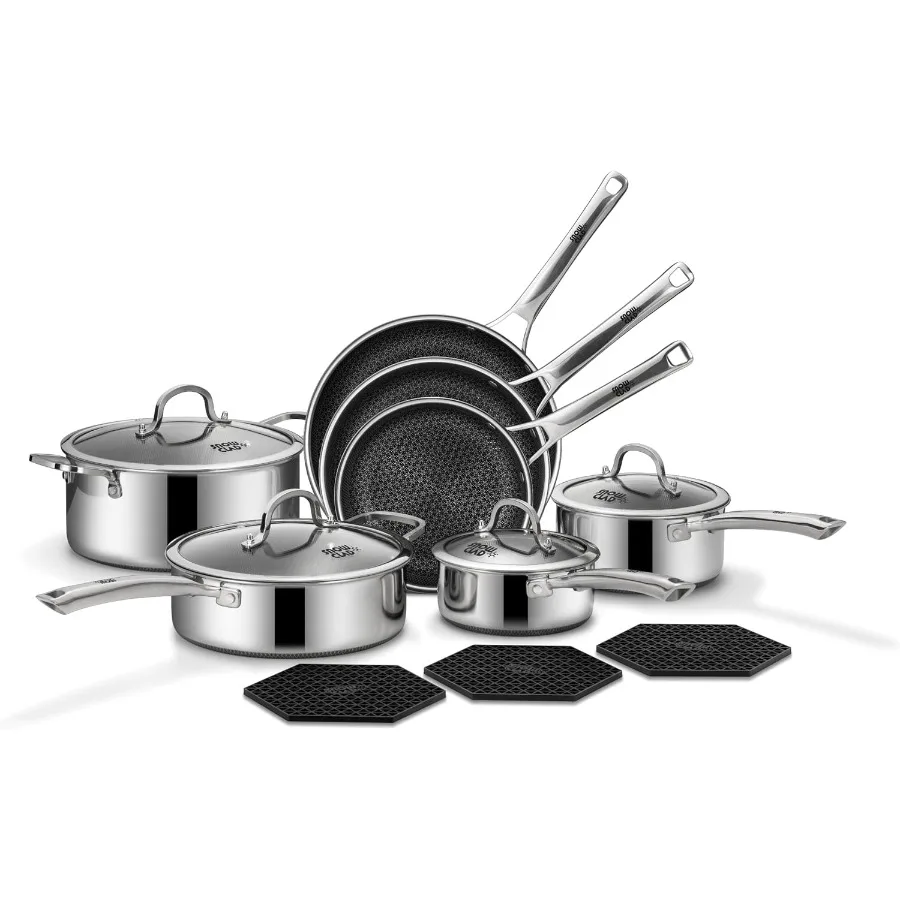
If you’re looking for a versatile and durable hybrid stainless steel cookware set, the SNOWCLAD Pots and Pans Set Non Stick 14 Pcs Hybrid Stainless Steel Cookware Sets Non Stick Frying Pans Saucepans Saute Pan and offers a well-rounded combination of performance and value. It features a tri-ply construction with an aluminum core, induction-compatible base, and a non-stick interior for easy cooking and cleanup. The set includes essential pieces for most cooking tasks, and the riveted handles stay cool. While it’s not the most premium option, it’s a solid choice for home cooks seeking a balance of quality and affordability.
SNOWCLAD Pots and Pans Set Non Stick 14 Pcs Hybrid Stainless Steel Cookware Sets Non Stick Frying Pans Saucepans Saute Pan and
For a reliable and versatile option, consider the SNOWCLAD Pots and Pans Set Non Stick 14 Pcs Hybrid Stainless Steel Cookware Sets Non Stick Frying Pans Saucepans Saute Pan and, which combines tri-ply construction with a non-stick interior for easy cooking.
Frequently asked questions
Is hybrid stainless steel cookware safe for induction cooktops?
Yes, most hybrid stainless steel cookware is induction-compatible because the outer layer is magnetic stainless steel. Check the product description for induction suitability.
Can I use metal utensils on hybrid stainless steel cookware?
It depends on the interior surface. For all-stainless interiors, metal utensils are generally safe, but they may scratch the surface. For non-stick interiors, use wooden or silicone utensils to protect the coating.
How do I clean burnt food from hybrid stainless steel pans?
Soak the pan with warm water and baking soda or a mixture of vinegar and water. Then scrub gently with a non-abrasive sponge. For stubborn residue, use a stainless steel cleaner or bar keeper’s friend.
What is the difference between tri-ply and multi-ply cookware?
Tri-ply typically has three layers (stainless-aluminum-stainless). Multi-ply may have five or more layers, often adding extra aluminum or a copper core for improved heat conductivity and retention. More layers can enhance performance but also increase weight and cost.
