
Blog
How to Choose the Best Window Bird Feeder for Your Home
Buying Guide
The Ultimate Window Bird Feeder Buying Guide
A window bird feeder brings nature right to your living room, offering endless entertainment and a peaceful connection to the outdoors. In this guide, we’ll help you pick the right one for your home and lifestyle.
Why Choose a Window Bird Feeder?
Window bird feeders have become a favorite for bird enthusiasts and casual observers alike. They provide an up-close view of birds without the need for binoculars or a backyard hideout. Unlike traditional feeders, which can be far from the house, a window feeder attaches directly to your glass, putting you inches away from visiting cardinals, bluebirds, and chickadees.
Beyond the visual appeal, window feeders are also easier to maintain. You can refill them without stepping outside, and you’ll notice spills or mold quickly. Plus, they’re perfect for apartment dwellers or anyone without a yard.
Key Factors to Consider When Buying
Before you purchase, think about the following aspects to ensure the feeder meets your needs and lasts for years.
Suction Power and Mounting
The most critical feature of a window bird feeder is its suction cups. Strong suction ensures the feeder stays put, even when squirrels or larger birds land on it. Look for feeders with heavy-duty suction cups that can hold at least 10-15 pounds. Some feeders come with additional support like a hanging strap or a base that rests on the windowsill for extra stability.
Consider the surface of your window: textured or tinted glass may reduce suction. Clean the glass thoroughly before attaching, and avoid using the feeder on very cold or hot days when the seal might weaken.
Material and Durability
Window feeders are typically made of plastic, acrylic, or wood. Plastic is lightweight and easy to clean, but may become brittle over time. Acrylic offers clarity and durability, making it a popular choice for clear feeders. Wooden feeders look charming but require more maintenance and may not offer the same visibility.
Choose a feeder with a removable tray for easy cleaning. A clear tray and roof allow you to see birds from all angles, but a roof also provides protection from rain and snow.
Capacity and Seed Type
Consider how much seed the feeder can hold. Larger capacity means less frequent refilling, but a heavier feeder may stress the suction cups. Most window feeders hold between 1 and 2 cups of seed, which is sufficient for a few days.
The type of seed you use will attract different birds. Black-oil sunflower seeds attract a wide variety, while nyjer seeds appeal to finches. Some feeders come with a seed catcher tray to reduce mess.
Ease of Cleaning
Hygiene is crucial to prevent the spread of disease among birds. Look for a feeder that disassembles easily or has a wide opening for cleaning. Dishwasher-safe parts are a plus. Regular cleaning with a mild bleach solution (1 part bleach to 9 parts water) is recommended.
Placement and Safety Tips
Where you place your window feeder matters for both bird safety and your viewing pleasure.
- Position: Place the feeder on a window that you use often, but avoid direct afternoon sun, which can make the feeder too hot.
- Prevent collisions: Birds may fly into the glass when they see the feeder. To reduce this, place the feeder very close to the glass (within 12 inches) or apply decals to the window. Learn more about bird-window collisions on Wikipedia.
- Predator protection: Keep cats indoors or place the feeder high enough to be out of reach. Some feeders have a protective cage or dome.
- Seasonal care: In winter, check the feeder regularly for ice buildup and ensure it remains accessible to birds.
Maintaining Your Window Bird Feeder
Once you have your feeder, regular maintenance will keep it functioning well and birds returning.
- Clean the feeder every two weeks, or more often if it gets wet or dirty.
- Remove old seed and debris before refilling.
- Check the suction cups periodically and reattach if they loosen.
- During extreme weather, consider bringing the feeder indoors to preserve its lifespan.
By following these steps, you’ll create a safe and inviting spot for birds to visit.
Top Features to Look For in a Quality Window Feeder
To sum up, here are the features that separate a good window feeder from a great one:
- Strong suction cups with a high weight capacity
- Clear, durable material for maximum visibility
- Removable tray for easy cleaning
- Roof or cover to protect seed from rain
- Drainage holes to prevent water accumulation
- Secure perches that can support birds of various sizes
When you find a feeder with these features, you’ll be rewarded with hours of birdwatching pleasure.
Our Top Pick: A Transparent Design
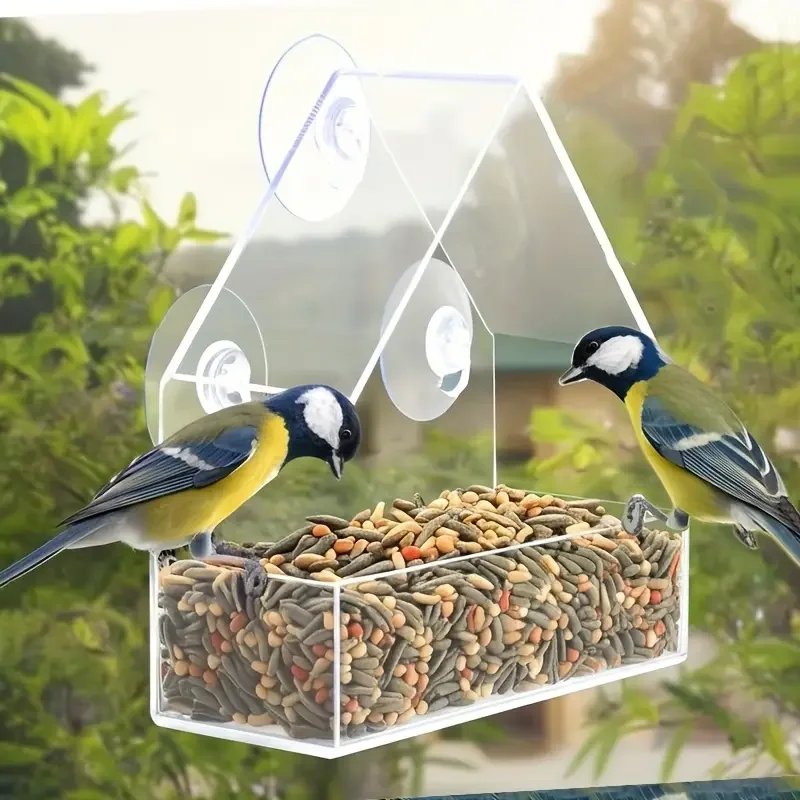
After considering all these factors, we recommend the Transparent Bird Feeder Birds House for Outdoor Window Bird Feeder with Strong Suction Cups for Wild Birds, Cardinal Bluebird. It combines a crystal-clear acrylic body with robust suction, making it a joy to use. The included seed tray catches husks, and the roof keeps seed dry. It’s a wonderful choice for anyone seeking an up-close view of their feathered friends.
Transparent Bird Feeder Birds House for Outdoor Window Bird Feeder with Strong Suction Cups for Wild Birds, Cardinal Bluebird
For a reliable and clear view, consider the Transparent Bird Feeder Birds House for Outdoor Window Bird Feeder with Strong Suction Cups for Wild Birds, Cardinal Bluebird.
Frequently asked questions
How do I get birds to come to my window feeder?
Be patient. Birds need time to discover the feeder. Place it in a location where they can see it, and offer a seed mix they like. Using a feeder with a clear view helps them feel safe. It may take a few weeks for regular visitors.
Can I use a window feeder if I have double-pane windows?
Yes, but you must ensure the suction cups are strong enough. Double-pane windows are usually flat and smooth, so they work well. Avoid using on textured or tinted glass, as suction may fail.
How often should I clean my window bird feeder?
Clean it every two weeks, or more often if it gets wet or dirty. Use a solution of one part bleach to nine parts water, rinse thoroughly, and let it dry completely before refilling.
Will a window feeder attract pests like squirrels?
Squirrels can be a problem. To deter them, choose a feeder with a weight-activated mechanism or a cage. Also, place the feeder away from trees or fences that squirrels can jump from. Some feeders have a dome that blocks access.
