
Blog
Transitional Bookshelf: Style & Function for Every Room
Buying Guide
The Transitional Bookshelf: A Perfect Blend of Form and Function
A transitional bookshelf is more than just storage; it’s a design chameleon that adapts to any room. Here’s how to pick the right one for your space.
What Makes a Bookshelf Transitional?
Transitional design bridges the gap between traditional and modern aesthetics. It combines the warmth and classic lines of traditional furniture with the clean, uncluttered feel of contemporary style. A transitional bookshelf often features simple silhouettes, neutral tones, and a mix of materials like wood and metal. It’s not too ornate, not too minimal—just right for most homes.
Why Choose a Transitional Bookshelf?
These bookshelves are incredibly versatile. They can fit into a cozy reading nook, a formal living room, or a home office without looking out of place. Their understated design lets them blend with any decor, and they provide ample storage for books, decor, and more. Plus, they often come in various sizes, including narrow options for tight spaces.
Key Benefits
- Adapts to any room style
- Provides both open and closed storage
- Durable construction
- Timeless appeal
Materials and Build Quality
When shopping for a transitional bookshelf, pay attention to materials. Solid wood offers durability and a classic look, while engineered wood like MDF is affordable and stable. Some designs incorporate metal frames for an industrial touch. Check the weight capacity and shelf thickness to ensure it can hold your items. A well-built bookshelf should feel sturdy and wobble-free.
Size and Placement
Measure your space before buying. Consider both width and height. A tall, narrow bookshelf is perfect for small rooms, while a wide low one can act as a media console. Think about what you’ll store: heavy books need thicker shelves, while decor items allow for more flexibility. Also, consider the depth—standard is around 12 inches, but deeper shelves can hold larger items.
Styling Your Transitional Bookshelf
Styling is where you can let your personality shine. Start with a few large books, then add smaller objects, plants, or framed photos. Use the rule of thirds: group items in odd numbers, and vary heights and textures. Don’t forget negative space—let some shelves breathe. For a cohesive look, stick to a color palette that complements the room.
Versatility Across Rooms
One of the best things about a transitional bookshelf is its adaptability. In the living room, it can hold books, board games, and decorative items. In a home office, it organizes files and reference materials. In a bedroom, it serves as a bedside alternative for books and a lamp. Even in a workshop, it can store tools and supplies neatly.
Maintenance and Care
To keep your bookshelf looking new, dust it regularly with a soft cloth. Avoid using harsh chemicals that can damage the finish. If it’s made of wood, consider using a furniture polish occasionally. Check screws and joints periodically and tighten if needed. With proper care, a transitional bookshelf can last for years.
Making the Right Choice
Ultimately, the best transitional bookshelf is one that fits your needs and style. Consider your space, storage requirements, and budget. Look for quality construction and a design that you’ll love for years. Remember, it’s not just a piece of furniture—it’s an investment in your home’s organization and aesthetics. For more inspiration on transitional design, you can explore interior design principles.
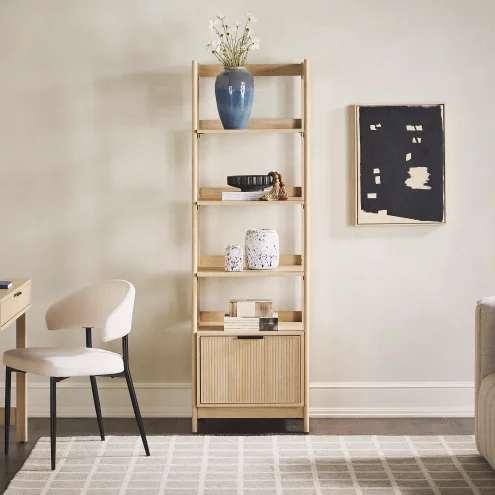
FCJ Oak Transitional Narrow Bookshelf with Drawer for Home Office Workshop Living Room Melamine Wood Style for Book Storage
For a space-saving option that doesn’t compromise on style, consider the FCJ Oak Transitional Narrow Bookshelf with Drawer, which fits neatly in tight spots while offering both open shelves and a hidden drawer.
Frequently asked questions
What is a transitional bookshelf?
A transitional bookshelf blends traditional and modern design elements, featuring clean lines, neutral colors, and a mix of materials like wood and metal. It’s versatile enough to fit various decor styles.
How do I choose the right size bookshelf?
Measure your available space, considering width, height, and depth. Think about what you’ll store and how much weight the shelves need to support. Tall and narrow works for small spaces, while low and wide can double as a console.
What materials are best for a transitional bookshelf?
Solid wood offers durability and a classic look, while engineered wood like MDF is budget-friendly and stable. Metal accents can add an industrial touch. Look for sturdy construction and quality finishes.
How can I style my transitional bookshelf?
Start with a few large books, add smaller items like plants or photos, and vary heights and textures. Group items in odd numbers and leave some empty space for a balanced, curated look.
