
Blog
The Ultimate Guide to Choosing a Solid Wood Writing Desk
Buying Guide
Find Your Ideal Solid Wood Writing Desk
A solid wood writing desk is more than just a piece of furniture; it’s an investment in your daily productivity and the ambiance of your workspace. Whether you’re a writer, a student, or a remote professional, choosing the right desk can transform how you work.
Why Choose a Solid Wood Writing Desk?
Unlike particleboard or veneer, a solid wood writing desk offers durability that can last for decades. Each piece has a unique grain, adding warmth and character to any room. But beyond aesthetics, solid wood is sturdy and can support heavy monitors, books, and other essentials without wobbling. It’s a sustainable choice too, as quality wood can be refinished rather than replaced.
However, not all solid wood is the same. The type of wood affects not only the look but also the desk’s hardness, weight, and resistance to scratches and moisture. Understanding these differences is key to making an informed decision.
Key Considerations Before Buying
Before you start shopping, think about how you’ll use the desk. Will it be a dedicated workspace for a computer, or a creative area for writing by hand? Do you need drawers for storage? What’s your room’s style? Answering these questions narrows down your options.
Size and Proportions
Measure your available space. A desk that’s too large can overwhelm a room, while one that’s too small may not provide enough surface area. Standard writing desks are around 30 inches high, but consider your chair height and legroom. Also, think about the depth—if you use a large monitor, you’ll need extra depth to maintain a comfortable viewing distance.
Wood Types and Their Traits
Here are common woods used in solid wood writing desks:
- Oak: Dense and durable, with a prominent grain. It’s resistant to moisture and scratches, making it a popular choice.
- Walnut: Rich, dark color and a straight grain. Softer than oak but still sturdy, and it ages beautifully.
- Cherry: Warm, reddish-brown that darkens over time. It’s moderately hard and easy to refinish.
- Maple: Very hard and light-colored, with a subtle grain. It’s resistant to wear, ideal for heavy use.
- Teak: Naturally oily, making it weather-resistant. Less common for indoor desks but very durable.
Finish and Protection
The finish not only affects the look but also the desk’s resistance to stains and heat. A clear lacquer or polyurethane protects the wood while letting the grain show. Oil finishes, like tung or Danish oil, penetrate the wood and are easier to repair. Consider your climate—in humid areas, a moisture-resistant finish is crucial.
Design and Style Trends
Solid wood writing desks come in various styles, from traditional to modern. A farmhouse-style desk with turned legs adds rustic charm, while a sleek, minimalist design with clean lines fits contemporary spaces. Mid-century modern desks often feature angled legs and a warm wood tone, blending retro with functionality. Choose a style that complements your existing decor.
Drawers and Storage
Think about what you need to store. A desk with drawers keeps supplies organized and off the surface. If you prefer a clutter-free look, a simple desk with no drawers might suffice. Some desks offer a keyboard tray or a hutch for extra shelving. Balance aesthetics with utility.
Caring for Your Solid Wood Desk
Proper care extends the life of your desk. Use coasters for drinks, and avoid placing hot items directly on the surface. Dust regularly with a soft cloth, and use a wood cleaner that’s appropriate for the finish. Every few years, you may need to reapply a protective coat. With care, your desk can become a family heirloom.
Where to Place Your Desk
Location matters. Place your desk near natural light if possible, but avoid direct sunlight to prevent fading. Ensure there’s enough clearance for drawers and chair movement. If you’re in a small space, consider a corner desk or a wall-mounted option. The goal is to create a comfortable and efficient work area.
For more on the benefits of wood in furniture, see this overview of wood as a material.
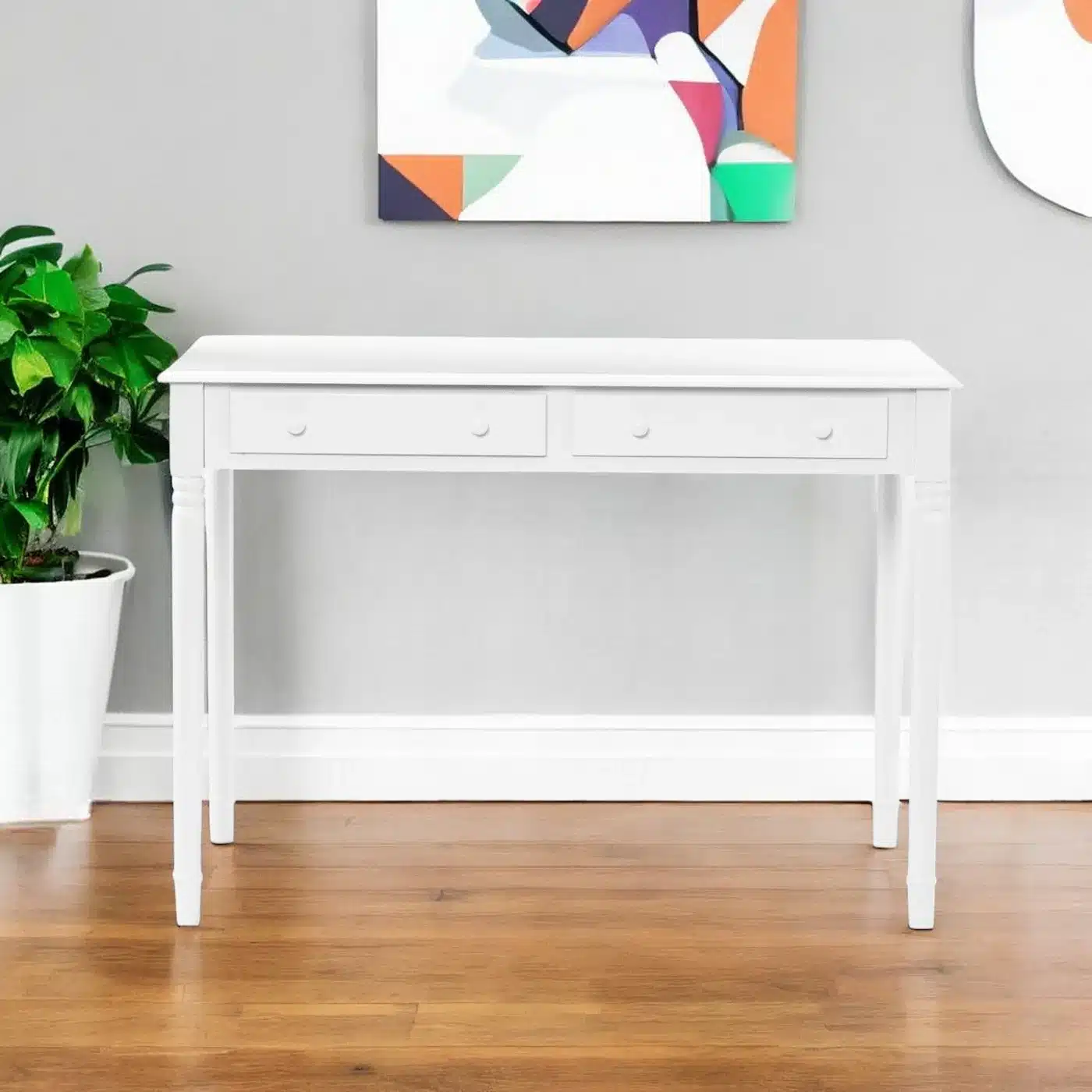
Luxury White Solid Wood 43″ Writing Desk with Two Drawers for Office Bedroom or CEO Office Certified Computer Table
If you’re looking for a ready-made option that combines elegance and functionality, consider the Luxury White Solid Wood 43″ Writing Desk with Two Drawers, a certified piece that fits both office and bedroom settings.
Frequently asked questions
What is the best wood for a solid wood writing desk?
The best wood depends on your needs. Oak is durable and water-resistant, walnut is rich and elegant, cherry darkens beautifully, maple is very hard, and teak is weather-resistant. Consider the look and maintenance level you prefer.
How do I measure for a writing desk?
Measure the length and width of the space where the desk will go. Allow at least 24 inches of depth for a computer, and 30 inches for comfortable writing. Ensure there’s enough legroom (about 24 inches high) and clearance for drawers.
How can I protect my solid wood desk from scratches?
Use felt pads under objects, avoid dragging items across the surface, and use a desk pad or blotter. Regularly dust and apply a protective finish like wax or polish to maintain the top layer.
Can I refinish a solid wood writing desk?
Yes, solid wood can be sanded and refinished multiple times. This is a major advantage over veneer. You can change the stain color or apply a new protective coat to revive its appearance.
