
Blog
The Ultimate Guide to Choosing the Perfect Writing Desk
Buying Guide
How to Choose the Perfect Writing Desk for Your Home
A writing desk is more than just a piece of furniture; it’s a sanctuary for your thoughts and a command center for your daily tasks. In this guide, we’ll walk you through everything you need to know to find the writing desk that fits your space, style, and budget.
Why a Writing Desk Matters More Than You Think
A dedicated writing desk can transform your productivity and creativity. Unlike a dining table or a lap desk, a proper writing desk offers a stable surface at the right height, reducing strain on your neck and wrists. It also creates a psychological boundary that signals to your brain: ‘This is where I focus.’ Whether you’re a novelist, a student, or a remote worker, having a designated spot for your writing tasks can make a world of difference.
Key Factors to Consider When Buying a Writing Desk
Before you dive into the vast ocean of options, it’s essential to know what to look for. Here are the critical factors that will guide your decision:
- Size and Space: Measure your room and consider how much surface area you need. A compact desk might be perfect for a small apartment, while a spacious L-shaped desk could be ideal for a home office.
- Material and Durability: From solid wood to engineered wood, each material has its pros and cons. Think about the look you want and how much wear and tear the desk will endure.
- Storage Options: Do you need drawers for stationery, shelves for books, or just a clear tabletop? Your storage needs will influence the design you choose.
- Ergonomics: The desk height should complement your chair and allow your arms to rest comfortably. An adjustable desk can be a game-changer for your posture.
Exploring Writing Desk Styles: From Classic to Modern
Writing desks come in a delightful array of styles, each with its own charm. Let’s explore a few popular ones:
Traditional and Antique
These desks often feature rich wood tones, intricate carvings, and a timeless elegance. They’re perfect for those who love a touch of history and craftsmanship. An antique writing desk can become a family heirloom, passed down through generations.
Minimalist and Modern
Clean lines, sleek materials like glass or metal, and a no-fuss design define modern desks. They are great for small spaces and easily blend with contemporary decor. If you prefer a clutter-free environment, a minimalist desk with hidden storage might be your best bet.
Industrial and Rustic
Combining raw materials like wood and metal, these desks have a rugged, stylish appeal. They often feature sturdy frames and reclaimed wood, adding character to any room. An industrial writing desk can be a conversation starter.
Materials Matter: Wood, Metal, Glass, and More
The material of your writing desk not only affects its appearance but also its durability and maintenance. Here’s a breakdown:
- Solid Wood: Known for its durability and natural beauty, solid wood desks can last a lifetime. They are heavier and more expensive but worth the investment if you want a premium piece.
- Engineered Wood (MDF, Plywood): These are more affordable and often come with a wood veneer. They are lighter and easier to move, but may not be as durable as solid wood.
- Metal: Sleek and modern, metal desks are sturdy and easy to clean. They can be paired with glass or wood tops for a unique look.
- Glass: A glass writing desk can make a room feel more spacious and bright. However, they require regular cleaning to keep smudges at bay.
Ergonomics and Comfort: Designing a Healthy Workspace
Your writing desk should work with your body, not against it. The ideal desk height is typically between 28 to 30 inches, but this can vary based on your height. When sitting, your elbows should be at a 90-degree angle, and your feet flat on the floor. Consider adding a monitor stand or an adjustable chair to achieve the perfect setup. An ergonomic writing desk can prevent back pain and improve your focus.
Space-Saving Solutions: Writing Desks for Small Areas
Living in a compact space doesn’t mean you have to forgo a writing desk. There are numerous space-saving designs that maximize functionality without taking up too much room. Wall-mounted desks fold away when not in use, while corner desks utilize often-wasted space. A slim writing desk can fit in a hallway or a bedroom nook, providing a dedicated spot for your laptop and notebooks.
Accessorizing Your Writing Desk: Essentials and Decor
Once you’ve chosen your writing desk, it’s time to personalize it. A desk lamp with adjustable brightness is a must for late-night writing sessions. Organize your pens, sticky notes, and other supplies with stylish desk organizers. Add a personal touch with a photo frame, a small plant, or a decorative tray. Remember, a clutter-free desk promotes a clutter-free mind, so keep only the essentials within arm’s reach.
For more inspiration on creating an ergonomic workspace, check out this Wikipedia article on ergonomics.
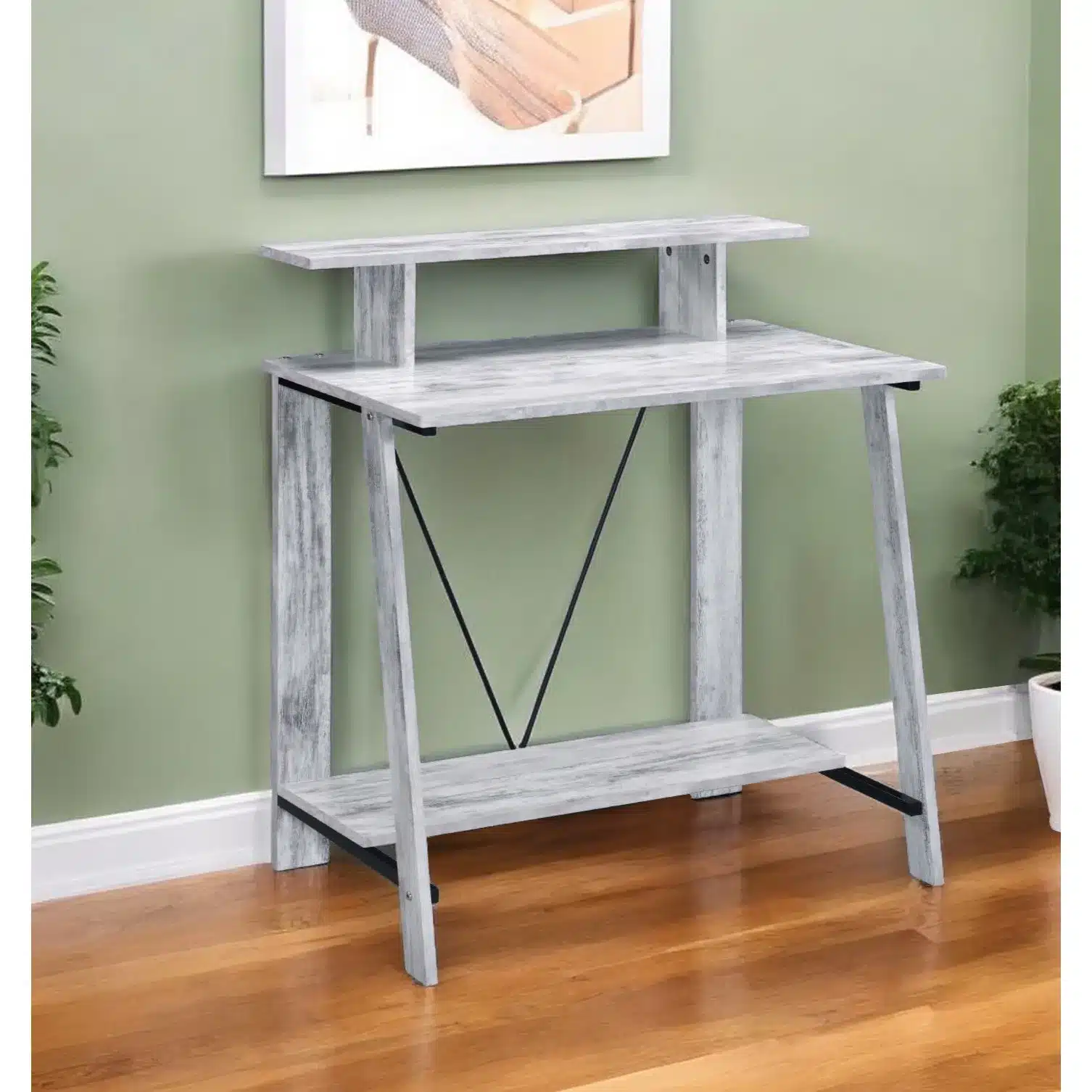
32″ Antiqued White Writing Desk Simple Design Computer Table with Adjustable Wood and Leather for Hotel or Living Room
If you’re looking for a charming and versatile piece, consider the 32″ Antiqued White Writing Desk Simple Design Computer Table with Adjustable Wood and Leather, which fits beautifully in a hotel or living room.
Frequently asked questions
What is the standard height for a writing desk?
The standard height for a writing desk is generally between 28 and 30 inches, which is comfortable for most adults when paired with an ergonomic chair. However, the ideal height depends on your own body proportions, so it’s best to test a desk or measure to ensure your elbows are at a 90-degree angle when writing.
How do I choose the right size writing desk for my room?
Start by measuring the available space in your room, considering both length and width. Think about what you’ll use the desk for—if you need a computer monitor, books, or just a notebook, that will determine the surface area you need. Leave at least 24 inches of clearance behind the chair for comfortable movement.
What are the benefits of an adjustable writing desk?
An adjustable writing desk allows you to switch between sitting and standing positions, which can improve posture, reduce back pain, and boost energy and focus. It also accommodates multiple users of different heights, making it a versatile choice for shared spaces.
How can I make my writing desk more ergonomic?
To make your writing desk more ergonomic, ensure your chair supports your lower back and allows your feet to rest flat on the floor. Position your monitor at eye level, about an arm’s length away. Use a wrist rest for your keyboard and mouse, and take regular breaks to stretch. An adjustable desk can also help you find the optimal height.
