
Blog
Best Antibacterial Cutting Board: Wood vs Plastic Guide
Kitchen Safety
How to Choose an Antibacterial Cutting Board
An antibacterial cutting board is essential for safe food preparation. But with so many options, how do you pick the right one?
Why an Antibacterial Cutting Board Matters
In the kitchen, cross-contamination is a real risk. An antibacterial cutting board helps reduce the spread of bacteria like Salmonella and E. coli. Unlike regular boards, these are designed with materials or treatments that inhibit microbial growth. Look for boards made from naturally antimicrobial woods or those infused with compounds like copper or silver.
Wood vs Plastic: Which Is More Hygienic?
Studies have shown that wood can be more antibacterial than plastic under certain conditions. Hardwoods like maple and walnut have natural tannins that kill bacteria. Plastic boards are easier to sanitize in the dishwasher but can develop deep knife grooves where bacteria hide. For the best of both worlds, consider a double-sided board with wood on one side and plastic on the other.
Features to Look for in an Antibacterial Cutting Board
- Material: Hardwoods (maple, walnut, teak) or bamboo with natural antimicrobial properties.
- Non-porous surface: Prevents liquid absorption and bacterial growth.
- Knife-friendly: A surface that is gentle on blades but durable.
- Easy maintenance: Look for boards that are easy to clean and require minimal oiling.
- Size and thickness: Choose a board that fits your counter and is stable during use.
How to Maintain Your Antibacterial Cutting Board
Cleaning Tips
After each use, wash with hot, soapy water and dry immediately. For wood boards, avoid soaking—it can cause warping. Once a month, apply food-grade mineral oil to keep the wood hydrated and hygienic.
When to Replace
If your board develops deep cuts or cracks, it’s time for a new one. Bacteria can thrive in those grooves. A well-maintained antibacterial cutting board can last for years.
The Science Behind Antibacterial Properties
Wood’s natural porosity actually traps bacteria inside, where they die—a phenomenon discovered by scientists at the University of Wisconsin. This is why many chefs prefer wooden cutting boards. For a deeper dive, check out this Wikipedia article on cutting board hygiene.
Top Materials for Antibacterial Cutting Boards
- Maple: Dense, hard, and naturally antimicrobial.
- Walnut Slightly softer but rich in oils that resist moisture.
- Bamboo: Sustainable and harder than most woods, but can dull knives.
- Teak: High oil content makes it water-resistant.
- Plastic: Non-porous and dishwasher-safe, but prone to cuts.
Common Myths About Antibacterial Cutting Boards
Myth: Plastic is always more hygienic than wood. Fact: While plastic is non-porous, wood has natural antibacterial properties that can be just as effective. Myth: You need to bleach your board after every use. Fact: Simple soap and water are sufficient for most boards.
New Ebony Wood Cutting Board Antibacterial Anti Mold Kitchen Chopping Board Double Sided
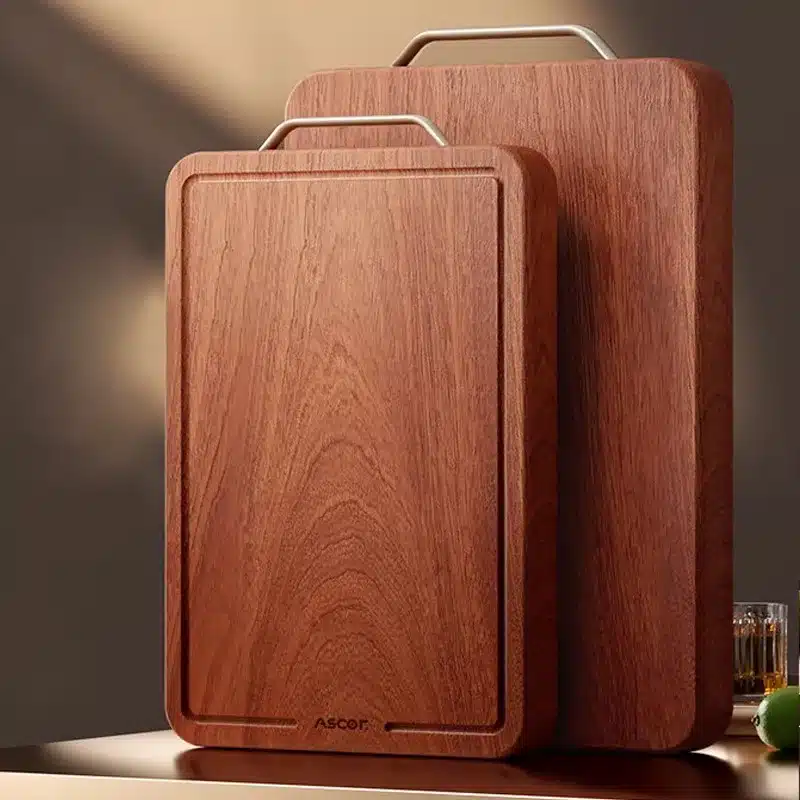
For a reliable option, consider our New Ebony Wood Cutting Board Antibacterial Anti Mold Kitchen Chopping Board Double Sided, which combines natural ebony’s density with a double-sided design for versatile use.
Frequently asked questions
How often should I replace my antibacterial cutting board?
Replace it when you see deep cuts, cracks, or warping. For wood boards, this might be every 5-10 years with proper care. Plastic boards may need replacing sooner (every 1-2 years) if heavily used.
Can I put my wooden cutting board in the dishwasher?
No, heat and moisture can warp or crack wood. Wash by hand with mild soap and dry immediately. Plastic boards are typically dishwasher-safe.
What makes a cutting board antibacterial?
Materials like certain hardwoods (maple, walnut) have natural antimicrobial properties. Some boards are treated with antimicrobial agents like silver or copper ions, or made from non-porous materials that resist bacterial growth.
Is bamboo a good antibacterial cutting board material?
Bamboo is hard, sustainable, and naturally antimicrobial, making it a good choice. However, it can be harder on knife edges than softer woods.
