
Blog
Find Your Perfect Antiqued Oak Coffee Table
Buying Guide
Choosing the Right Antiqued Oak Coffee Table
An antiqued oak coffee table brings timeless charm to any living room, blending rustic character with everyday functionality. Whether you’re furnishing a farmhouse or a modern space, this versatile piece anchors the room with warmth and history.
Why Choose an Antiqued Oak Coffee Table?
An antiqued oak coffee table offers more than just a surface for your remote and coffee mug. The aged finish conceals minor scratches and wear, making it ideal for busy households. Oak is naturally strong, so your table will withstand daily use while developing a patina that tells your story.
Unlike glossy modern tables, the antiqued look brings a relaxed, lived-in feel. It pairs beautifully with neutral sofas, colorful rugs, and even industrial accents. If you love a space that feels curated over time, this style is for you.
Understanding Oak Wood and Antiquing
Oak is a hardwood prized for its prominent grain and durability. Antiquing is a finishing technique that mimics the wear of age—think darkened edges, subtle dents, and a matte or satin sheen. The result is a table that looks like a cherished heirloom from day one.
For more on oak properties, see this Wikipedia article on oak.
Styles of Antiqued Oak Coffee Tables
- Farmhouse: Chunky legs, plank tops, often with a distressed white or gray wash over the oak.
- Rustic: Live edges, knots, and a darker stain for a cabin-like feel.
- Traditional: Turned legs, paneled sides, and a warm brown antiqued finish.
- Industrial: Metal hairpin legs contrasted with a weathered oak top.
Each style changes the vibe of your room. A farmhouse table suits open-concept living, while a traditional one complements classic decor.
Size and Proportion Considerations
Before buying an antiqued oak coffee table, measure your seating area. The table should be within 4-12 inches of your sofa height and leave at least 18 inches of clearance for walking. For a standard 8-foot sofa, a table 48-60 inches long works well.
If you have a small space, consider a rectangular or oval shape to maximize surface area without overwhelming the room. Round tables are great for conversation but offer less tabletop space.
Finishes and Color Variations
Antiqued oak comes in many shades. White oak tends to be cooler, while red oak has a pinkish undertone. Common finishes include:
- Natural antiqued: Light brown with visible grain, minimal darkening.
- Weathered gray: A coastal, modern look that still shows oak texture.
- Dark walnut: Rich brown with pronounced antiquing in crevices.
- Painted antique: A base color (like cream or sage) with oak peeking through distressed areas.
Choose a finish that coordinates with your floor and other furniture. A gray-washed oak can brighten a dark room, while a dark finish adds coziness.
Storage Features: Shelves and Drawers
Many antiqued oak coffee tables include a lower shelf or drawers. A shelf is perfect for displaying books or baskets, keeping remotes and coasters within reach. Drawers hide clutter like TV remotes, chargers, and coasters.
Consider your storage needs. If you have kids, a drawer can stash toys quickly. If you love coffee table books, an open shelf shows them off. The Goldoma 57-Inch Antiqued White Oak Coffee Table with Shelf – Farmhouse End Table for Living Room offers a spacious lower shelf for both display and storage.
Care and Maintenance Tips
Antiqued oak is forgiving, but a little care goes a long way. Dust with a soft cloth weekly. Clean spills immediately to avoid water rings—use a coaster! Avoid harsh chemicals; a damp cloth with mild soap is enough. Every few months, apply a furniture wax or oil to nourish the wood and maintain the antiqued finish.
Because the finish is distressed, minor scratches add to the character. If you want to prevent deep gouges, use felt pads under heavy objects.
Where to Place Your Coffee Table
An antiqued oak coffee table works in living rooms, family rooms, and even large home offices. Place it centered with your sofa, leaving enough room to walk around. In a sectional layout, align the table with the main seating area.
For a cohesive look, pair it with an antiqued oak end table or media console. Mixing wood tones? Keep the undertones consistent—warm with warm, cool with cool.
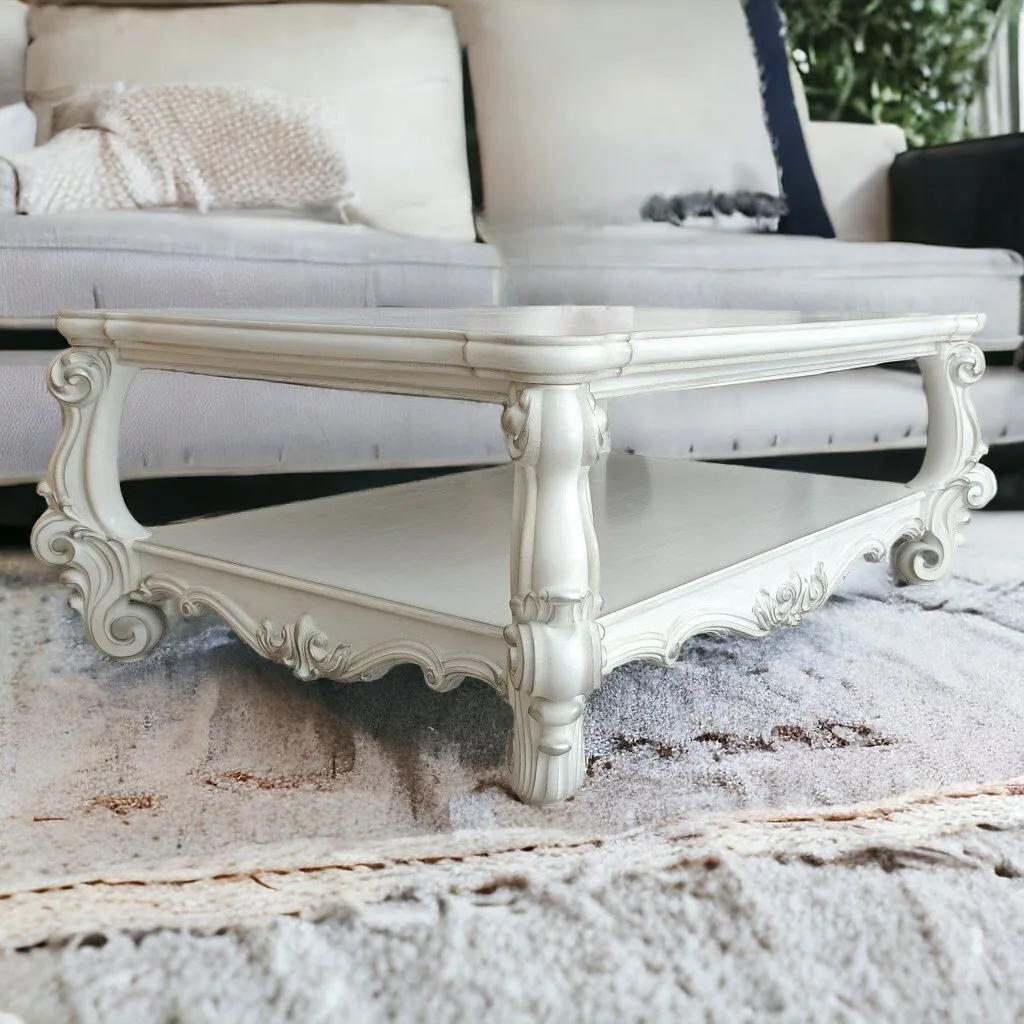
Goldoma 57-Inch Antiqued White Oak Coffee Table with Shelf – Farmhouse End Table for Living Room
For a beautifully crafted piece that combines farmhouse charm with practical storage, consider the Goldoma 57-Inch Antiqued White Oak Coffee Table with Shelf – Farmhouse End Table for Living Room.
Frequently asked questions
What is an antiqued oak coffee table?
It’s a coffee table made from oak that has been finished to mimic the look of age and wear, often with distressed edges, a matte sheen, and darkened crevices.
How do I clean an antiqued oak coffee table?
Dust regularly with a soft cloth. For spills, wipe immediately with a damp cloth and mild soap. Avoid abrasive cleaners that can strip the antiqued finish.
Can an antiqued oak coffee table fit in a modern home?
Absolutely. Choose a streamlined silhouette or a gray-washed finish to blend with modern decor. The texture adds warmth without being overly rustic.
What size coffee table do I need for my sofa?
Aim for a table that is about two-thirds the length of your sofa and roughly the same height as the seat cushions. Allow 18 inches of clearance for traffic.
