
Blog
The Best Ceramic Tableware for Everyday Elegance
Buying Guide
Finding the Best Ceramic Tableware for Your Home
Finding the best ceramic tableware can transform your daily meals into something special. Whether you’re setting a casual dinner or hosting a festive gathering, the right plates and bowls add warmth to the table.
Why Ceramic Tableware is a Smart Choice
Ceramic tableware has been cherished for centuries, and for good reason. It offers a timeless appeal that blends seamlessly with any decor style, from rustic farmhouse to modern minimalism. Beyond aesthetics, ceramic is incredibly durable when properly fired, resisting chips and cracks better than earthenware. It’s also non-porous when glazed, making it hygienic and easy to clean. Unlike plastic or melamine, ceramic doesn’t absorb odors or stains, and it’s microwave and dishwasher safe in most cases. For everyday use or special occasions, ceramic brings a balance of beauty and practicality that few materials can match.
What to Look for in the Best Ceramic Tableware
When shopping for the best ceramic tableware, consider these key factors to ensure you invest in pieces that will serve you well for years.
Material Quality and Firing
High-quality ceramic is fired at high temperatures, resulting in a dense, vitrified body that is less porous and more durable. Porcelain and stoneware are common types; porcelain tends to be lighter and more translucent, while stoneware is heavier and often more rustic. Look for pieces with a smooth, even glaze that covers the entire surface, including the foot (bottom rim) to prevent scratching.
Design and Versatility
Choose designs that complement your existing tableware and lifestyle. Neutral colors like white, cream, or gray are versatile and can be mixed and matched. Hand-painted patterns or gold accents add personality but may require hand washing. Consider the shapes: rimmed plates are classic for dinner, while coupe plates offer a modern, minimalist look. Bowls should have a stable base and comfortable depth for soups, salads, or pasta.
Weight and Feel
Pick up a piece to assess its weight. It should feel substantial but not overly heavy. The balance is important — a well-designed plate or bowl should feel comfortable in your hand. Check the edges for smoothness to ensure they are not sharp.
Durability and Care
Most quality ceramic is microwave and dishwasher safe, but always check the manufacturer’s recommendations. Glazed surfaces resist scratches and stains, but abrasive cleaners can damage the finish over time. Avoid sudden temperature changes, like placing a hot dish directly into cold water, as this can cause thermal shock and cracking.
How to Care for Your Ceramic Tableware
Proper care extends the life of your ceramic pieces. Always let them cool before washing. Use mild detergent and soft sponges; steel wool can scratch the glaze. Stack plates with felt or paper liners to prevent scratching. Store bowls separately to avoid chipping edges. If you have gold or metallic accents, hand washing is best to preserve the finish.
For a deeper dive into the history and science of ceramics, you can read more on Wikipedia.
Top Styles of Ceramic Tableware
From minimalist to ornate, there’s a style for every taste.
- Minimalist White: Clean lines and pure white finish that work with any table setting.
- Handcrafted Artisan: Unique glaze effects and slight irregularities that add character.
- Gold Accents: Elegant metallic details that elevate special occasions.
- Rustic Stoneware: Earthy tones and textured finishes for a cozy feel.
- Modern Geometric: Bold shapes and patterns for a contemporary look.
Ceramic vs. Other Materials
How does ceramic compare to other popular tableware materials?
- Porcelain: A type of ceramic, often more delicate and refined. True porcelain is white and translucent.
- Stoneware: Heavier, more durable, and often has a rustic appearance. Great for everyday use.
- Earthenware: Fired at lower temperatures, more porous and less durable. Can be decorative but not ideal for daily use.
- Glass: Non-porous and easy to clean but can break easily. Not as warm in feel.
- Melamine: Lightweight and unbreakable but can scratch and is not microwave safe.
For most households, ceramic (especially stoneware or porcelain) offers the best balance of durability, beauty, and practicality.
Investing in Quality Pieces
While it’s tempting to buy inexpensive sets, investing in quality ceramic tableware pays off. Well-made pieces resist chipping, maintain their glaze, and can last decades. Look for brands that stand behind their products with warranties. A smaller collection of high-quality pieces is better than a large set that wears out quickly.
Bringing Warmth to Your Table
The best ceramic tableware doesn’t just serve food — it creates an experience. The weight of a well-crafted plate, the smoothness of a glazed bowl, and the subtle clink as you set the table all contribute to the joy of dining. Whether you prefer classic white or bold colors, choose pieces that make you happy every time you use them.
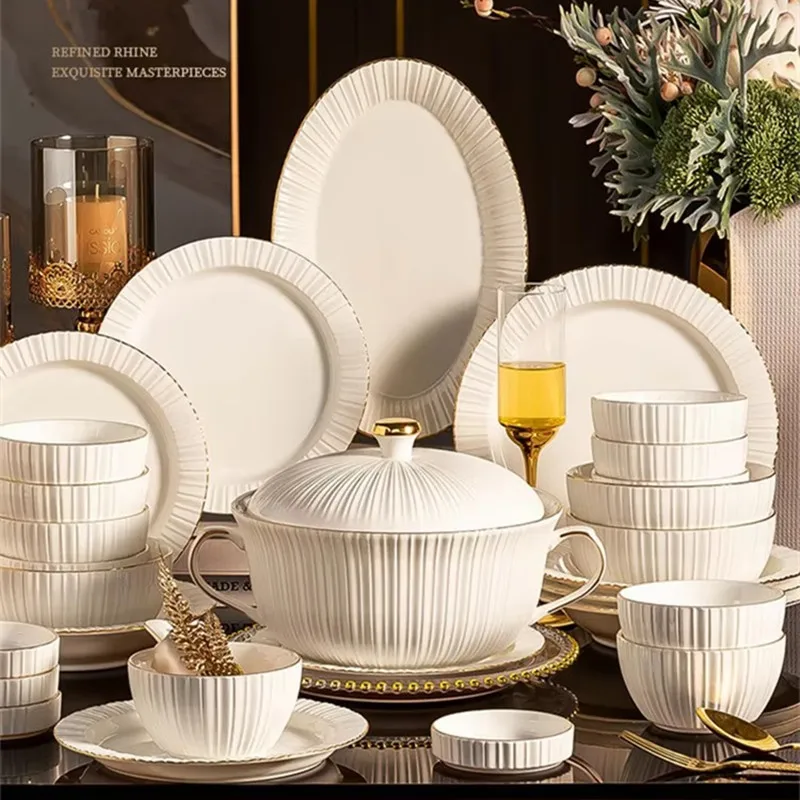
Relief Sculpture Gold Inlay Ceramic Rice Bowl Dishes Beef Steak Plate Fish Plate Premium Ceramic Tableware 1pcs
For those who appreciate artistry in everyday objects, the Relief Sculpture Gold Inlay Ceramic Rice Bowl and Plate set combines handcrafted detail with a subtle metallic accent that catches the light beautifully.
Frequently asked questions
Is ceramic tableware safe for microwave and dishwasher?
Most high-quality ceramic tableware is microwave and dishwasher safe, but always check the manufacturer’s instructions. Some pieces with metallic accents or hand-painted details may require hand washing to preserve their finish.
How do I prevent my ceramic plates from chipping?
To prevent chipping, avoid stacking plates without protective liners, store them with felt or paper between each piece, and handle them carefully when washing. Also, avoid sudden temperature changes, which can cause thermal shock.
What is the difference between ceramic and porcelain tableware?
Porcelain is a specific type of ceramic made from kaolin clay fired at very high temperatures, resulting in a dense, white, and often translucent material. Ceramic is a broader category that includes earthenware, stoneware, and porcelain. Porcelain is generally more delicate and refined, while stoneware is heavier and more durable.
Can I use ceramic tableware for baking?
Some ceramic dishes are oven-safe, but not all. Check the manufacturer’s guidelines for temperature limits. Generally, stoneware and porcelain can withstand oven temperatures up to 350°F or higher, but avoid using them under a broiler or on a stovetop.
