
Blog
Best Chef Knives: Your Guide to Kitchen Excellence
Knife Guide
Find Your Best Chef Knives Today
Choosing the best chef knives can transform your cooking experience. Whether you’re a home cook or a professional, the right blade makes all the difference.
Understanding Chef Knife Anatomy
A chef knife is more than just a blade; it’s an extension of your hand. The key parts include the blade, bolster, handle, and tang. A full tang (metal extending through the handle) provides balance and durability.
Blade Materials
Most quality knives use stainless steel or high-carbon steel. Stainless resists rust, while high-carbon holds a sharper edge longer. Damascus steel combines layers for strength and a beautiful pattern.
Blade Shapes and Their Uses
Western-style chef knives have a curved belly for rocking cuts. Japanese Gyutou knives are thinner and sharper for precise slicing. Consider your cooking style: if you chop vegetables often, a flatter blade works well.
Edge Types
Double-bevel edges (both sides sharpened) are common and easy to maintain. Single-bevel edges (like traditional Japanese) offer extreme sharpness but require skill to use.
Handle Comfort and Grip
Your knife handle should feel comfortable in your hand. Materials like wood, plastic, or metal each have pros and cons. Wood feels warm but needs care; synthetic handles are durable and slip-resistant.
Ergonomics
Look for a handle that fills your palm without pressure points. A balanced knife reduces fatigue during long prep sessions. Try holding the knife before buying if possible.
Knife Maintenance for Longevity
Proper care extends the life of your best chef knives. Hand wash with mild soap and dry immediately. Never put good knives in the dishwasher—the heat and detergent damage blades and handles.
Sharpening
Keep your knife sharp with a honing rod (for regular touch-ups) and a whetstone (for full sharpening). A dull knife is more dangerous than a sharp one because it requires more force.
Budget vs. Investment Pieces
You don’t need to spend a fortune for a good chef knife. Entry-level options around $50 can serve well. However, investing in a premium set ensures better steel, edge retention, and comfort.
What to Look For
Check for heat-treated blades (hardness rating 58-60 HRC), full tang construction, and a bolster that protects your fingers. A knife that feels like an extension of your hand is worth the investment.
Choosing the Right Knife Set
A basic set includes a chef’s knife, paring knife, and serrated bread knife. Some sets add a utility knife or Santoku. Avoid large sets with rarely used knives; quality over quantity matters.
Storage
Store knives in a block, magnetic strip, or blade guard. Loose drawers dull edges and risk injury. Magnetic strips save space and keep your knives accessible.
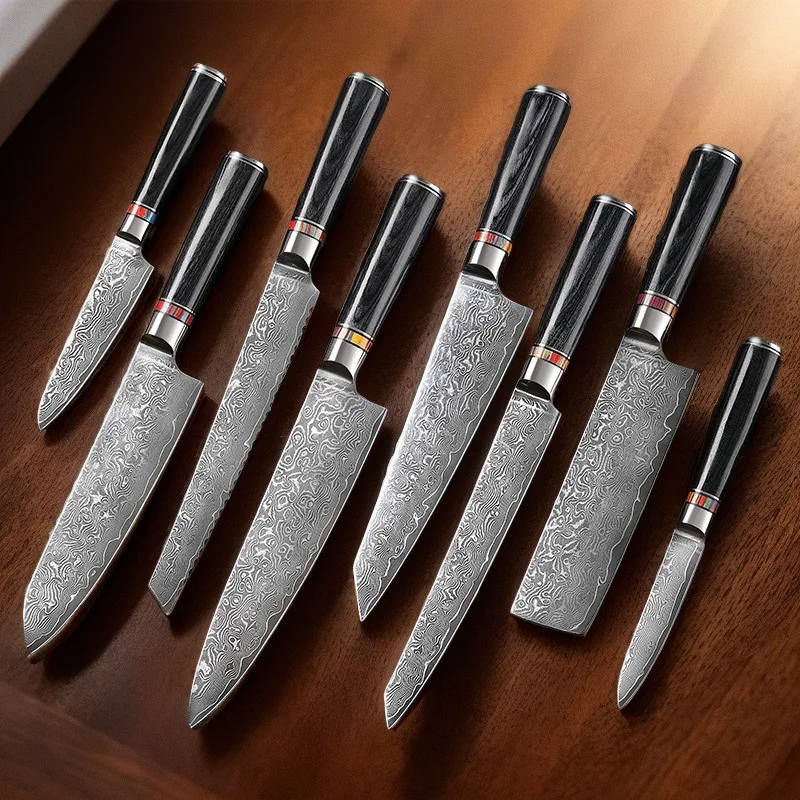
Art Forged Damascus Steel Kitchen Knife Set 1-8 pcs Professional Hotel Chef’s Slicing and Carving Knife Premium Kitchen Cutlery
For a reliable, beautifully crafted option, the Art Forged Damascus Steel Kitchen Knife Set offers a full tang and layered steel that holds an edge well.
Frequently asked questions
What is the best chef knife for beginners?
A versatile 8-inch chef knife with a comfortable handle and medium weight is ideal. Look for high-carbon stainless steel for easy maintenance.
How often should I sharpen my chef knife?
Hone with a steel rod weekly for touch-ups. Sharpen with a whetstone every 2-3 months depending on use. Professional chefs may sharpen monthly.
Are expensive chef knives worth it?
Higher cost often brings better steel, heat treatment, and ergonomics. A good mid-range knife ($80-$150) can outperform budget options but premium sets offer lasting performance.
What is the difference between a chef knife and a Santoku?
Chef knives have a curved blade for rocking cuts; Santoku knives have a flat edge and sheepsfoot tip, excelling at straight cuts and slicing. Santoku are lighter and often shorter.
