
Blog
The Best Entertainment Center for Your Living Room
Buying Guide
Find the Best Entertainment Center for Your Home
Finding the best entertainment center for your living room can transform how you enjoy movies, games, and family time. This guide walks you through everything you need to consider.
1. Why the Best Entertainment Center Matters
Your entertainment center is more than just a TV stand. It’s the focal point of your living room and a hub for your media devices. The best entertainment center balances form and function, providing ample storage while complementing your decor. A well-chosen unit can reduce clutter, improve viewing angles, and even enhance sound quality by positioning speakers correctly.
Think about how you use your space. Do you host movie nights? Game with friends? Or just want a tidy spot for your streaming devices? Your answers will guide your choice. Remember, the best entertainment center should adapt to your lifestyle, not the other way around.
2. Key Features to Look For
When shopping, focus on these essential features:
- TV Size Compatibility: Ensure the unit can support your TV’s weight and size. Most modern centers accommodate up to 65 inches, but larger options exist for bigger screens.
- Storage Options: Look for shelves, cabinets, and drawers to hide cables, consoles, and accessories. Open shelving is great for display, while closed storage keeps dust away.
- Cable Management: Built-in grommets and channels keep wires organized and out of sight.
- Material Quality: Solid wood offers durability, while engineered wood is budget-friendly. Metal accents add a modern touch.
- Ventilation: Electronics generate heat, so check for open back panels or ventilation slots.
These features directly impact how well the best entertainment center serves you over time.
3. Matching Your Decor Style
Your entertainment center should blend seamlessly with your room’s aesthetic. For a modern look, choose sleek units with clean lines and neutral colors. Rustic spaces pair well with reclaimed wood or dark finishes. Industrial styles benefit from metal and wood combinations. Don’t forget about color – black and white are versatile, but a bold hue can make a statement.
Pro tip: Measure your wall space and consider the unit’s depth. A bulky piece can overwhelm a small room, while a too-slim unit might look lost in a large space. The best entertainment center is one that feels proportional to your room.
4. Storage and Organization Solutions
Think beyond the TV. Your entertainment center should accommodate all your media: streaming boxes, game consoles, Blu-ray players, books, and decorative items. Adjustable shelves are a lifesaver – they let you customize heights for different gadgets. Drawers are perfect for remote controls and small accessories. Learn more about home entertainment centers on Wikipedia.
Consider how many devices you own. If you have multiple consoles, look for units with dedicated compartments and ventilation. Cable management systems reduce tangles and make cleaning easier. The best entertainment center keeps everything organized without sacrificing style.
5. Choosing the Right Size and Placement
Measure your TV’s width and height, then add a few inches for clearance. The unit should be at least as wide as the TV, but wider if you want flanking shelves. Height matters too – the center of the TV should be at eye level when seated. For most people, that’s about 42 inches from the floor.
Placement also affects viewing angles. Avoid direct sunlight on the screen to reduce glare. If your room has multiple seating areas, consider a swivel mount or a corner unit. The best entertainment center for your space is one that optimizes comfort and visibility.
6. Materials and Durability
Common materials include solid wood, plywood, MDF, and particleboard. Solid wood is durable and can be refinished, but it’s heavier and more expensive. MDF offers a smooth surface for painting and is budget-friendly, but it’s less moisture-resistant. Particleboard is the cheapest but least durable. For long-term value, prioritize solid wood or high-quality MDF with a laminate finish.
Check the weight capacity of shelves and the overall frame. If you have a heavy TV, look for reinforced construction. The best entertainment center should feel sturdy and last for years.
7. Budget and Value
Entertainment centers range from under $200 to over $2000. Set a budget based on your needs and room size. At the lower end, you’ll find functional units with basic features. Mid-range options offer better materials and design. High-end pieces are custom or made from premium materials like walnut or oak.
Don’t forget to factor in shipping and assembly costs. Some units require professional installation. The best entertainment center for you is one that offers the best value within your budget, balancing quality and cost.
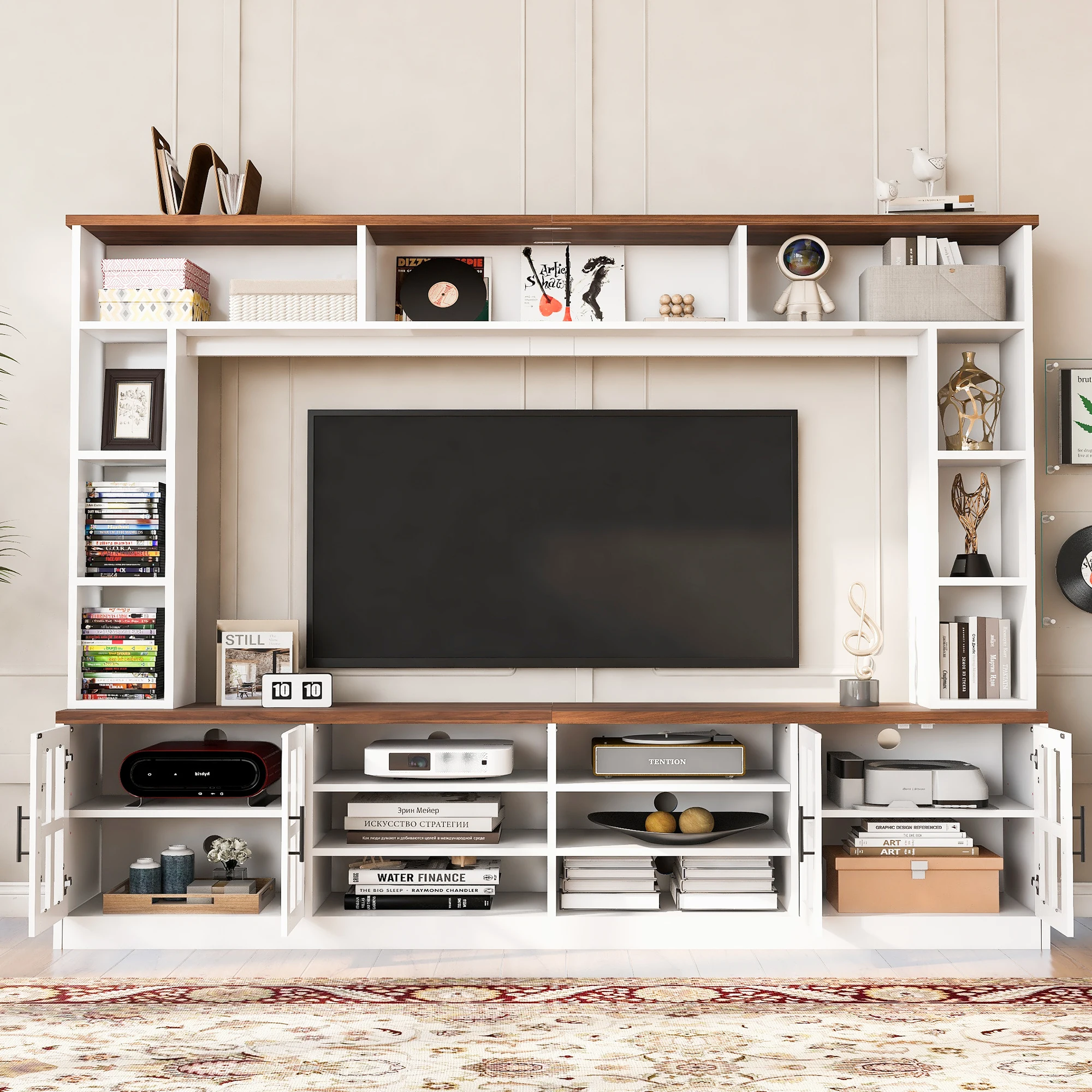
Goldoma 95.5″ Modern Wall Unit Entertainment Center with Bookshelves for TVs up to 80″
For a stylish and functional option, consider the Goldoma 95.5″ Modern Wall Unit Entertainment Center with Bookshelves for TVs up to 80″, which offers ample storage and a contemporary design.
Frequently asked questions
What is the best material for an entertainment center?
Solid wood is the most durable and attractive option, but it can be expensive. MDF with a laminate finish offers a good balance of cost and durability for most homes.
How do I choose the right size entertainment center?
Measure your TV’s width and height, then add at least 2-3 inches on each side for clearance. The unit should be at least as wide as the TV, and the center of the screen should be at eye level when seated.
What features should I look for in a modern entertainment center?
Prioritize cable management, adjustable shelves, ventilation for electronics, and a style that complements your decor. Closed storage helps reduce clutter.
Can I mount my TV above an entertainment center?
Yes, but ensure the unit can support the weight and that the mount is securely attached to wall studs. Leave enough space for airflow around the TV.