
Blog
The Best Japanese Chef Knife: A Complete Buying Guide
Kitchen Essentials
Find Your Best Japanese Chef Knife Today
Looking for the best Japanese chef knife? This guide will help you choose the perfect blade for your cooking style.
What Makes a Japanese Chef Knife the Best?
A truly best Japanese chef knife combines exceptional steel, precise geometry, and ergonomic design. Unlike Western knives, Japanese blades are typically harder (Rockwell 60-65), allowing for a sharper edge that lasts longer. They also feature thinner profiles, which means less resistance when cutting through vegetables or fish. The craftsmanship behind these knives often involves traditional techniques like forge welding and hand-sharpening, resulting in a tool that feels alive in your hand.
Types of Japanese Chef Knives: Find Your Match
Understanding the different styles is crucial when searching for the best Japanese chef knife. Here are the most common types:
- Gyuto – The Japanese version of a chef’s knife, versatile for meat, fish, and vegetables.
- Santoku – A multi-purpose knife with a flat edge, excellent for chopping, slicing, and dicing.
- Nakiri – Designed specifically for vegetables, with a straight blade that makes clean cuts.
- Deba – A heavy knife for butchering fish and poultry.
- Yanagiba – A long, slender knife for slicing raw fish (sashimi).
Steel Types: Carbon vs. Stainless
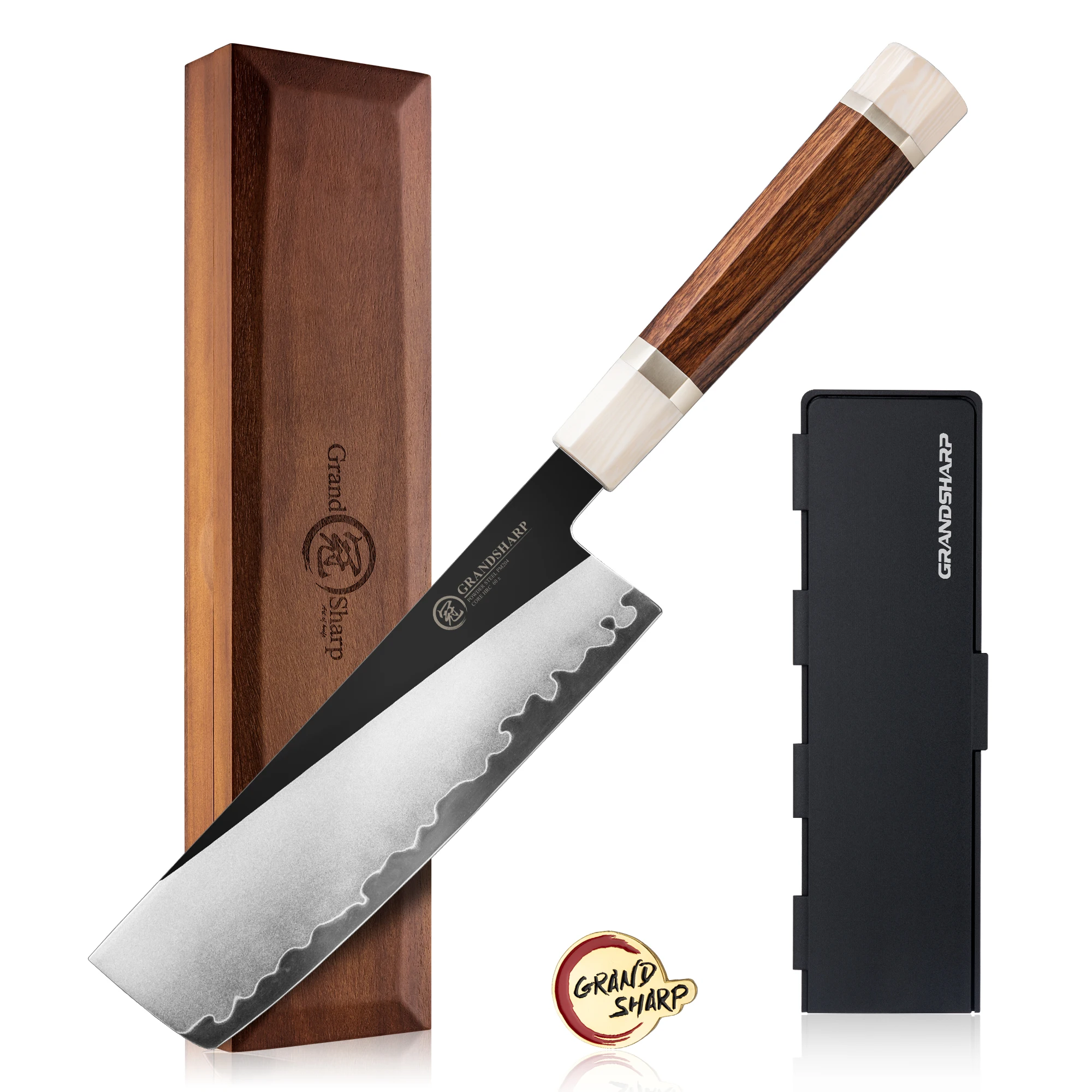
The steel is the heart of any best Japanese chef knife. High-carbon steel (e.g., Shirogami, Aogami) offers excellent edge retention and sharpness but requires care to prevent rust. Stainless steel (e.g., VG-10, SG2) is more corrosion-resistant and easier to maintain. Many premium knives use a laminated construction, where a hard core steel is sandwiched between softer layers for durability. The Grandsharp Professional 6.5” Nakiri Knife features a steel core with 3-layer composite, offering a balance of sharpness and resilience.
What to Look for in Knife Steel
- Rockwell hardness: 60-63 is ideal for kitchen use.
- Edge retention: Harder steels hold edges longer but are harder to sharpen.
- Stain resistance: Stainless is easier for everyday use.
Handle Materials and Ergonomics
A comfortable handle ensures safe and efficient cutting. Traditional Japanese handles (wa-handles) are often made from magnolia wood or pakka wood and are octagonal or D-shaped. Western-style handles (yo-handles) are typically made from synthetic materials like Micarta or G-10. The Grandsharp Nakiri knife uses Mkuruti wood, a durable and attractive African hardwood that provides a secure grip. When choosing the best Japanese chef knife, consider the handle shape and weight balance.
How to Choose the Right Knife for Your Needs
First, assess what you cook most. If you prepare many vegetables, a Nakiri or Santoku is ideal. For a general-purpose knife, a Gyuto is versatile. Budget also matters: entry-level Japanese knives start around $50, while professional-grade can exceed $500. Look for reputable brands known for heat treatment and fit. Remember, the best Japanese chef knife is the one that feels right in your hand and suits your cutting style.
Maintenance Tips to Keep Your Knife Sharp
Proper care extends the life of any best Japanese chef knife. Always hand wash and dry immediately; never put in dishwasher. Use a cutting board made of wood or plastic; avoid glass or stone. Sharpen regularly with whetstones (1000-6000 grit). Honing with a ceramic rod can maintain the edge between sharpenings. Store in a knife block or magnetic strip to protect the blade.
For more on knife maintenance, check out Wikipedia’s guide to knife sharpening.
Top Features of the Best Japanese Chef Knife
- Hard steel core (VG-10, SG2, or high-carbon)
- Laminated construction for durability
- Thin blade geometry for precise cuts
- Ergonomic handle that fits your grip
- Well-balanced weight (typically 6-8 ounces)
Whether you’re a home cook or a professional, investing in a quality Japanese knife elevates your cooking experience.
Grandsharp Professional 6.5”Nakiri Knife Steel Core 3 Layer Composite with Mkuruti Wood Handle Japanese Style Chef Knife
For vegetable prep, the Grandsharp Professional 6.5” Nakiri Knife with its steel core and Mkuruti wood handle offers a sharp, comfortable cutting experience.
Frequently asked questions
What is the best Japanese chef knife for beginners?
For beginners, a Santoku or Gyuto with a stainless steel blade is recommended. These knives are versatile, easier to maintain, and offer good value. Look for a knife with a comfortable handle and a hardness around 60 HRC.
How often should I sharpen my Japanese chef knife?
It depends on usage. For home cooks, sharpening every 2-3 months with a whetstone is typical. If you notice the knife struggling to cut through a tomato, it’s time to sharpen. Regular honing can extend the interval.
Are Japanese chef knives worth the investment?
Yes, if you prioritize sharpness and precision. Japanese knives offer superior edge retention and cutting performance. They can last a lifetime with proper care, making them a worthwhile investment for serious cooks.
Can I use a Japanese chef knife on bones or frozen food?
No, Japanese knives are not designed for cutting bones or frozen food. The hard, thin blades can chip or break. Use a dedicated cleaver or heavy-duty knife for such tasks.
