
Blog
Best Japanese Kitchen Knife Set for Home Cooks
Cutting Edge
Find Your Perfect Japanese Kitchen Knife Set
A Japanese kitchen knife set can transform your cooking experience, offering unparalleled sharpness and precision. Whether you’re a home cook or a professional, choosing the right set is essential.
What Makes a Japanese Kitchen Knife Set Special?
Japanese knives are revered for their exceptional sharpness, often achieved through harder steel and thinner blades. This allows for cleaner cuts, preserving the integrity of ingredients. Traditional Japanese knives like the Gyuto (chef’s knife) and Santoku (multi-purpose) are designed for specific tasks, making a set versatile.
Key Features to Look For in a Japanese Knife Set
Steel Type
High-carbon stainless steel offers a balance of edge retention and rust resistance. Look for VG-10 or AUS-8 for durability. Some traditionalists prefer carbon steel for its ease of sharpening, but it requires more care.
Handle Design
Western-style handles (e.g., D-shaped) provide comfort for pinch grips, while traditional wa-handles (octagonal or round) offer a lighter feel. Choose based on your grip preference.
Knife Types Included
A good set typically includes a chef’s knife (Gyuto or Santoku), a paring knife, a utility knife, and a bread knife. Some sets add a boning or butcher knife for meat preparation.
How to Choose the Right Japanese Knife Set for Your Needs
Consider your cooking habits. If you frequently prepare vegetables, a Santoku is ideal. For meat and fish, a Gyuto or a dedicated boning knife is better. A paring knife is essential for delicate tasks. Think about storage: magnetic strips or knife blocks keep blades safe.
Caring for Your Japanese Kitchen Knives
Hand wash only with mild soap and dry immediately. Avoid cutting on hard surfaces like glass or stone; use wooden or plastic cutting boards. Regular honing with a ceramic rod maintains the edge, while occasional sharpening with whetstones restores sharpness.
Understanding Blade Hardness and Edge Retention
Japanese knives typically have Rockwell hardness ratings of 58-64 HRC. Harder blades hold an edge longer but are more brittle and prone to chipping. A set with around 60 HRC offers a good balance for home use.
Budget Considerations: Finding Value in a Japanese Knife Set
Entry-level sets from reputable brands can cost $100-$200, while high-end sets from master smiths can exceed $1000. For most home cooks, a mid-range set with good steel and comfortable handles provides excellent value.
Why a Complete Set Beats Individual Knives
A matched set ensures consistent quality, ergonomics, and aesthetic appeal. You avoid mismatched handles and varying steel performance. Plus, sets often include a storage block or roll, saving space.
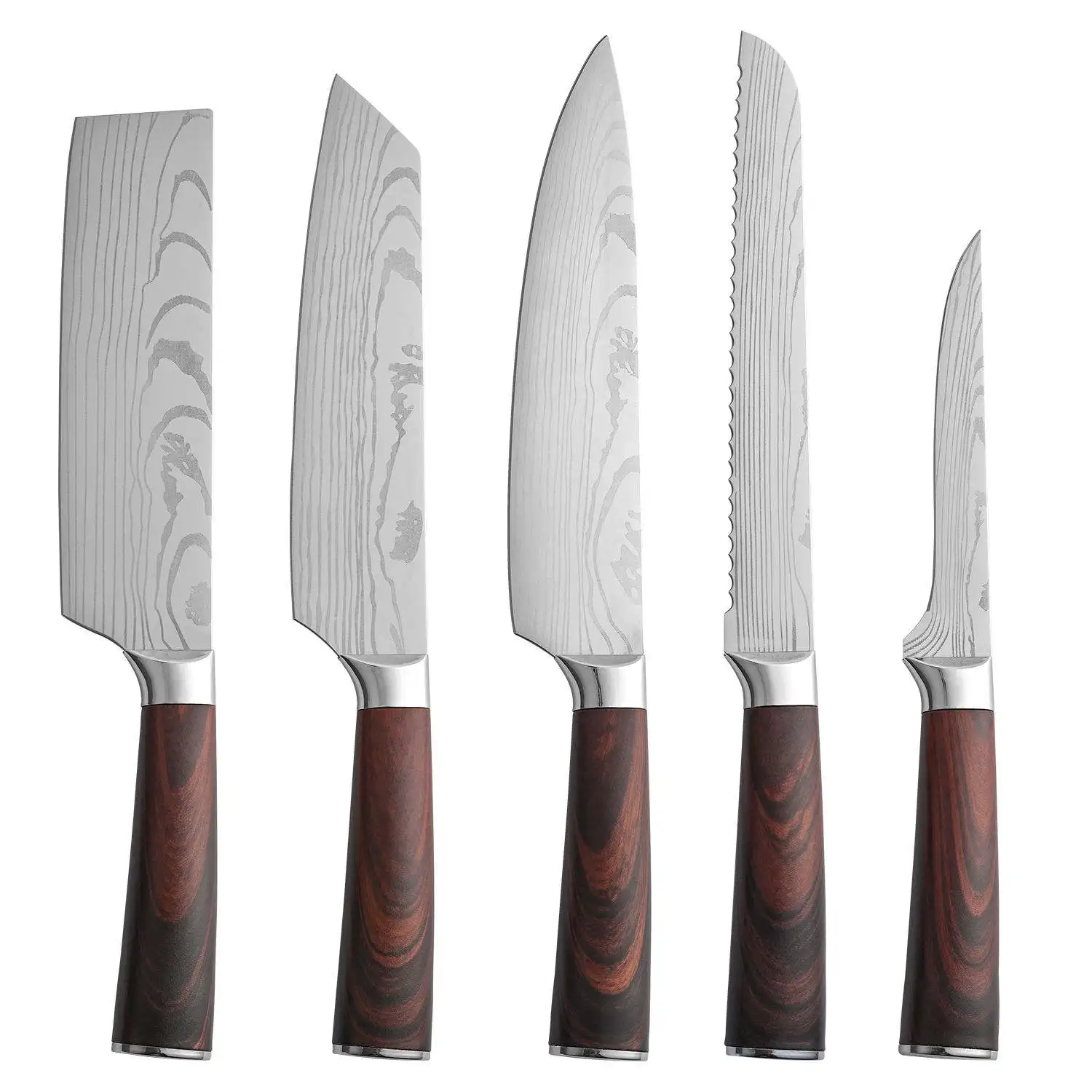
Stainless Steel Paring Boning Butcher Bread Knife Set Five-Piece Japanese Kitchen Knife Set
If you’re seeking a versatile starter set, consider the Stainless Steel Paring Boning Butcher Bread Knife Set Five-Piece Japanese Kitchen Knife Set, which covers essential tasks with reliable performance.
Frequently asked questions
What is the best steel for a Japanese knife set?
High-carbon stainless steel like VG-10 offers a great balance of sharpness, edge retention, and rust resistance for most home cooks.
How often should I sharpen Japanese knives?
Depending on use, sharpen every 1-3 months with a whetstone. Hone weekly with a ceramic rod to maintain the edge.
Can I use Japanese knives on a cutting board?
Yes, but use wood or soft plastic boards. Avoid glass, stone, or ceramic as they can dull or chip the blade.
What is the difference between Gyuto and Santoku?
Gyuto is a chef’s knife with a curved edge for rocking cuts, ideal for meat. Santoku has a straighter edge and is versatile for vegetables, fish, and meat.
