
Blog
The Ultimate Guide to Finding the Best Kitchen Knife Set
Kitchen Essentials
How to Choose the Best Kitchen Knife Set
Finding the best kitchen knife set can transform your cooking experience, making prep work faster and more enjoyable. Whether you’re a seasoned chef or a home cook, the right set makes all the difference.
What Makes the Best Kitchen Knife Set?
The best kitchen knife set balances sharpness, durability, and comfort. High-carbon stainless steel blades hold an edge longer and resist corrosion. Full tang construction (blade extending through the handle) provides balance and control. Look for ergonomic handles that reduce fatigue during extended use.
Key Features to Consider
- Blade material: Stainless steel vs. high-carbon vs. ceramic
- Handle design: Wood, plastic, or metal
- Number of knives: Essential vs. specialty
- Storage: Block, magnetic strip, or roll
Understanding Knife Types in a Set
A well-curated set includes knives for specific tasks. The chef’s knife (8-10 inches) is the workhorse for chopping, slicing, and dicing. A serrated bread knife tackles crusty loaves and tomatoes. Paring knives handle intricate work like peeling and trimming. Utility knives bridge the gap for smaller tasks. Santoku knives (Japanese style) excel at slicing and mincing. Steak knives are essential for dining. A carving knife is ideal for roasts and poultry.
Why Variety Matters
Having the right knife for each task improves efficiency and safety. Using a chef’s knife for bread can damage the edge, while a paring knife for large vegetables is inefficient. A complete set ensures you’re prepared for any recipe.
Blade Materials: Finding the Right Edge
Stainless steel is rust-resistant and easy to maintain, while high-carbon stainless steel offers better edge retention. German steel (X50CrMoV15) is popular for toughness. Japanese steel (VG-10) is harder and takes a sharper edge but is more brittle. Ceramic blades are lightweight and stay sharp longer but can chip. For most home cooks, a high-carbon stainless steel set provides the best balance.
Handle Comfort and Safety
Handles should fit your grip comfortably. Wood handles (like walnut or rosewood) offer a classic feel and absorb shock, but require more care. Synthetic materials (polypropylene or rubber) are durable and dishwasher-safe. Look for a bolster (thick metal band between blade and handle) for finger protection and balance. A non-slip grip is crucial when hands are wet or greasy.
Knife Maintenance for Longevity
Even the best kitchen knife set needs proper care. Hand wash and dry immediately to prevent rust. Use a honing rod (steel) weekly to realign the edge. Sharpen with a whetstone or professional service when dull (every few months). Store knives in a block or on a magnetic strip to protect edges. Avoid glass cutting boards; opt for wood or plastic.
For more on knife sharpening techniques, visit Wikipedia’s guide.
Choosing the Right Knife Storage
Knife blocks keep blades organized and accessible but can dull edges if slots are too tight. Magnetic strips save counter space and display knives but require secure mounting. Drawer inserts protect blades and keep them out of sight. Consider your kitchen layout and safety preferences when choosing storage.
Budget and Value Considerations
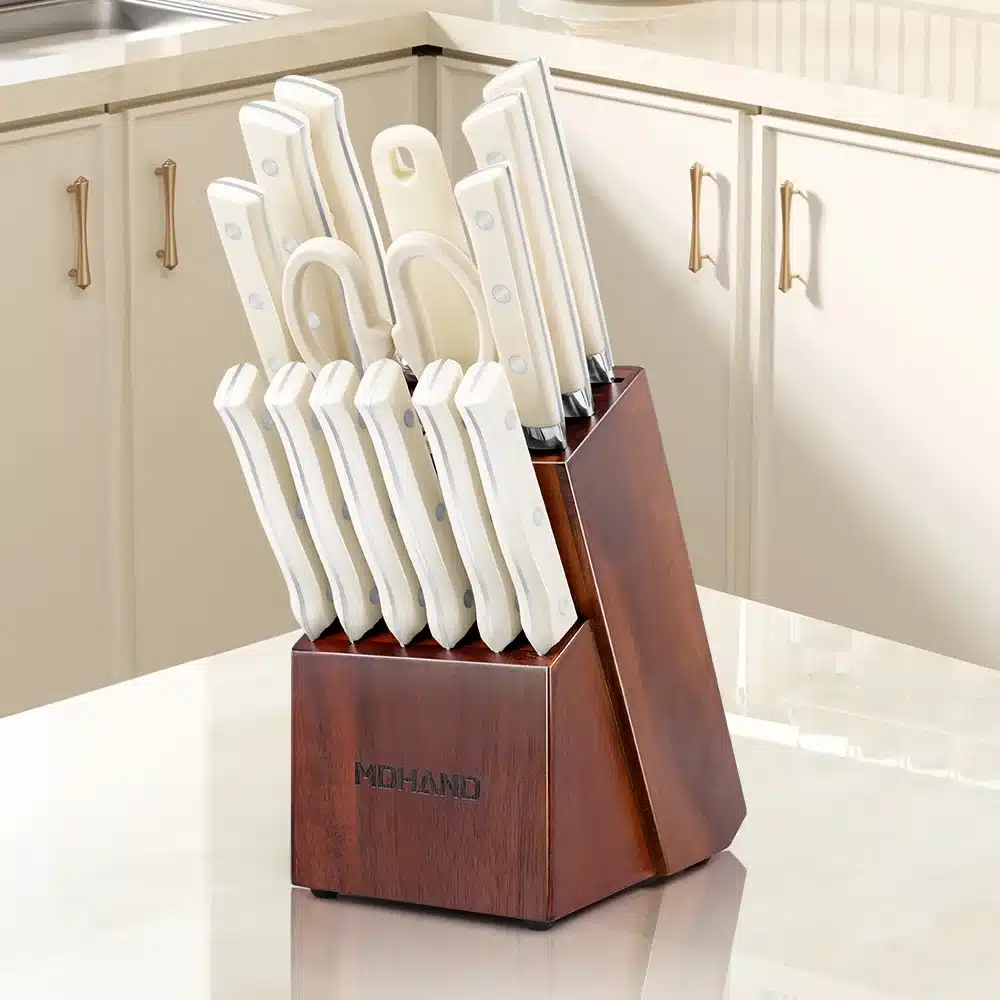
Investing in a quality set saves money long-term. Lower-priced sets may dull quickly or have poorly balanced handles. Mid-range sets (like our 14pcs Stainless Steel Kitchen Knife Set with Sharpener & Wood Handle) offer excellent value with essential knives plus extras like a sharpener. Premium sets from brands like Wüsthof or Shun are costly but last decades. Determine your cooking frequency and needs to find the sweet spot.
What to Avoid
- Knives with plastic handles that crack over time
- Sets with unnecessary specialty knives
- Blocks that don’t accommodate larger knives
- Dishwasher-safe claims that still require hand washing for longevity
14pcs Stainless Steel Kitchen Knife Set with Sharpener & Wood Handle, Chef, Santoku, Bread, Utility,Steak,Paring & Carving Knife
For a versatile and reliable option, consider the 14pcs Stainless Steel Kitchen Knife Set with Sharpener & Wood Handle, which includes chef, Santoku, bread, utility, steak, paring, and carving knives for every task.
Frequently asked questions
How many knives should a good kitchen set include?
A well-rounded set typically includes 8-15 pieces, with essential knives like chef’s, bread, paring, utility, and steak knives. Look for sets that cover core tasks without excessive duplicates.
Is it better to buy a set or individual knives?
Sets offer convenience and often better value per knife, especially for beginners. Experienced cooks may prefer selecting individual knives to customize their collection. A quality set like the 14-piece option provides versatility for most needs.
How often should I sharpen my knives?
Hone weekly with a steel rod to maintain alignment. Sharpen with a whetstone or professional service every 3-6 months, depending on usage. Signs of dullness include slipping when cutting tomatoes or tearing bread crusts.
What’s the best way to store kitchen knives?
Use a knife block, magnetic strip, or drawer insert. Avoid loose drawers where blades can get damaged or cause injury. Wood blocks are classic; magnetic strips save space. Ensure storage allows easy access and protects edges.
