
Blog
Best Kitchen Knife Set: Your Guide to Choosing Quality Blades
Knife Guide
Finding the Best Kitchen Knife Set for You
The best kitchen knife set can transform your cooking experience, making prep work faster and more enjoyable. But with so many options, how do you choose wisely?
What Makes a Kitchen Knife Set the Best?
A truly great knife set balances sharpness, durability, and comfort. You want blades that hold an edge, handles that feel secure, and a variety that covers most tasks. Avoid sets with too many specialty knives you’ll never use.
Key Materials: Steel Types and Handles
High-carbon stainless steel is a popular choice for its edge retention and corrosion resistance. Forged knives are generally stronger than stamped ones. Look for full tang construction (the metal extends through the handle) for better balance. Handles can be wood, plastic, or metal; choose one that feels good in your grip.
Learn more about knife steel on Wikipedia.
Essential Knives Every Set Should Include
At minimum, a good set has an chef’s knife (8-inch), a paring knife (3-4 inch), and a serrated bread knife. A utility knife and a Santoku are nice additions. Avoid sets with many identical steak knives unless you host frequently.
Chef’s Knife: The Workhorse
This is the knife you’ll use most. A versatile 8-inch blade chops, slices, and dices. Look for a comfortable handle and a blade that tapers evenly.
Paring Knife: For Precision
Perfect for peeling, trimming, and intricate cuts. A 3.5-inch blade is standard. It should feel nimble and precise.
Bread Knife: Serrated for Crusty Loaves
A long serrated blade (8-10 inches) saws through bread without crushing it. Also great for tomatoes and soft fruits.
How Many Knives Do You Really Need?
A set of 8-10 knives is ideal for most home cooks. More than that can be overwhelming and unnecessary. Focus on quality over quantity. A well-chosen smaller set will serve you better than a giant block of mediocre blades.
Caring for Your Knife Set
Hand wash and dry immediately — dishwashers dull blades and damage handles. Use a honing rod weekly to maintain the edge, and sharpen professionally once or twice a year. A good cutting board (wood or plastic) also protects your knives.
Budget vs. Premium: Finding the Sweet Spot
You don’t need to spend a fortune, but very cheap sets often disappoint. Mid-range sets from reputable brands offer great value. If you cook daily, investing in a premium set with better steel and construction pays off in the long run.
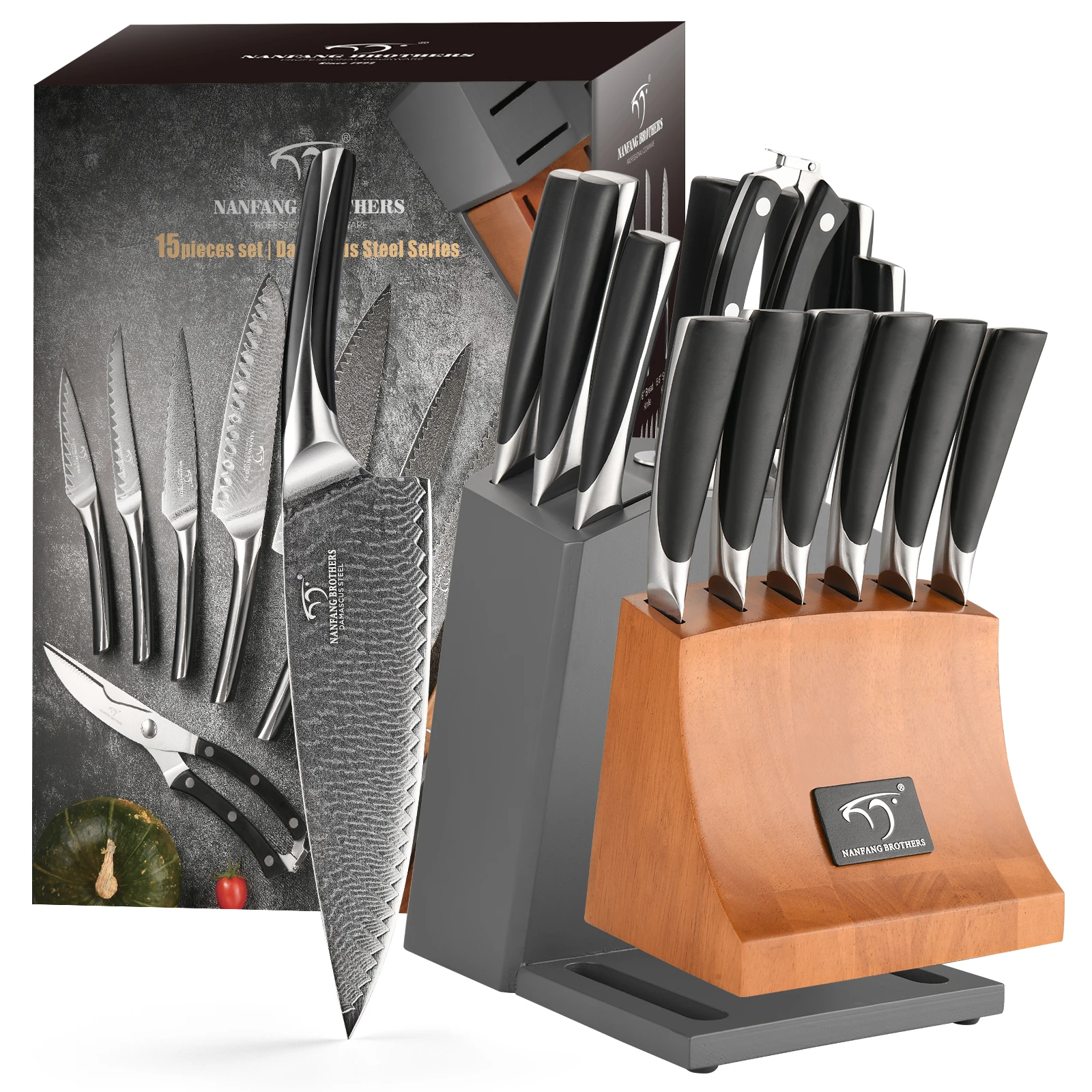
When you’re ready, consider a set that includes a variety of blades, a sharpener, and a storage block. One such option is the Set of 15 VG-10 Damascus Steel Knives Cutting Bread Meat Kitchen Knife Set with Scissors Sharpener Stick, which offers excellent edge retention and a beautiful finish.
Set of 15 VG-10 Damascus Steel Knives Cutting Bread Meat Kitchen Knife Set with Scissors Sharpener Stick
For a well-rounded set with lasting sharpness, the Set of 15 VG-10 Damascus Steel Knives offers a range of blades plus scissors and a sharpening stick.
Frequently asked questions
What is the best kitchen knife set for beginners?
Look for a set with a chef’s knife, paring knife, and serrated knife. Choose high-carbon stainless steel with full tang for balance. A mid-range set from a reputable brand is ideal.
How often should I sharpen my kitchen knives?
Hone with a steel rod weekly. Sharpen with a stone or professional service every 6-12 months, depending on use.
Are Damascus steel knives worth the extra cost?
Damascus steel offers excellent edge retention and a unique pattern, but performance depends on the core steel. Good for those who value aesthetics and durability.
Should I buy a knife block or magnetic strip?
Blocks protect blades and are tidy, but can harbor bacteria. Strips save counter space and keep knives accessible. Choose based on your kitchen layout.
