
Blog
Best Kitchen Knife Set: A Thoughtful Guide for Home Cooks
Buying Guide
Choosing the Best Kitchen Knife Set for Your Kitchen
The best kitchen knife set can transform your cooking experience, making prep work faster, safer, and more enjoyable. But with so many options, how do you pick the right one?
Why a Quality Knife Set Matters
A good knife set is the backbone of any kitchen. Dull, unbalanced knives make chopping frustrating and can lead to accidents. Investing in the best kitchen knife set means you get consistent performance, better control, and longevity. Whether you’re a weekend cook or a daily chef, the right set saves time and effort.
Key Blade Materials to Consider
The blade material affects sharpness, durability, and ease of maintenance. Common options include:
- Stainless Steel: Rust-resistant and easy to care for, but may not hold an edge as long as carbon steel.
- Carbon Steel: Holds a razor-sharp edge longer but requires more upkeep to prevent rust.
- Ceramic: Lightweight and stays sharp for a long time, but can chip if used on hard surfaces.
For most home cooks, high-carbon stainless steel offers a great balance of performance and convenience.
Handle Comfort and Grip
You’ll be holding your knives for extended periods, so comfort matters. Look for ergonomic handles that fit your hand size. Materials like rubberized synthetic or wood provide a secure grip, even when wet. A full tang (where the blade extends through the handle) adds balance and durability. Test the weight—neither too heavy nor too light—for fatigue-free chopping.
Essential Knife Types in a Set
A complete set should cover your basic tasks. Typical knives include:
- Chef’s Knife: The workhorse for chopping, slicing, and dicing.
- Paring Knife: For peeling and intricate work.
- Bread Knife: Serrated edge for crusty loaves without crushing.
- Utility Knife: Versatile for medium-sized tasks.
- Santoku Knife: A Japanese alternative to the chef’s knife, great for slicing.
- Steak Knives (optional): For dining.
Some sets also include kitchen shears and a sharpening tool, which add value.
Maintenance and Longevity
Even the best kitchen knife set will dull over time. Regular honing (with a steel) realigns the edge, while periodic sharpening removes metal to create a new edge. Hand washing and immediate drying prevent corrosion and protect the blade. Store knives in a block, magnetic strip, or blade guards to keep them safe and sharp.
Balancing Budget and Quality
You don’t need to spend a fortune, but extremely cheap sets often sacrifice performance. Mid-range sets from reputable brands offer excellent value. Consider how often you cook and which features matter most. A set with a few high-quality knives beats a large set full of mediocre ones.
A Note on Versatility
Some sets include specialty knives like a boning or fillet knife. If you frequently prepare fish or meat, these can be worthwhile. For plant-based cooking, a good chef’s knife and paring knife might suffice. Think about your cooking style before buying.
Safety Features
Look for knives with non-slip handles and a secure fit in the block. Some sets come with blade guards or sheaths for safe storage. A sharp knife is actually safer than a dull one because it requires less force and is less likely to slip.
Making the Final Decision
Read reviews, check the warranty, and if possible, hold a knife in your hand before purchasing. The best kitchen knife set for you balances comfort, performance, and price. Remember, a great set can last for years with proper care, making it a worthwhile investment in your cooking journey.
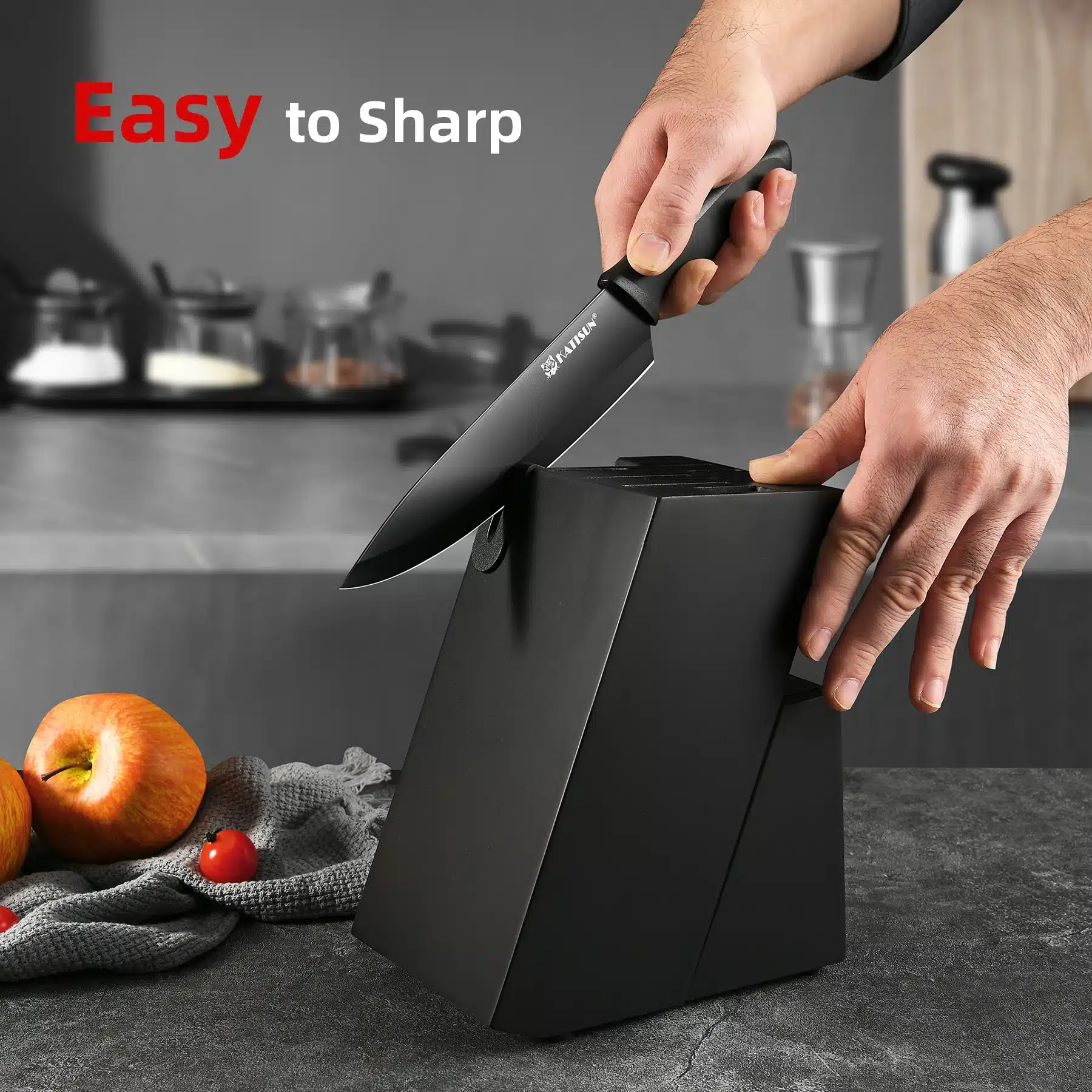
15 Pieces Black Anti-Slip Handle Carbon Steel Blade Kitchen Knife Set with Sharpener Chicken Bone Scissors
For a reliable all-in-one solution, consider the 15 Pieces Black Anti-Slip Handle Carbon Steel Blade Kitchen Knife Set with Sharpener Chicken Bone Scissors, which offers great value and essential tools.
Frequently asked questions
How many knives do I really need in a set?
A basic set of 3-5 knives (chef’s, paring, bread, utility, and maybe Santoku) covers most tasks. Avoid oversized sets with redundant knives.
What is the best blade material for home use?
High-carbon stainless steel is a great choice—it holds an edge well and is easy to maintain. Carbon steel is sharper but requires more care.
How often should I sharpen my knives?
Hone with a steel before each use to maintain the edge. Sharpen every few months or when you notice a decline in cutting performance.
Are ceramic knives better than steel?
Ceramic knives stay sharp longer and are lightweight, but they are brittle and can chip on hard surfaces or bones. Steel knives are more durable and versatile.
