
Blog
Best Kitchen Knife Set: Your Guide to Smart Buying
Buying Guide
Finding the Best Kitchen Knife Set for Your Cooking
The best kitchen knife set can transform your cooking experience, but with so many options, it’s easy to feel overwhelmed. Let’s cut through the noise together.
Why a Good Knife Set Matters
A reliable knife set is the backbone of any kitchen. You don’t need a dozen knives—just a few well-crafted ones that feel like extensions of your hand. A quality set reduces prep time, improves safety, and makes cooking more enjoyable. Whether you’re a weekend meal prepper or a daily home cook, the right knives pay for themselves in durability and performance.
Blade Material: Stainless Steel vs. Carbon Steel
Most kitchen knives are made from stainless steel or carbon steel. Stainless steel is rust-resistant and low-maintenance, ideal for everyday use. High-carbon stainless steel offers a good balance of edge retention and ease of sharpening. Carbon steel holds a sharper edge but requires immediate drying and oiling to prevent rust. For most home cooks, a quality stainless steel set is the practical choice.
- Stainless Steel: Rust-resistant, easy care, good edge retention.
- High-Carbon Stainless: Better edge, still rust-resistant.
- Carbon Steel: Sharpest edge, needs more maintenance.
What to Look for in Blade Hardness
Hardness is measured on the Rockwell scale (HRC). A rating of 55-58 HRC is typical for home knives—hard enough to hold an edge but soft enough to sharpen easily. Knives above 60 HRC stay sharp longer but can be brittle. Avoid extremes unless you’re a professional.
Handle Comfort and Ergonomics
A knife’s handle affects control and fatigue. Look for a full tang (metal extends through the handle) for balance and durability. Materials like polypropylene, wood, or stainless steel each have pros and cons. Ergonomic shapes with a slight curve reduce hand strain. Try holding a knife before buying if possible; your grip should feel natural and secure even when wet.
- Full Tang: Better balance, stronger.
- Material: Polypropylene is lightweight and grippy; wood looks classic but needs care.
- Weight: Heavier knives aid chopping; lighter ones are nimble for detail work.
Essential Knives in a Set
A good set typically includes an 8-inch chef’s knife, a paring knife, a serrated bread knife, and a utility knife. A santoku is a versatile alternative to the chef’s knife. Some sets add a carving knife, boning knife, or kitchen shears. Avoid sets with many specialty knives you won’t use—quality over quantity.
Must-Have Knives
- Chef’s Knife (8″): Your go-to for chopping, slicing, and dicing.
- Paring Knife (3-4″): For peeling and small tasks.
- Bread Knife (8-10″): Serrated for crusty bread and tomatoes.
- Utility Knife (5-7″): Bridges chef and paring knives.
Storage: Blocks, Magnets, or Sheaths
Proper storage protects blades and hands. Wooden knife blocks are classic but can accumulate bacteria. Magnetic strips save counter space and keep knives visible. Sheaths or blade guards are great for drawers. Whichever you choose, ensure knives are dry before storing and never left loose in a drawer.
Maintenance and Sharpening
Even the best knives dull over time. Use a honing steel weekly to realign the edge. Sharpen with a whetstone or use a professional service every few months. Dishwashers dull blades and damage handles—hand wash and dry immediately. A little care keeps your set performing for years.
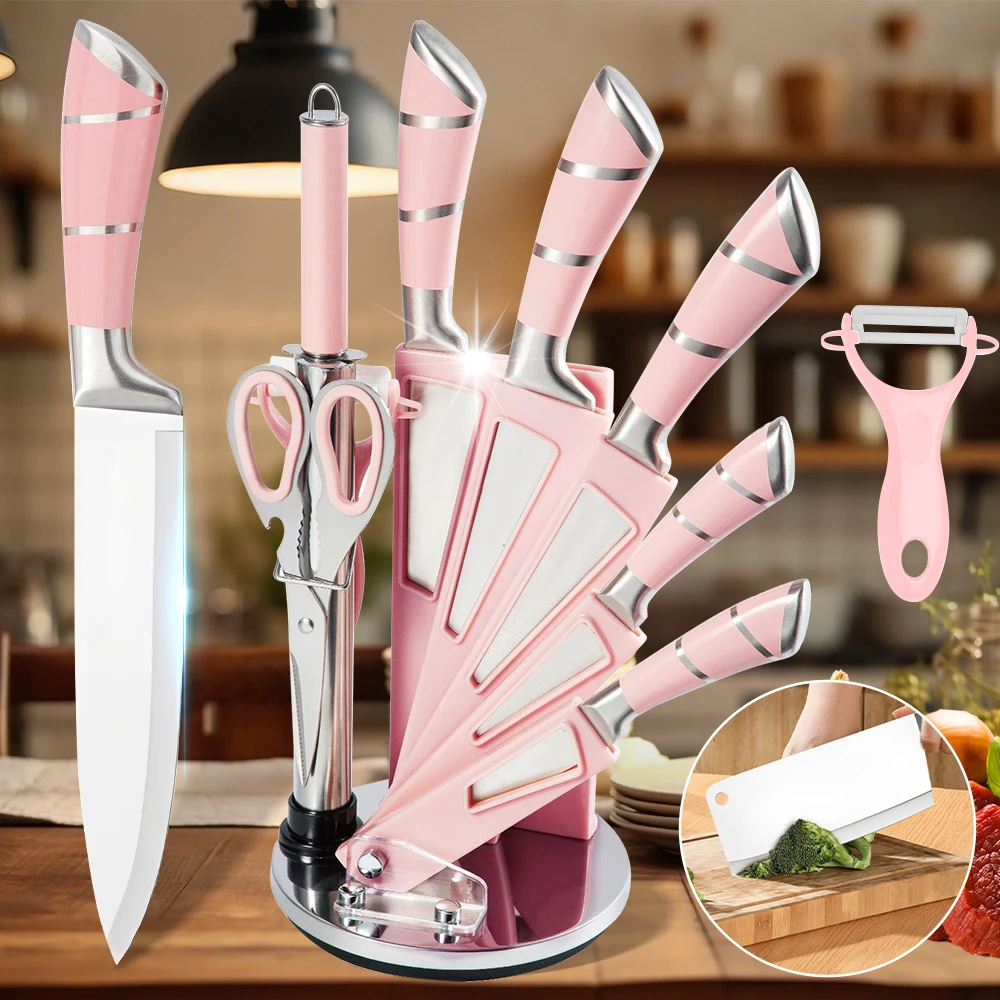
If you’re looking for a balanced, ready-to-use set that covers all the basics, the ZENG 9PCS Kitchen Knife Set offers stainless steel blades, comfortable hollow handles, and includes scissors and a peeler—a practical choice for everyday cooking.
Budget vs. Investment
You can spend $30 or $300 on a knife set. Budget sets often use lower-grade steel and plastic handles that may crack. Mid-range sets (around $100-$200) offer good quality for most home cooks. High-end sets are for enthusiasts who value premium materials and craftsmanship. Consider how often you cook and choose accordingly.
ZENG 9PCS Kitchen Knife Set Stainless Steel Hollow Handle Sharp Meat Cutting Cooking Knife Scissors Bread Knife Fruit Peeler
For a reliable all-in-one solution, the ZENG 9PCS Kitchen Knife Set covers the essentials with sharp stainless steel blades, a comfortable hollow handle, and handy extras like scissors and a peeler.
Frequently asked questions
How many knives do I really need in a set?
Most home cooks do well with a set of 5-8 knives: a chef’s knife, paring knife, bread knife, utility knife, and perhaps a santoku or carving knife. Avoid overly large sets with redundant knives.
Is stainless steel or ceramic better for kitchen knives?
Stainless steel is more durable and versatile—it can be sharpened and won’t chip as easily as ceramic. Ceramic knives are lightweight and stay sharp longer but are brittle and harder to sharpen.
How often should I sharpen my knives?
For regular home use, sharpen every 3-6 months. Use a honing steel weekly to maintain the edge. If you notice resistance when cutting, it’s time to sharpen.
Can I put my knife set in the dishwasher?
No, dishwashers can dull blades, damage handles, and cause rust. Always hand wash knives with mild soap and dry immediately.
