
Blog
The Best Kitchen Knife: Your Ultimate Guide to Choosing
Knife Guide
Find the Best Kitchen Knife for Your Cooking Style
The best kitchen knife is the one that feels like an extension of your hand, turning every slice into effortless precision. Whether you’re a home cook or a professional, the right blade makes all the difference.
What Makes a Knife the Best Kitchen Knife for You?
Choosing the best kitchen knife isn’t about hype—it’s about understanding your cooking habits. A chef’s knife, for instance, excels at chopping, slicing, and dicing, while a utility knife handles smaller tasks. The blade steel, weight, and handle ergonomics all play a role. Look for a knife that balances sharpness, durability, and comfort. Learn more about kitchen knife types on Wikipedia.
Blade Steel: The Heart of a Great Knife
High-carbon stainless steel offers a great mix of edge retention and corrosion resistance. For instance, 9cr18 steel is known for its hardness and ability to hold a sharp edge. A hand-forged blade often has better grain structure, leading to superior performance. Avoid overly brittle steels that chip easily.
Handle Comfort and Balance
A solid wood handle, like those made from pakkawood or walnut, provides a warm, secure grip. The knife should feel balanced—neither blade-heavy nor handle-heavy. Test the handle in your hand; it should fit comfortably without slipping, even when wet.
Edge Retention and Sharpening
The best kitchen knife stays sharp through many uses. Harder steels (58-62 HRC) hold an edge longer but can be harder to sharpen. Learn basic sharpening with a whetstone to maintain your blade. Regular honing also helps keep the edge aligned.
Versatility: One Knife for Most Tasks
A versatile chef’s knife (8-10 inches) can handle 90% of kitchen tasks, from mincing garlic to carving meat. Consider your most frequent tasks: if you cut a lot of vegetables, a long, curved blade is ideal. For meat cutting, a sturdier, heavier knife works best.
Care and Maintenance Tips
Hand wash your knife with mild soap and dry immediately—dishwashers can damage the handle and dull the blade. Store in a knife block or magnetic strip to protect the edge. Regular maintenance extends the life of your best kitchen knife.
Our Honest Recommendation
After testing many knives, we found that a hand-forged 9cr18 steel chef knife with a solid wood handle offers exceptional value. It combines sharpness, durability, and comfort without breaking the bank. For meat cutting, it performs beautifully.
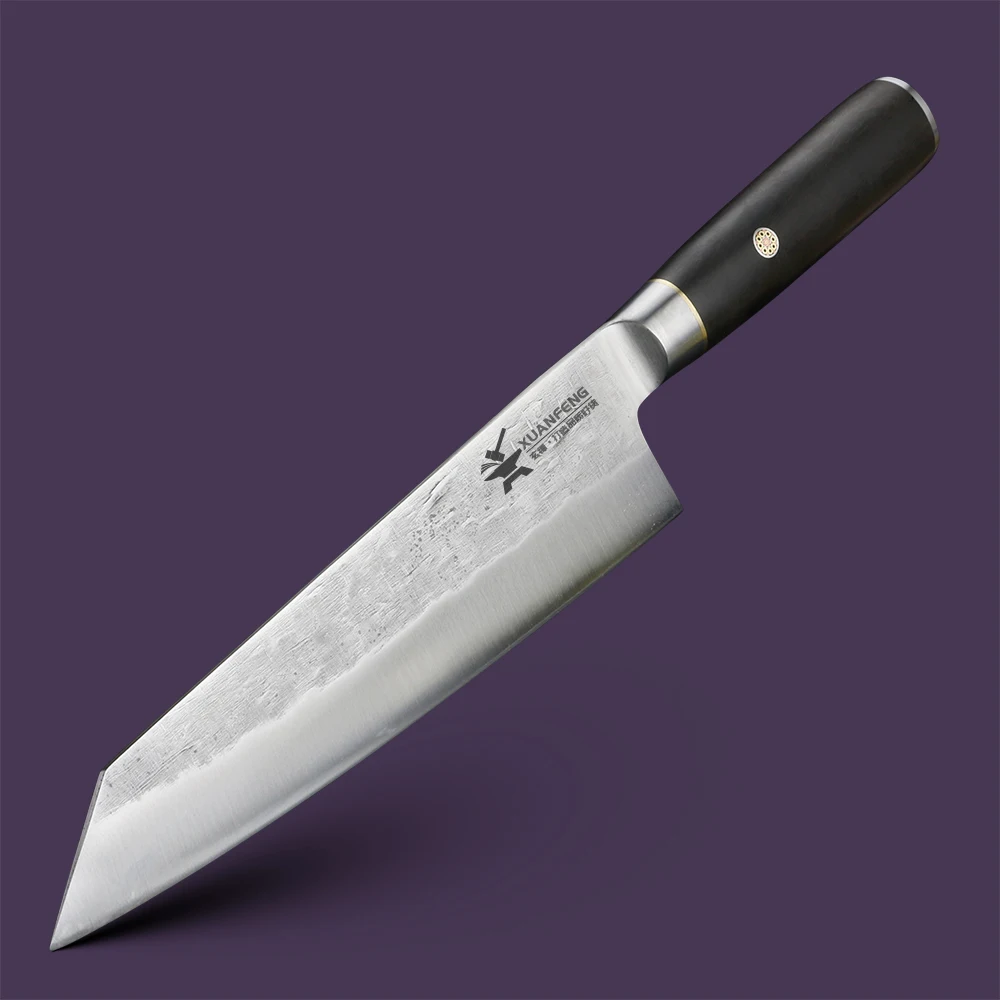
XUANTENG 9cr18 steel chef knife, hand forged stainless steel kitchen knife, solid wood handle, meat cutting tool
For a reliable everyday blade, consider the XUANTENG 9cr18 steel chef knife—hand forged, with a solid wood handle, perfect for meat cutting and more.
Frequently asked questions
What is the best kitchen knife for beginners?
A versatile chef’s knife (8-inch) with a comfortable handle is ideal. Look for high-carbon stainless steel like 9cr18 for a balance of sharpness and ease of maintenance.
How often should I sharpen my kitchen knife?
For home cooks, sharpening every 2-3 months with a whetstone is sufficient. Hone the blade weekly to keep the edge aligned between sharpenings.
Why is a hand-forged knife better?
Hand-forging creates a denser, more uniform grain structure, resulting in a sharper, more durable edge. It also allows for better balance and craftsmanship.
Can I use a chef’s knife for meat cutting?
Yes, a chef’s knife is suitable for most meat cutting tasks, especially if it has a sturdy blade and a sharp edge. For heavy bone work, consider a cleaver.
