
Blog
Best Non-Slip Placemats: A Complete Buying Guide
Buying Guide
Find the Best Non-Slip Placemats for Your Table
Looking for the best non-slip placemats to keep your dining setup secure? We’ve researched options that combine safety with style.
Why You Need the Best Non-Slip Placemats
Placemats do more than decorate your table. The best non-slip placemats prevent dishes from sliding, protect surfaces from heat and spills, and add a layer of comfort. Whether you have kids, host dinner parties, or just want a stable dining experience, non-slip placemats are a practical investment.
What Makes a Placemat Non-Slip?
The key is the backing material. Common options include PVC, silicone, and natural rubber. PVC placemats often have a textured underside that grips the table without leaving residue. Some mats use a weave pattern that increases friction. Look for placemats labeled as non-slip or with a tested grip. For more on material science, see this Wikipedia article on placemats.
Material Comparison
- PVC: Durable, easy to wipe clean, often with a non-slip backing.
- Silicone: Heat-resistant and grippy, but can attract lint.
- Natural fibers: Eco-friendly but may require a separate non-slip pad underneath.
Top Features to Look For
When shopping for the best non-slip placemats, consider these factors:
- Grip strength: Test by placing a plate on the mat and sliding it. The mat should stay put.
- Size and shape: Rectangular mats are common, but round and oval options exist. Ensure they fit your table and plates.
- Easy care: Washable materials like PVC or coated fabric save time.
- Style: From minimalist to ornate, choose a design that complements your decor.
How to Care for Non-Slip Placemats
To extend the life of your placemats, wipe them after each meal. For PVC mats, use a damp cloth and mild soap. Avoid abrasive cleaners that can damage the non-slip layer. Some mats are dishwasher-safe; check the label. Store them flat or rolled to prevent curling.
Eco-Friendly Options for Non-Slip Placemats
If sustainability matters to you, look for placemats made from recycled materials or natural fibers like bamboo. Some brands offer biodegradable non-slip backings. While natural mats may not grip as strongly as synthetic ones, you can pair them with a separate non-slip underlay. The best non-slip placemats balance eco-consciousness with performance.
Budget vs. Premium: What’s Worth It?
You can find non-slip placemats for under $10 each, but premium options offer better durability and design. Mid-range mats (around $15-$25) often provide the best value, with sturdy construction and attractive patterns. Consider how frequently you’ll use them—daily use justifies a higher investment. The best non-slip placemats don’t have to break the bank, but cheap ones may lose grip over time.
Styling Your Table with Non-Slip Placemats
Non-slip placemats come in a variety of colors and patterns. Neutral tones like beige, gray, or white blend with any table setting. For a bold look, choose geometric prints or metallic accents. Layering with a tablecloth or runner adds depth. Remember, the best non-slip placemats should enhance your dining experience, not just function.
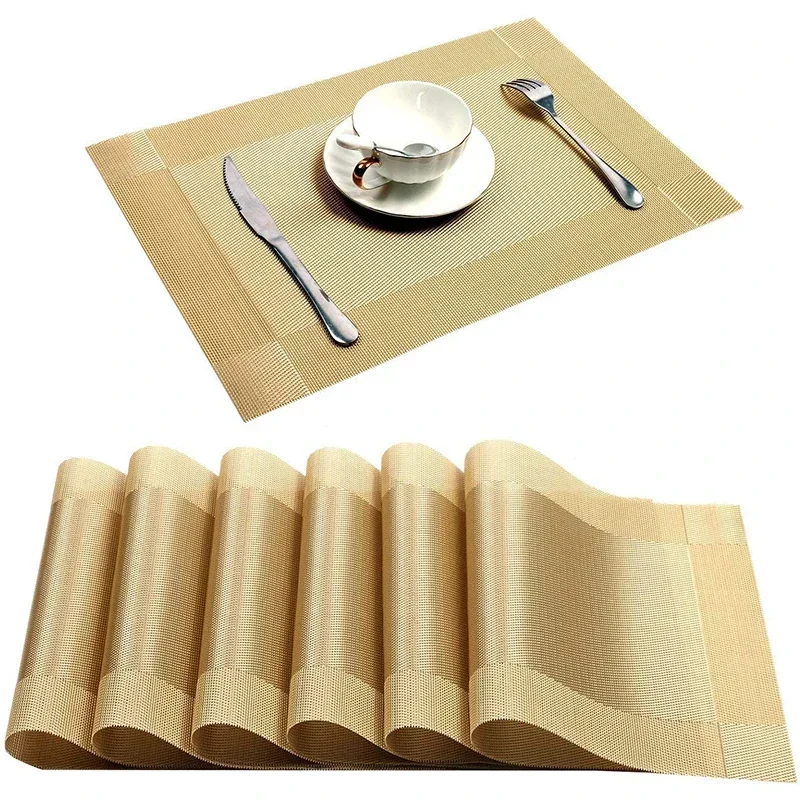
6/4pcs Gold Placemat Washable PVC Dining Table Set Weave Mats Diagonal Frame Teslin Cloth Disc Bowl Coaster Non-slip Pad
For a reliable and stylish option, consider the 6/4pcs Gold Placemat Washable PVC Dining Table Set—its diagonal frame design provides excellent grip and easy cleaning.
Frequently asked questions
Can non-slip placemats damage my table?
Quality non-slip placemats with PVC or silicone backing won’t damage your table. Avoid mats with adhesive or rough backings that might leave marks.
How often should I replace non-slip placemats?
Depending on use, replace them every 6-12 months. Signs of wear include loss of grip, stains, or curling edges.
Are non-slip placemats heat-resistant?
Many are heat-resistant up to a certain temperature. PVC mats typically handle hot plates up to 180°F. Check product specs for details.
Can I use non-slip placemats outdoors?
Yes, but choose mats rated for outdoor use. Some materials can fade or warp in direct sunlight. PVC is generally UV-resistant.
