
Blog
Best Outdoor Cookware: Your Guide to Camping Meals
Camping Kitchen
Find the Best Outdoor Cookware for Your Adventures
Finding the best outdoor cookware can transform your camping meals from bland to brilliant. Whether you’re a weekend warrior or a thru-hiker, the right cookset makes all the difference.
Why the Right Cookware Matters
Outdoor cooking is different from your home kitchen. You face wind, uneven surfaces, and limited space. The best outdoor cookware is designed to handle these challenges while being easy to pack and clean.
A good cookset should heat evenly, withstand high heat, and be light enough to carry. Materials like aluminum and titanium are popular for their weight and heat conduction.
Key Features to Look For
When shopping, consider these factors:
- Weight: Every ounce counts when backpacking.
- Durability: Can it survive drops and rough handling?
- Heat Distribution: Even cooking prevents burnt food.
- Compactness: Does it nest together?
- Non-Stick Coating: Easier to clean and cook with less oil.
Material Choices
Aluminum is lightweight and heats quickly. Hard-anodized aluminum is more durable. Stainless steel is tough but heavy. Titanium is ultralight but expensive. For most campers, aluminum offers the best balance.
Types of Outdoor Cookware
Cooksets vary from simple pot-and-pan combos to comprehensive kits.
- Pot Sets: Include a pot, lid, and often a frying pan.
- Mess Kits: Individual sets for one person.
- Dutch Ovens: For campfire stews and baking.
What to Avoid
Stay away from cookware with plastic handles that can melt. Also, avoid sets that are too bulky or have unnecessary pieces.
How to Choose the Right Size
Think about how many people you cook for. A 1-2 person set might include a 1-liter pot and a small pan. For groups of 4, look for a 2-3 liter pot and larger pan.
Also consider the type of cooking: boiling water for dehydrated meals requires less space than simmering a stew.
Caring for Your Cookware
To extend the life of your gear, clean it after each use. Avoid using metal utensils on non-stick surfaces. Store it dry to prevent rust or corrosion.
Some cookware can be used over a campfire, but check the manufacturer’s recommendations. High heat can damage non-stick coatings.
Packing Tips for Your Camping Kitchen
Organize your cookware so it’s accessible. Use stuff sacks or mesh bags to keep items together and allow them to dry.
Pack a small sponge and biodegradable soap. A lightweight dish towel is also handy.
Making the Final Decision
Your choice depends on your camping style. Car campers can afford heavier, more durable sets. Backpackers need minimal weight and volume.
Read reviews and consider the warranty. A good cookset can last for years.
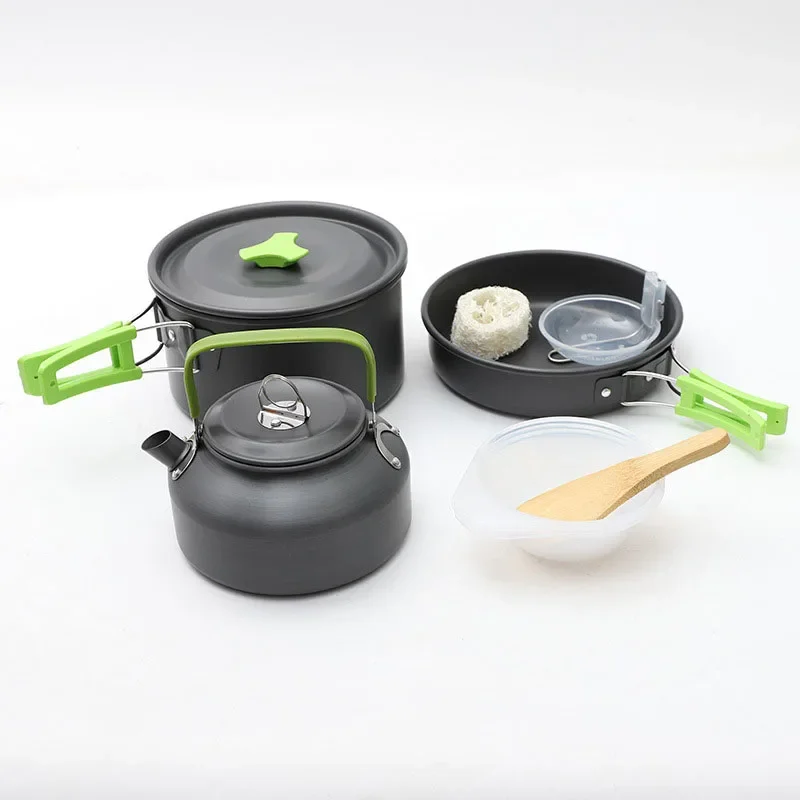
Aluminum Outdoor Camping Cookware Set, With Mesh Bag Folding Cookset Camping Kitchen Cooking Teapot and Pans Equipment
For a reliable and lightweight option, the Aluminum Outdoor Camping Cookware Set with mesh bag offers a practical combination of teapot and pans for easy packing.
Frequently asked questions
What is the best material for outdoor cookware?
Aluminum is a great all-around choice for its lightweight and even heat distribution. Hard-anodized aluminum is more durable. Titanium is ultralight but expensive, while stainless steel is heavy but very durable.
How many pieces do I need in a cookset?
For one person, a simple pot with a lid and a small pan is enough. For a family of four, look for a set with a 2-3 liter pot, a frying pan, and perhaps a kettle. Consider multi-purpose items to save space.
Can I use outdoor cookware over a campfire?
It depends on the material. Cast iron and some stainless steel can handle direct flames. Non-stick coatings and aluminum with plastic handles may be damaged by high heat. Always check the manufacturer’s guidelines.
How do I clean outdoor cookware in the backcountry?
Use a small amount of biodegradable soap and a sponge. Scrape off food residue with a spatula. Rinse well and dry thoroughly. Avoid using abrasive pads that can damage non-stick surfaces.
