
Blog
Best Wooden Chopping Board: A Warm Guide to Choosing Yours
Buying Guide
Finding the Best Wooden Chopping Board for Your Kitchen
The best wooden chopping board is an investment in your kitchen’s heart—a surface that cradles your knife and your ingredients with warmth. Here’s how to choose one that lasts.
Why Wooden Boards Are the Best Wooden Chopping Board Choice
Wood has been the material of choice for cutting surfaces for centuries, and for good reason. Unlike glass or plastic, wood is gentle on knife edges, reducing the frequency of sharpening. It also possesses natural antimicrobial properties—studies have shown that certain woods can actually kill bacteria within minutes. When you invest in the best wooden chopping board, you’re choosing a surface that works with your knife, not against it.
Types of Wood: Hard vs. Soft
The best wooden chopping board starts with the right wood. Hardwoods like maple, walnut, and acacia are dense and durable, resisting deep cuts and warping. Softwoods like pine or cedar are too soft and will scar easily, harboring bacteria. Learn more about cutting board materials on Wikipedia. For heavy daily use, choose a hardwood with a tight grain.
- Maple: Hard, light color, classic choice
- Walnut: Rich dark hue, slightly softer but beautiful
- Acacia: Extremely hard, water-resistant, exotic look
- Teak: High oil content, weather-resistant
Grain Orientation: End Grain vs. Edge Grain
End grain boards are made by gluing blocks of wood with the grain facing up—like a butcher block. They are the best wooden chopping board for knife longevity because the fibers part when cut, then spring back. Edge grain boards are easier to make and more affordable but show knife marks more. For a balance of durability and beauty, consider a combination or end grain board.
Size and Thickness Matter
A board that is too small will frustrate you; too large and it may not fit your counter. Aim for at least 12×18 inches for general use, and at least 1.5 inches thick to prevent warping. Thicker boards also provide a stable, heavy surface that won’t slide around. The best wooden chopping board should feel substantial in your hands.
How to Care for Your Wooden Board
Proper care extends the life of your board. Hand wash with mild soap and warm water, never submerge or put in dishwasher. Dry immediately and apply mineral oil or beeswax monthly. Avoid leaving wet or in direct sunlight. With care, a quality board can last decades.
Seasoning and Oiling
Regular oiling prevents drying and cracking. Food-grade mineral oil is the standard—apply generously, let soak, and wipe off. Beeswax can be used for a protective finish.
Design and Versatility: More Than Just Chopping
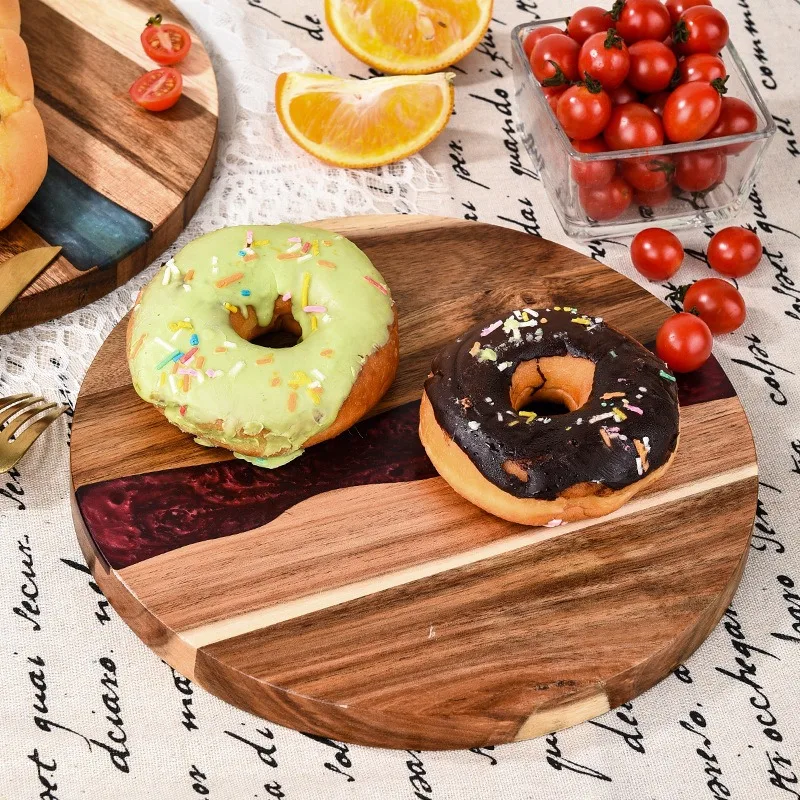
Modern wooden boards serve as serving platters for cheese, charcuterie, bread, or pizza. A round board with a resin accent adds artistry. Look for features like juice grooves, handles, or non-slip feet. The best wooden chopping board can double as a centerpiece.
Sustainability and Ethics
Choose wood from responsibly managed forests. Acacia is fast-growing and sustainable. Avoid exotic endangered woods unless certified. A well-made board from renewable sources is an eco-friendly choice.
Acacia Wood with Resin Cutting Board,Round Kitchen Chopping Board,Steak Bread Pizza Charcuterie Block,Fruit Cheese Serving Board
For a unique blend of durability and artistry, consider the Acacia Wood with Resin Cutting Board, which combines a hard acacia surface with a stunning resin accent for both chopping and serving.
Frequently asked questions
What is the best wood for a cutting board?
Hardwoods like maple, walnut, and acacia are best for their durability and knife-friendly properties. Avoid softwoods like pine.
How often should I oil my wooden chopping board?
Oil your board once a month or whenever it looks dry. Use food-grade mineral oil or a beeswax blend.
Can I put a wooden chopping board in the dishwasher?
No, never put wooden boards in the dishwasher. The heat and moisture will warp and crack the wood. Hand wash and dry immediately.
Is acacia wood good for cutting boards?
Yes, acacia is very hard, water-resistant, and has a beautiful grain. It makes an excellent long-lasting cutting board.
