
Blog
Brass Ball Chandelier Buying Guide: Style & Light
Buying Guide
Brass Ball Chandelier: A Radiant Buying Guide
A brass ball chandelier can transform a room, but finding the right one involves more than just picking a pretty fixture. This guide walks you through every consideration, from size and finish to bulb type and placement, so you can choose with confidence.
Why Choose a Brass Ball Chandelier?
A brass ball chandelier is more than a light source; it’s a sculptural centerpiece that adds warmth and character. Its spherical globes and metallic finish catch the light in intriguing ways, creating a play of reflection and glow. Whether your decor is modern, industrial, or classic, this fixture bridges styles effortlessly.
The beauty of a brass ball chandelier lies in its versatility. It can hang over a dining table, in an entryway, or in a living room, becoming a conversation starter. The combination of brass and glass offers a timeless appeal that never goes out of fashion.
Size and Proportion: Getting the Scale Right
Before you fall in love with a particular design, consider the dimensions of your room. A chandelier that’s too large overwhelms, while one that’s too small gets lost. As a rule of thumb, add the room’s length and width in feet, then convert that sum to inches for the ideal diameter. For example, a 12×14-foot room suggests a chandelier about 26 inches wide.
Also think about ceiling height. For ceilings under 8 feet, a flush or semi-flush mount might be better, but if you have 9-foot ceilings or higher, a hanging brass ball chandelier can shine. Leave at least 7 feet of clearance from the floor to the bottom of the fixture.
Finish and Materials: Brass, Glass, and Beyond
The term ‘brass ball chandelier’ often refers to the finish, but the actual material can vary. Solid brass is durable and develops a beautiful patina over time, while brass-plated options are more budget-friendly. Consider the look you want: polished brass is shiny and reflective, while antique brass has a darker, more vintage vibe. Satin brass offers a middle ground with a subtle sheen.
The globes are typically made of glass, and the type matters. Clear glass maximizes light output, while frosted or amber glass diffuses it for a softer glow. Hand-blown glass adds artisanal charm, with slight variations that make each piece unique. Some designs incorporate metal shades or fabric, but for a true brass ball chandelier, glass globes are classic.
Lighting Needs: Bulbs, Brightness, and Dimming
Think about the ambiance you want to create. A brass ball chandelier can be the primary light source or just accent lighting. The number of bulbs and their wattage determine brightness. For a dining area, you might want 40-60 watts per bulb to create a warm, inviting atmosphere. For task lighting, you’d need more lumens.
LED bulbs are energy-efficient and come in various color temperatures. Warm white (2700K-3000K) enhances the brass and creates coziness, while cool white (4000K+) gives a more modern, crisp feel. Dimmer switches are a great addition, allowing you to adjust the mood from bright to intimate.
Placement and Installation: Where to Hang Your Chandelier
Your brass ball chandelier should be positioned thoughtfully. Over a dining table, center it and leave 30-36 inches between the tabletop and the bottom of the fixture. In an entryway, ensure it doesn’t obstruct door swings and that there’s enough headroom. In a living room, place it where it can be seen from multiple angles, like a focal point in a seating area.
Installation may require a licensed electrician, especially if you’re adding new wiring or a ceiling box. Check the weight of the chandelier – heavy pieces need proper support. Also, consider the ceiling slope; some fixtures come with sloped ceiling adapters.
Style and Decor: Matching Your Aesthetic
A brass ball chandelier is remarkably adaptable. In a minimalist space, it adds a touch of warmth without clutter. In an industrial loft, it complements exposed brick and metal. In a traditional room, it echoes classic elegance. The key is to balance the fixture with your existing decor.
Think about the other metals in the room – do you want to match or contrast? Brass pairs beautifully with black, nickel, or chrome. Also, consider the shape of the globes: round balls are classic, but some designs feature elongated or teardrop shapes for a more unique look.
Maintenance and Care: Keeping the Shine
Brass can tarnish over time, but with proper care, your chandelier will stay beautiful. Dust it regularly with a soft cloth or a duster attachment. For deeper cleaning, use a brass cleaner or a mixture of vinegar and salt, but test on a small area first. Glass globes can be wiped with a glass cleaner.
Check the electrical connections periodically and replace bulbs as needed. If you have solid brass, you might embrace the patina as part of its charm, or you can polish it to keep it shiny. Either way, a little maintenance goes a long way.
Budget and Value: Investing in Quality
Brass ball chandeliers come in a wide price range. While it might be tempting to go for the cheapest option, consider the long-term value. A well-made chandelier with quality materials will last for years and can become a family heirloom. Look for solid construction, good reviews, and a warranty.
Remember that the chandelier is a focal point – it’s worth investing in a piece you truly love. Think about the cost per year of use; a durable fixture that brings joy daily is a wise purchase. For more on lighting design principles, you can check out this resource on lighting design.
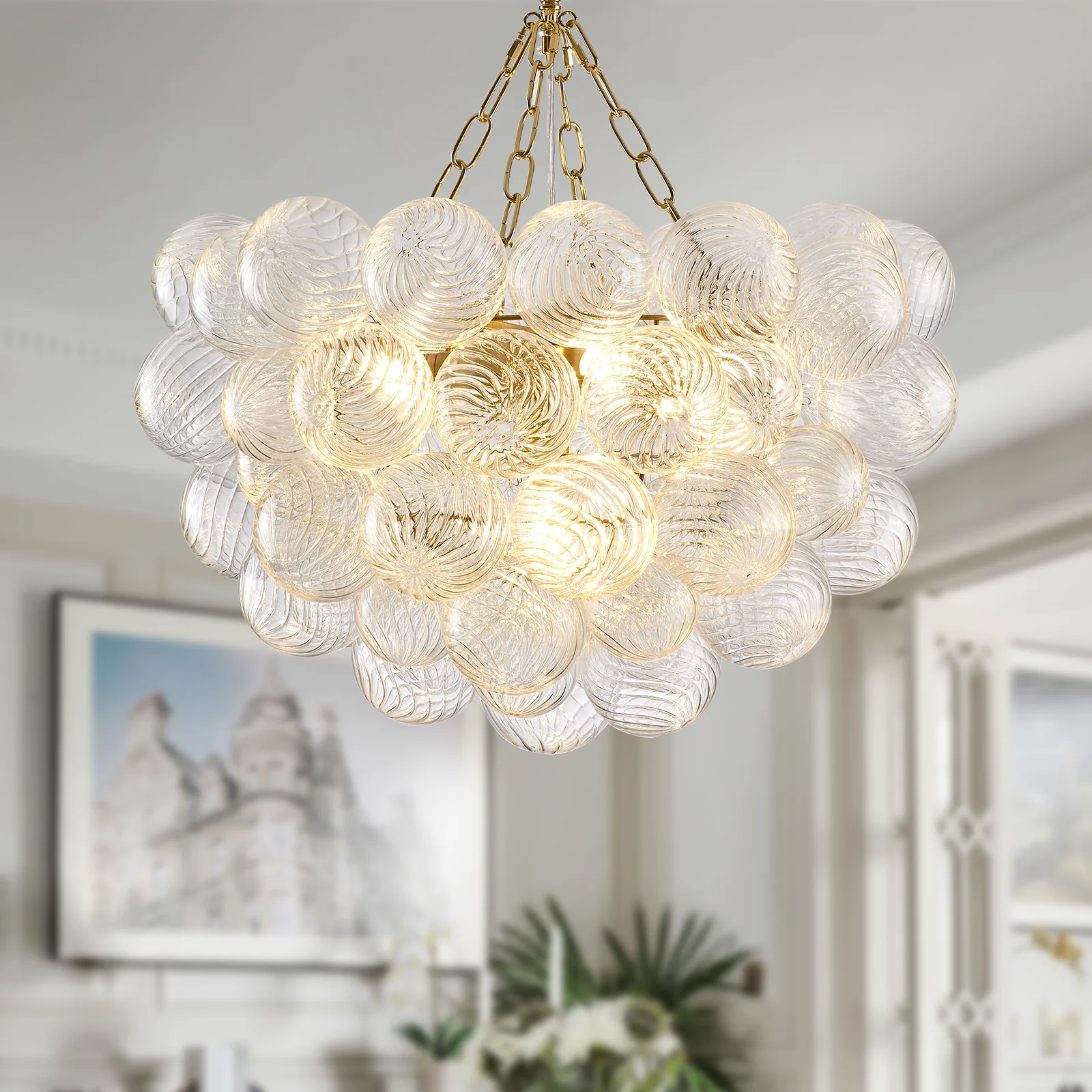
Bubble Chandelier Ball Brass Chandeliers Ball Hand Blown Glass Chandeliers for Living Room Entryway Round Globe Chandeliers
If you’re drawn to the classic beauty of a brass ball chandelier, our Bubble Chandelier Ball Brass Chandeliers Ball Hand Blown Glass Chandeliers offers artisanal craftsmanship and timeless style for your living room or entryway.
Frequently asked questions
How do I determine the right size of a brass ball chandelier for my room?
A general rule is to add the room’s length and width in feet, then convert that sum to inches for the ideal chandelier diameter. For example, a 12×14-foot room suggests a chandelier about 26 inches wide. Also consider ceiling height and ensure at least 7 feet of clearance from the floor.
What is the best finish for a brass ball chandelier?
The best finish depends on your style and maintenance preference. Polished brass is shiny and reflective, antique brass has a darker vintage look, and satin brass offers a subtle sheen. Solid brass develops a patina over time, while brass-plated is more budget-friendly.
Can a brass ball chandelier be used with LED bulbs?
Yes, LED bulbs are a great choice. They are energy-efficient and come in various color temperatures. Warm white (2700K-3000K) enhances the brass and creates a cozy atmosphere, while cool white (4000K+) gives a modern feel. Ensure the fixture is compatible with LED dimming if you plan to use a dimmer switch.
How do I clean and maintain a brass ball chandelier?
Regular dusting with a soft cloth is essential. For deeper cleaning, use a brass cleaner or a vinegar-salt solution, but test on a small area first. Glass globes can be cleaned with a glass cleaner. Check electrical connections periodically and replace bulbs as needed.
