
Blog
The Ultimate Camping Cookware Set Guide for 2025
Outdoor Cooking
The Complete Camping Cookware Set Guide
Choosing the right camping cookware set can make or break your outdoor cooking experience. Whether you’re backpacking solo or car camping with family, the right gear ensures hot meals and happy trails.
Why Your Camping Cookware Set Matters
There’s nothing quite like a hot meal after a long day on the trail. A quality camping cookware set can be the difference between a frustrating evening and a memorable one. Lightweight, durable, and non-stick options have revolutionized outdoor cooking, making it easier than ever to prepare delicious meals in the backcountry.
When you’re miles from the nearest kitchen, your cookware becomes your most trusted companion. It needs to be compact enough to fit in your pack, yet sturdy enough to withstand campfire heat. Modern sets often include pots, pans, and utensils that nest together, saving precious space.
For those new to camping, the variety of materials—aluminum, stainless steel, titanium, and non-stick coatings—can be overwhelming. Each has pros and cons in terms of weight, durability, and heat distribution. We’ll break down everything you need to know to choose the perfect set for your adventures.
Remember, the best camping cookware set is one that fits your specific needs: how you camp, what you cook, and how many people you feed.
Key Features to Look For in a Camping Cookware Set
Before you buy, consider these essential features that separate great cookware from the rest:
- Material: Aluminum heats quickly and is lightweight; stainless steel is durable but heavier; titanium is ultralight but expensive. Non-stick coatings make cleanup easy but require gentle care.
- Weight: Every ounce counts when backpacking. Aim for a set under 1.5 pounds for solo trips.
- Packability: Look for sets where pots, pans, and utensils nest inside each other. A stuff sack or integrated handles help with storage.
- Heat Distribution: Even heating prevents hot spots and burnt food. Multi-layer bottoms are best.
- Durability: Handles should stay cool and attach securely. Lids should fit snugly to retain heat and boil water faster.
A good camping cookware set balances these features against your budget and cooking style. For car camping, weight is less critical, so you can prioritize durability and size.
Types of Camping Cookware Sets
Backpacking Sets
Designed for ultralight travel, these sets are compact and often made of titanium or thin aluminum. They usually include a small pot, a lid that doubles as a pan, and a folding utensil. Perfect for solo hikers or couples who boil water for dehydrated meals.
Car Camping Sets
Larger and heavier, these sets include multiple pots, a frying pan, and sometimes plates or bowls. Stainless steel or hard-anodized aluminum is common. Great for families who cook full meals at a campsite.
Modular Sets
These allow you to mix and match components. You can buy a pot, add a pan later, or choose a set with a kettle. Ideal for those who want flexibility.
No matter which type you choose, a versatile camping cookware set should include at least one pot (1-2 liters), a pan, and a lid that can strain. Many sets now include a collapsible cup or bowl.
Material Comparison: Pros and Cons
Understanding materials helps you pick the right camping cookware set:
- Aluminum: Lightweight and affordable. Heats quickly but can warp. Non-stick coating helps with cleanup.
- Stainless Steel: Durable and scratch-resistant. Heavier and can have hot spots. Great for car camping.
- Titanium: Ultralight and incredibly strong. Expensive and poor heat distribution—food may burn if not stirred.
- Non-Stick (PTFE or Ceramic): Easy to clean and uses less oil. PTFE can scratch; ceramic is more eco-friendly but less durable.
For most campers, a non-stick aluminum set offers the best balance of weight, cost, and performance. If you’re a weight-conscious backpacker, titanium is worth the investment.
How to Maintain Your Camping Cookware Set
Proper care extends the life of your gear. After each trip, wash with mild soap and a soft sponge—avoid steel wool on non-stick coatings. Dry thoroughly before storing to prevent rust or odors. For titanium or stainless steel, occasional seasoning with oil can improve non-stick properties.
Store your set with a soft cloth between pieces to prevent scratches. Check handles and rivets for looseness before each trip. A well-maintained camping cookware set can last for years.
For more on outdoor cooking techniques, check out Camping Food on Wikipedia.
Choosing the Right Size and Capacity
Think about how many people you usually camp with and what you cook. Solo backpackers can get by with a 0.8L pot, while a family of four might need a 3L pot and a 10-inch skillet. Consider that you’ll often boil water for drinks and dehydrated meals, so capacity matters.
Many sets include measuring marks inside the pot. Some lids have strainer holes—a handy feature for pasta or rinsing berries. Nesting cups and bowls are a bonus for car camping.
Don’t forget utensils: a long-handled spoon or spatula helps avoid burnt fingers. Many sets include a folding spoon or fork, but you can always bring your own.
Eco-Friendly and Health Considerations
Look for sets with PFAS-free non-stick coatings (like ceramic) to avoid harmful chemicals. Aluminum cookware is generally safe if not scratched, but hard-anodized aluminum is more durable and less reactive. Stainless steel is inert and BPA-free.
Reduce waste by choosing a set that replaces disposable plates and cups. Some sets include reusable silicone bowls that pack flat. Every little bit helps when you’re enjoying nature.
Ultimately, the camping cookware set you choose should align with your values and needs. Take your time, read reviews, and consider renting gear to test before buying.
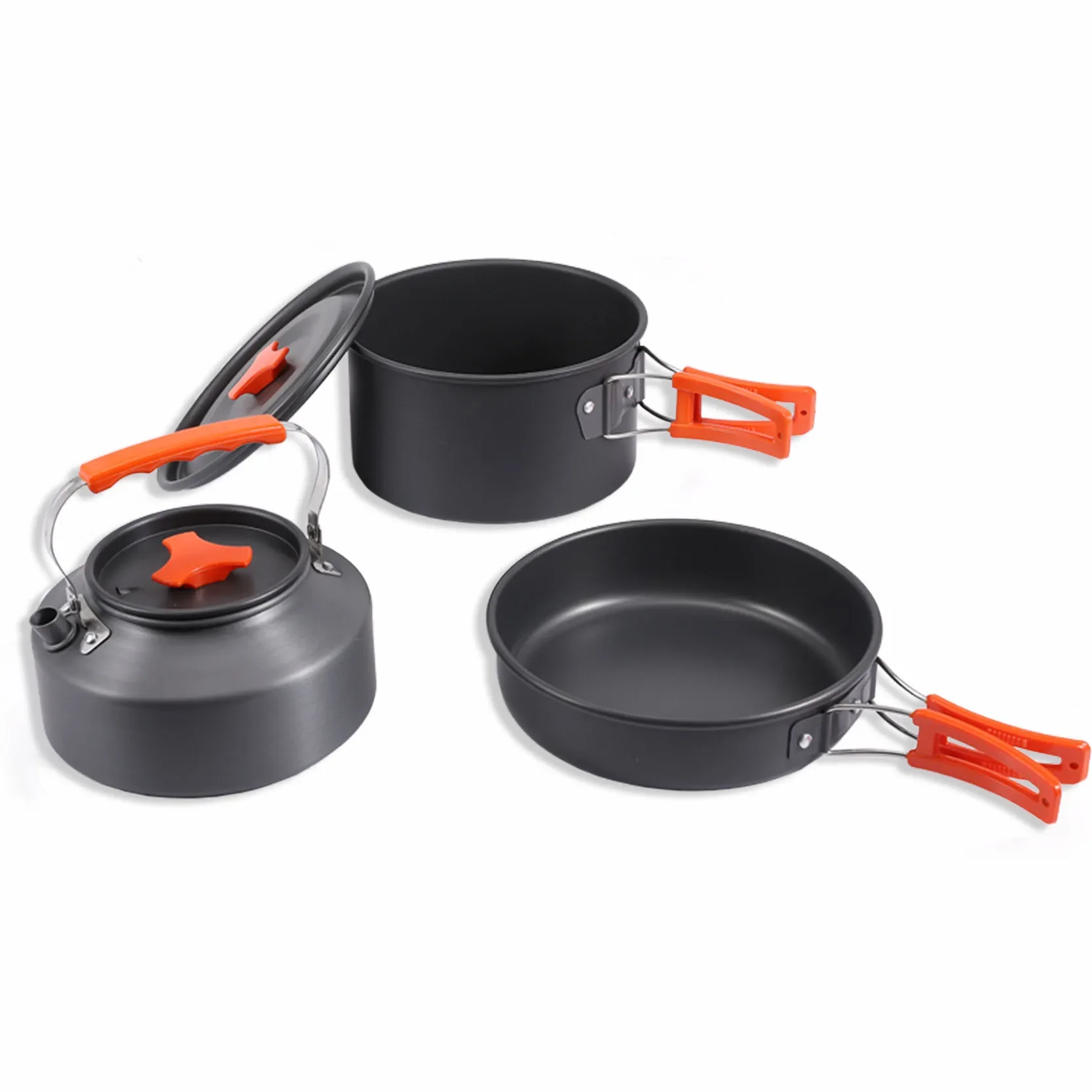
Camping Cookware Mess Kit, Non-Stick Lightweight Pots Set Portable Outdoor, For Backpacking Hiking Outdoor Cooking and Picnic
For a reliable balance of weight, durability, and non-stick convenience, consider the Camping Cookware Mess Kit, Non-Stick Lightweight Pots Set Portable Outdoor, For Backpacking Hiking Outdoor Cooking and Picnic.
Frequently asked questions
What is the best material for a camping cookware set?
For backpacking, titanium is ultralight but requires careful cooking. For car camping, stainless steel or hard-anodized aluminum offer durability. Non-stick aluminum sets provide a good balance for most campers.
How many pieces should a camping cookware set have?
A basic set for one or two people typically includes a pot, a lid/pan, and a utensil. Family sets may include multiple pots, a skillet, plates, and bowls. Focus on what you’ll actually use.
Can I use a camping cookware set on a campfire?
Most sets are designed for camp stoves. Using them directly on a campfire can damage non-stick coatings and handles. Look for sets with metal handles if you plan to use them over coals.
How do I clean a non-stick camping cookware set?
Use mild dish soap and a soft sponge. Avoid abrasive scrubbers. For stubborn food, soak with warm water. Dry thoroughly to prevent rust on aluminum edges.
