
Blog
The Ultimate Camping Cookware Set Guide for 2025
Outdoor Cooking
Find Your Perfect Camping Cookware Set
Choosing the right camping cookware set can make or break your outdoor kitchen. Whether you’re simmering soup or frying eggs, your cookware needs to be lightweight, durable, and easy to clean.
What Makes a Great Camping Cookware Set?
A great camping cookware set balances weight, durability, and functionality. For backpackers, every ounce matters, so look for aluminum or titanium sets. Car campers can prioritize non-stick coatings and larger pots. The best sets include pots, a pan, and a kettle that nest together to save space. Materials like hard-anodized aluminum offer even heating without the weight of stainless steel. And don’t forget the handles—they should stay cool and fold for packing. A camping trip is only as good as your gear, so invest wisely.
Materials: Aluminum vs. Stainless Steel vs. Titanium
Each material has trade-offs. Aluminum is lightweight and heats quickly, but can dent. Hard-anodized aluminum is more durable and non-reactive. Stainless steel is strong and easy to clean, but heavy. Titanium is ultralight and strong, but expensive and prone to hot spots. For a balanced camping cookware set, many campers choose anodized aluminum. It’s light enough for backpacking and tough enough for car camping. If you cook acidic foods, avoid uncoated aluminum. Non-stick coatings help with easy cleanup, but require gentle care.
Size and Capacity: How Much Do You Need?
Think about how many people you cook for. A 1-2 person set includes a 1.5L pot and a small pan. For 3-4 people, look for 2-3L pots and a larger skillet. Some sets come with plates, bowls, or mugs that double as cookware. The best camping cookware set for a family might include a 3L pot, a frying pan, and a kettle. Remember, you’ll also need room for fuel and a stove. Nesting sets are great for saving space. Always check the packed dimensions before buying.
Non-Stick Coatings: Pros and Cons
Non-stick camping cookware sets make cooking and cleaning a breeze, especially for beginners. You can fry eggs with less oil, and food won’t stick. However, non-stick coatings can scratch and degrade over time. Use silicone or wooden utensils, and avoid high heat. Some modern coatings are PFOA-free and more durable. If you’re rough on gear, consider a set with a reinforced ceramic non-stick layer. They’re safer and last longer. Still, for long-term durability, some campers prefer uncoated cookware that they can season like cast iron.
Weight and Packability for Backpacking
Backpackers need the lightest possible camping cookware set. Titanium sets can weigh under 10 ounces for a pot and pan. Aluminum sets are a bit heavier but more affordable. Look for sets where the pot handles fold, and the lid doubles as a strainer or pan. Some sets include a stuff sack to keep everything together. Every gram counts when you’re hiking miles. If you’re car camping, weight is less of an issue, so you can opt for a more feature-rich set with larger pots and a non-stick interior.
Accessories and Extras: What’s Included?
Many camping cookware sets include more than just pots. You’ll often get a frying pan, a kettle, and sometimes a cutting board or collapsible cups. Some sets come with a mesh bag for drying, or a small sponge for cleaning. Consider whether you need bowls or plates. Some sets have pot grips that protect your hands. The best sets are modular: you can use the pot lid as a pan, or the cup as a measuring tool. Check reviews to see if the extras are actually useful or just gimmicks.
Cleaning and Maintenance Tips
Keep your camping cookware set in top shape. After cooking, wipe out food with a paper towel. Use biodegradable soap and a soft sponge. Avoid abrasive scrubbers on non-stick surfaces. Dry thoroughly to prevent rust (especially on steel). For stubborn residue, boil water in the pot and scrape gently. Some campers use sand or snow to scrub when water is scarce. Store your set loosely to allow airflow. A well-maintained set can last for years. Remember, a clean camp kitchen is a happy camp kitchen.
Budget Considerations: Finding Value
You don’t have to spend a fortune. Good camping cookware sets start around $30 for a basic aluminum set. Mid-range options ($50-$100) often include non-stick coatings and better handles. Premium titanium sets can cost $100-$200. Think about how often you camp. If you go twice a year, a budget set might suffice. For frequent trips, invest in durable materials. A quality camping cookware set is a long-term companion. Don’t forget to factor in the cost of a stove and fuel. Sometimes a complete kit with stove offers better value.
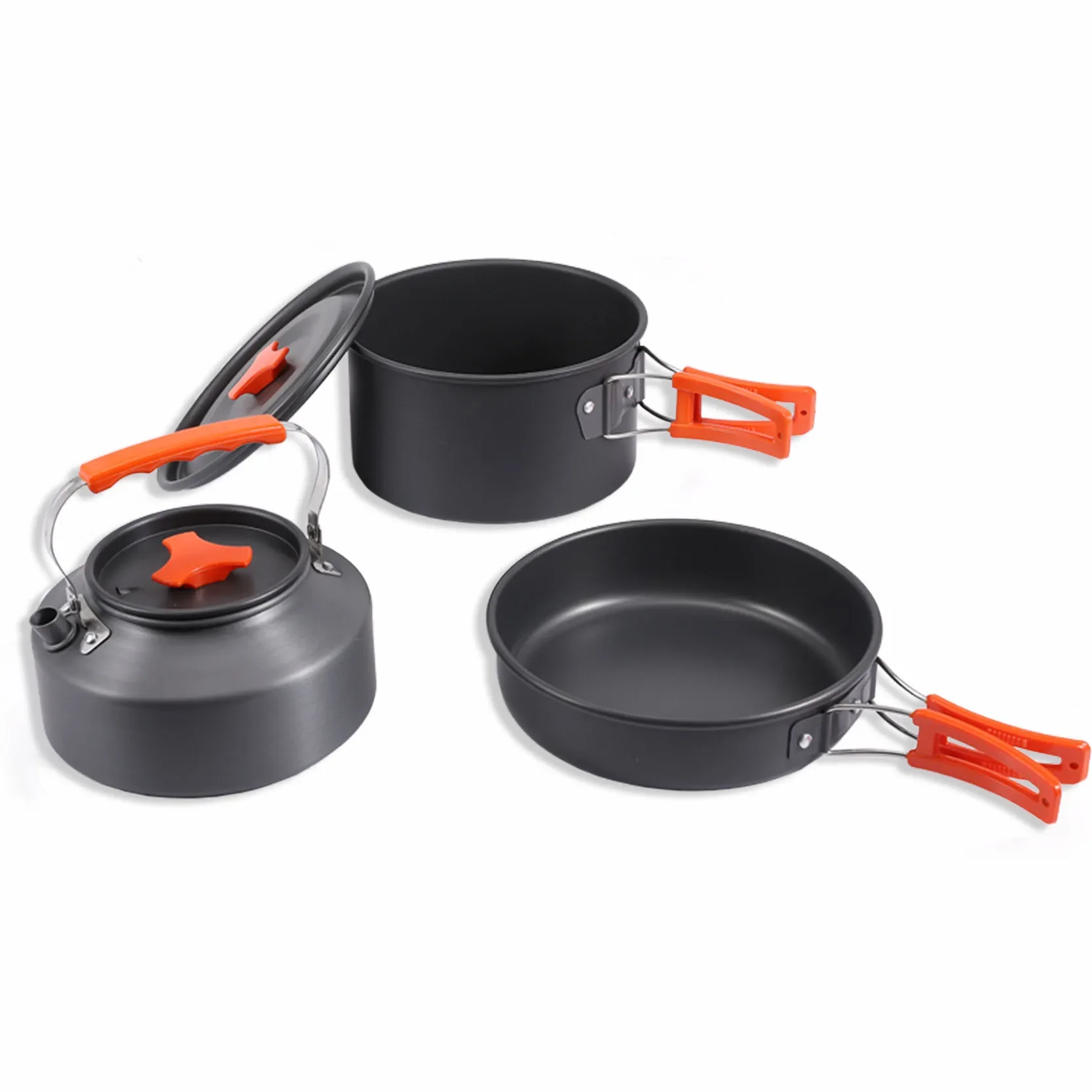
Camping Cookware Mess Kit, Non-Stick Lightweight Pots Set Portable Outdoor, For Backpacking Hiking Outdoor Cooking and Picnic
For a reliable combination of non-stick convenience and lightweight portability, the Camping Cookware Mess Kit is a solid choice for both backpacking and car camping.
Frequently asked questions
What is the best material for a camping cookware set?
It depends on your needs. Titanium is lightest and strongest, but expensive. Aluminum is affordable and lightweight, but less durable. Stainless steel is heavy but nearly indestructible. For most campers, anodized aluminum offers a good balance of weight, durability, and cost.
How many pots do I need in a camping cookware set?
For solo backpackers, one pot (1-2 liters) and a small pan are enough. For two people, add a second pot or a larger pan. Families may want a 3-liter pot, a frying pan, and a kettle. Many sets nest together, so you can bring multiple pieces without taking up extra space.
Is non-stick cookware safe for camping?
Yes, modern non-stick coatings are safe when used correctly. Avoid overheating (above 500°F) and use silicone or wooden utensils. Look for PFOA-free and PFOS-free coatings. Non-stick makes cleaning easier, which is especially useful when water is scarce.
Can I use my camping cookware set on an induction stove?
Most camping cookware sets are designed for camp stoves, open fires, or gas burners. Induction requires ferromagnetic material (like stainless steel with a magnetic base). Check the product description. If you plan to use induction at home, look for a set that specifically mentions induction compatibility.
