
Blog
The Ultimate Carbon Steel Skillet Buying Guide
Buying Guide
Your Essential Carbon Steel Skillet Buying Guide
Choosing the right carbon steel skillet can transform your cooking experience, offering the heat retention of cast iron with a lighter weight. We’ll walk you through everything you need to know to find the perfect pan for your kitchen.
What Makes a Carbon Steel Skillet Special?
A carbon steel skillet is a favorite among professional chefs and home cooks alike. It heats quickly and evenly, develops a natural non-stick patina over time, and can handle high temperatures that would damage other pans. Unlike cast iron, it’s lighter and more responsive to temperature changes, making it ideal for searing, sautéing, and frying. The key is its seasoning—a layer of polymerized oil that creates a slick, non-stick surface. With proper care, a carbon steel skillet can last a lifetime.
How to Choose the Right Size and Weight
Carbon steel skillets come in various sizes, typically from 8 to 14 inches. For most home cooks, an 11- or 12-inch pan is the sweet spot—large enough to cook a full meal but not too heavy to handle. Weight matters: a thicker pan (around 2-3 mm) retains heat better and is more durable, while a thinner pan heats faster and is lighter to toss. Consider your stovetop and oven: most carbon steel skillets are oven-safe up to 500°F or more. If you plan to cook for a crowd or sear large cuts of meat, go bigger. For everyday eggs and vegetables, a smaller pan is fine.
Seasoning Your Carbon Steel Skillet
Seasoning is the process of baking oil onto the pan to create a protective, non-stick layer. Most new carbon steel skillets come pre-seasoned, but you’ll need to maintain and sometimes re-season it. To season, wash the pan with hot water and mild soap, dry thoroughly, then rub a thin layer of high-smoke-point oil (like flaxseed or grapeseed) all over. Place it upside down in a 400°F oven for an hour, with a baking sheet below to catch drips. Let it cool in the oven. Repeat a few times for a stronger coating. The more you cook with it, the better the seasoning becomes.
Cooking with Carbon Steel: Tips and Techniques
Carbon steel excels at high-heat cooking. Preheat the pan gradually to avoid warping—start on medium heat for a few minutes before cranking it up. Use enough oil to coat the surface, especially when cooking sticky foods like eggs or fish. Let food develop a crust before flipping; if it sticks, it’s not ready. Deglazing with liquid after cooking helps clean the pan and builds flavor. Avoid acidic foods like tomatoes for long periods, as they can strip the seasoning. With practice, you’ll find carbon steel becomes your go-to for everything from pancakes to steak.
Cleaning and Maintenance
Clean your carbon steel skillet while it’s still warm. Use hot water and a stiff brush—soap is okay occasionally but not necessary. For stuck-on bits, boil a little water in the pan to loosen them. Dry immediately over low heat to prevent rust, then rub a tiny amount of oil on the surface. Store in a dry place. Over time, the pan will darken and become more non-stick. If rust appears, scrub it off with steel wool and re-season.
Carbon Steel vs. Cast Iron vs. Stainless Steel
Each material has strengths. Cast iron holds heat longer but is heavy and requires careful seasoning. Stainless steel is non-reactive and easy to clean but doesn’t develop non-stick properties. Carbon steel strikes a balance: it’s lighter than cast iron, heats faster, and seasons similarly. It’s also more affordable than high-end stainless steel. For most cooks, a carbon steel skillet is the most versatile choice—it can go from stovetop to oven to campfire. If you’re new to carbon steel, start with a pre-seasoned pan to simplify the process.
Where to Buy and What to Look For
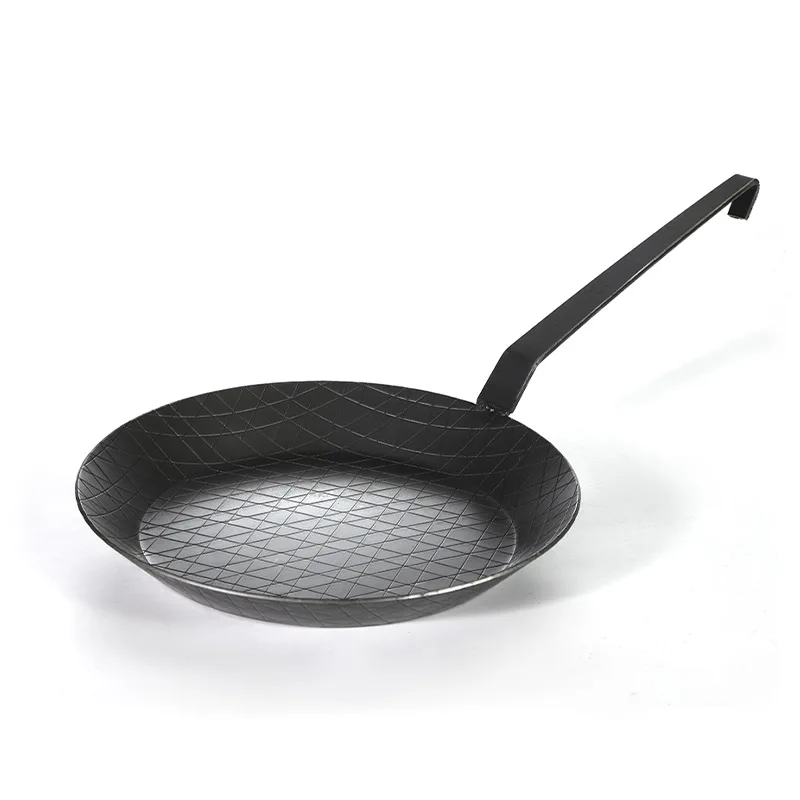
When shopping for a carbon steel skillet, look for a smooth cooking surface, sturdy construction, and comfortable handle. Many brands offer pre-seasoned options, which save time. Avoid pans with rivets that can trap food. Check that the handle is oven-safe and ergonomic. For a reliable choice, consider our Pre-Seasoned Carbon Steel Skillet 11″ Frying Pan, which is ready to use out of the box. It’s oven-safe, works on all stovetops including induction, and is lightweight enough for camping. For more technical details, Wikipedia’s article on carbon steel provides an excellent overview of the material properties.
Common Mistakes to Avoid
- Using too high heat too quickly—always preheat gradually to prevent warping.
- Soaking the pan in water—this causes rust; clean and dry immediately.
- Cooking acidic foods before the seasoning is established—wait until the pan is well-seasoned.
- Using metal utensils on a new seasoning—stick to wood or silicone until the coating is robust.
- Storing with the lid on—trapped moisture can cause rust; store with a paper towel inside to absorb humidity.
Pre-Seasoned Carbon Steel Skillet 11″ Frying Pan Use in the Oven, on the Stove, Camping Cookware Cast Iron Lightweight Chef Pot
Our Pre-Seasoned Carbon Steel Skillet 11″ Frying Pan is a versatile choice, ready to use out of the box and suitable for oven, stove, and camping.
Frequently asked questions
What is the difference between carbon steel and cast iron skillets?
Carbon steel is lighter, heats faster, and is more responsive to temperature changes than cast iron. Cast iron retains heat longer but is heavier and more brittle. Both require seasoning for non-stick properties.
How do I season a carbon steel skillet?
Wash the pan, dry it, apply a thin layer of high-smoke-point oil, then bake it upside down in a 400°F oven for an hour. Repeat 2-3 times for best results.
Can I use metal utensils on a carbon steel skillet?
It’s best to avoid metal utensils until the seasoning is well-established. Use wood, silicone, or nylon utensils to protect the non-stick layer.
Is a carbon steel skillet dishwasher safe?
No, never put a carbon steel skillet in the dishwasher. The harsh detergents and moisture will strip the seasoning and cause rust. Hand wash only.
