
Blog
The Complete Guide to Choosing Ceramic Bakeware Bowls
Kitchen Essentials
Your Guide to Perfect Ceramic Bakeware Bowls
Ceramic bakeware bowls are a versatile staple for any kitchen, perfect for baking, serving, and even decorating. In this guide, we’ll help you find the right set for your needs.
Why Choose Ceramic Bakeware Bowls?
Ceramic bakeware bowls offer excellent heat distribution, making them ideal for even baking. They retain heat well, keeping food warm longer. Plus, their natural non-stick surface requires less oil, promoting healthier cooking. Unlike metal, ceramic doesn’t react with acidic foods, preserving flavor. And let’s not forget the aesthetic appeal—hand-painted designs can double as serving dishes straight from oven to table.
Key Features to Look For
Material Quality
Look for high-fired stoneware or porcelain. These materials are durable, chip-resistant, and withstand high oven temperatures. Avoid low-quality earthenware, which may crack under thermal shock.
Size and Capacity
Consider your cooking needs. Small bowls (10-16 oz) are great for dips, eggs, or individual desserts. Medium bowls (1-2 quarts) work for casseroles, sides, or mixing. Large bowls (3+ quarts) handle roasts, lasagnas, or big salads. A set with varied sizes offers flexibility.
Design and Finish
Glazed finishes are easier to clean and more resistant to stains. Hand-painted patterns add charm but ensure the paint is lead-free and food-safe. Some bowls have fluted edges or handles for easy gripping.
How to Use Ceramic Bakeware Bowls
Ceramic bowls are incredibly versatile. Use them for baking bread, cobblers, gratins, or soufflés. They’re also perfect for serving salads, pasta, or fruit. Many are microwave and dishwasher safe—always check the manufacturer’s instructions. Avoid sudden temperature changes (e.g., placing a hot bowl on a cold counter) to prevent cracking.
Caring for Your Bowls
- Hand wash with mild soap and a soft sponge to preserve the glaze.
- Avoid using metal utensils that can scratch the surface.
- Store with a soft cloth between bowls to prevent chipping.
- If stacking, place smaller bowls on top of larger ones.
Proper care extends the life of your ceramic bakeware bowls, keeping them beautiful for years.
Styling with Ceramic Bowls
Beyond the kitchen, these bowls make charming decorative pieces. Use a set of small bowls for holding jewelry, keys, or potpourri. Larger bowls can become a centerpiece for fruit or pinecones. Their hand-painted artistry adds a touch of elegance to any room.
For more on ceramic craftsmanship, visit Wikipedia’s article on ceramics.
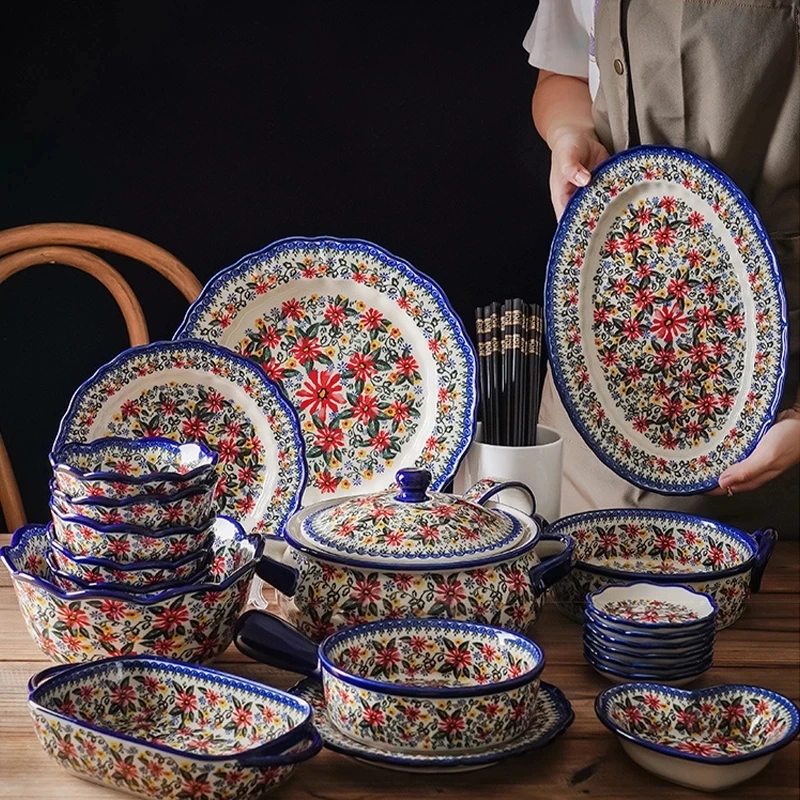
Ceramic Bakeware Bowls Polish Style Hand-painted Kitchen Tableware Salad Dessert Steak Pasta Plate Fruit Tray Decoration
For those seeking a blend of artistry and function, consider our Ceramic Bakeware Bowls Polish Style Hand-painted Kitchen Tableware Salad Dessert Steak Pasta Plate Fruit Tray Decoration, a set that brings handcrafted elegance to your table.
Frequently asked questions
Can ceramic bakeware bowls go in the oven?
Yes, most ceramic bakeware bowls are oven-safe up to 400-500°F. Always check the manufacturer’s guidelines for specific temperature limits.
Are ceramic bowls microwave safe?
Many ceramic bowls are microwave safe, but avoid those with metallic accents or glazes. Test by microwaving a cup of water in the bowl for 30 seconds; if the bowl stays cool, it’s safe.
How do I remove stains from ceramic bowls?
Create a paste of baking soda and water, apply to stains, let sit for 15 minutes, then scrub gently with a non-abrasive sponge. For tough stains, soak in diluted bleach for an hour.
Can I use ceramic bowls for baking bread?
Absolutely! Ceramic bowls retain heat well, creating a nice crust. Preheating the bowl in the oven helps achieve a crispy bottom.
