
Blog
The Best Ceramic Coffee Cup for Your Morning Ritual
Buying Guide
Find Your Perfect Ceramic Coffee Cup
A ceramic coffee cup does more than hold your morning brew—it shapes the entire experience. From the warmth that seeps through the walls to the gentle clink on the saucer, the right cup makes coffee taste better.
Why Choose a Ceramic Coffee Cup?
Ceramic has been used for centuries to craft vessels for hot drinks. Unlike glass or metal, ceramic offers natural insulation that keeps your coffee warm without burning your hands. The material is also non-reactive, meaning it won’t alter the flavor of your brew. For many, the weight and feel of a ceramic coffee cup signal a moment of pause—a daily ritual.
Additionally, ceramic is durable when properly made. High-fired stoneware or porcelain can last for years if handled with care. The glaze not only adds color and pattern but also creates a non-porous surface that resists stains and odors. This makes cleaning easy and ensures each cup of coffee tastes fresh.
Key Features to Look For
Material and Firing
Not all ceramic is the same. Porcelain, stoneware, and earthenware vary in density and finish. Porcelain is fired at high temperatures, making it vitreous and chip-resistant. Stoneware is sturdy and often more textured. Earthenware is softer and may require a glaze to be waterproof. For daily use, look for a ceramic coffee cup labeled as dishwasher and microwave safe—this indicates it has been properly vitrified.
Size and Shape
Coffee cups range from tiny espresso shot glasses to large mugs. A standard 280ml capacity is versatile for filter coffee, lattes, or tea. The shape matters too: a wider mouth allows aromas to escape, while a narrower opening retains heat. A curved interior helps the coffee flow smoothly when sipping.
- Consider the handle: it should be comfortable to grip, especially if the cup is full.
- Check the base: a slightly recessed bottom prevents scratching surfaces.
- Think about stacking: some cups are designed to nest for storage.
How to Evaluate Craftsmanship
Look for even glazing, no sharp edges, and a smooth rim. A well-made ceramic coffee cup will have a consistent thickness and no bubbles in the glaze. The weight should feel balanced—not too heavy, not too light. Hand-thrown cups often have subtle imperfections that add character, but machine-made cups offer uniformity.
If you enjoy a tactile experience, run your finger along the rim. It should be smooth and comfortable against your lips. Also, inspect the handle joint: a clean attachment without excess clay signals quality.
Caring for Your Ceramic Cup
To extend the life of your ceramic coffee cup, avoid sudden temperature changes (don’t pour boiling water into a cold cup). Hand washing is gentler, but most modern cups are dishwasher safe. Avoid abrasive scrubbers that can scratch the glaze. Over time, tea or coffee stains may appear; a paste of baking soda and water can gently remove them.
Store cups with care—stacking with felt pads or hanging on hooks prevents chips. If a chip does occur, the cup might still be usable, but the exposed clay can absorb moisture and odors.
Style and Design Considerations
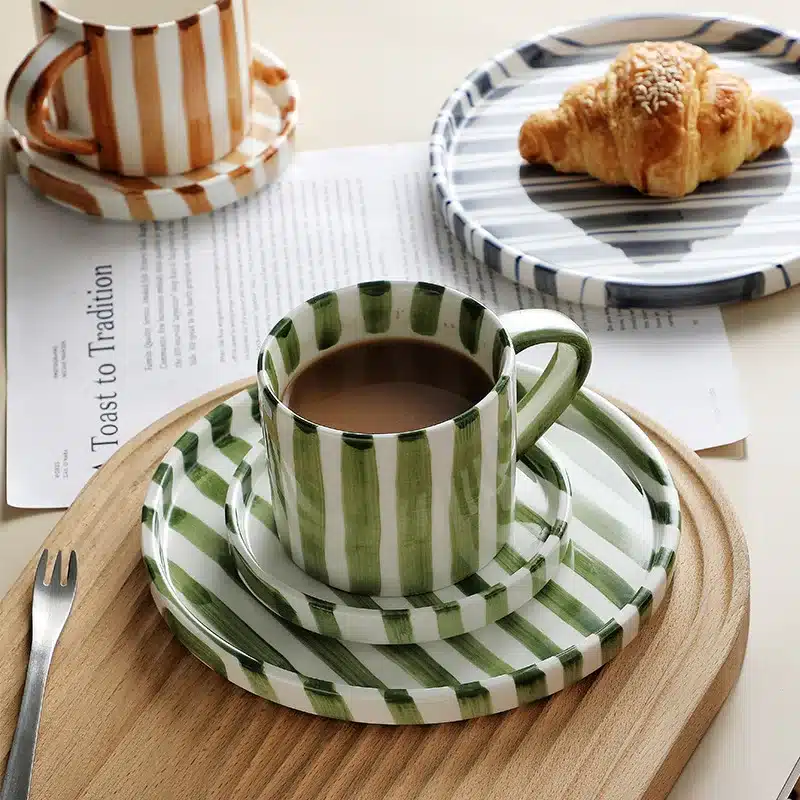
A ceramic coffee cup is also a decorative object. Whether you prefer minimalist white, bold stripes, or hand-painted motifs, the cup can complement your kitchen or table setting. Consider the occasion: a sturdy mug for breakfast, a delicate cup for afternoon tea. The Simple Striped design, for instance, blends classic elegance with a modern touch, suitable for both casual and formal settings.
Color also influences your perception of taste. White cups are said to enhance the bitterness of coffee, while blue or red may alter the perceived sweetness. Choose a color that makes you happy.
Environmental and Health Aspects
Ceramic is an eco-friendly material made from natural clay and fired in kilns. Unlike plastic, it doesn’t leach chemicals. A durable ceramic cup reduces waste compared to disposable cups. Look for brands that use lead-free glazes and sustainable practices. For more on ceramic production, visit Wikipedia’s ceramic page.
Buying a high-quality cup means you’ll use it for years, which is better for the planet than frequent replacements. Some artisans also offer repair services for chipped cups, extending their life further.
Making the Final Choice
Ultimately, the best ceramic coffee cup is one that feels right in your hands and fits your daily routine. Test the grip, consider the volume, and appreciate the craftsmanship. Whether you’re a coffee connoisseur or a casual drinker, the right cup elevates the experience.
Simple Striped Ceramic Teacup Hotel Café Porcelain Coffee Cup 280ml Office Mug Breakfast Bread Dessert Mug Gift Table Decoration
If you appreciate a classic striped design with a comfortable grip, consider the Simple Striped Ceramic Teacup Hotel Café Porcelain Coffee Cup 280ml—it’s a versatile choice for both morning coffee and tea time.
Frequently asked questions
Can I put my ceramic coffee cup in the microwave?
Most high-fired ceramic cups are microwave safe, but check for metal accents. If the cup has metallic trim or a metallic glaze, avoid microwaving. Also, if the cup is cold, preheat it slightly to avoid thermal shock.
How do I remove stubborn coffee stains from a ceramic cup?
Make a paste with baking soda and a little water, apply it to the stain, let it sit for 10 minutes, then scrub gently with a soft sponge. Alternatively, soak the cup in a solution of vinegar and water overnight.
What is the difference between porcelain and stoneware?
Porcelain is fired at a higher temperature, making it more vitreous and less porous than stoneware. It is often lighter and more delicate, while stoneware is heavier and more chip-resistant. Both are excellent choices for coffee cups.
Are ceramic coffee cups safe for hot drinks?
Yes, ceramic is a traditional material for hot beverages. It retains heat well and does not release harmful chemicals. Ensure the cup is made with lead-free glaze and is suitable for hot liquids.
