
Blog
Ultimate Guide to Ceramic Dinnerware Sets for Your Home
Buying Guide
Choosing the Best Ceramic Dinnerware Sets
Ceramic dinnerware sets are the heart of every memorable meal, combining artistry with everyday practicality. Our guide helps you find the perfect set for your table.
What Makes Ceramic Dinnerware Sets Special?
Ceramic dinnerware sets bring a timeless elegance to your dining experience. Unlike plastic or melamine, ceramic is fired at high temperatures, creating a hard, non-porous surface that resists scratches and stains. The natural clay body retains heat well, keeping your food warm longer. Plus, the glazed finish offers endless possibilities for color and texture, from matte to glossy. Whether you’re hosting a formal dinner or a casual brunch, ceramic dinnerware sets add a touch of craftsmanship to every meal.
Types of Ceramic Materials
Understanding the different ceramic materials helps you choose the right set. Stoneware is durable and chip-resistant, ideal for daily use. Porcelain is finer and more translucent, often used for special occasions. Earthenware is more porous and requires careful glazing. According to Wikipedia, ceramics are inorganic, non-metallic solids made by firing clay at high temperatures. Each type has its own charm, but for everyday durability, stoneware is a popular choice.
Key Features to Look For
When browsing ceramic dinnerware sets, consider these features:
- Durability: Look for high-fired stoneware or porcelain that can withstand microwave and dishwasher use.
- Design: Reactive glazes create unique patterns, while solid colors offer versatility.
- Weight: Heavier pieces feel substantial but may be harder to handle.
- Set Size: A 20-piece set typically includes dinner plates, salad plates, bowls, and mugs for 4 people.
How to Care for Ceramic Dinnerware Sets
Proper care extends the life of your ceramic dinnerware sets. Avoid sudden temperature changes—don’t put a hot dish directly into cold water. Most are dishwasher safe, but hand washing with mild soap preserves the glaze. Stack plates with felt pads to prevent scratching. If you notice crazing (fine cracks in the glaze), it’s usually cosmetic but can trap bacteria over time.
Styling Your Table with Ceramic Dinnerware Sets
Ceramic dinnerware sets are versatile for any table setting. Mix and match colors for a bohemian look, or stick to a monochromatic palette for minimalism. The Nordic shape—simple, organic curves—complements modern and rustic decor alike. For a cozy dinner, layer a salad plate over a dinner plate and add a textured linen napkin. The reactive glaze finish adds depth, making each piece unique.
Eco-Friendly and Safe Choices
Many ceramic dinnerware sets are lead-free and cadmium-free, ensuring food safety. Look for brands that use natural clays and glazes. Ceramic is also sustainable—it’s made from abundant natural materials and can last for decades if cared for. Avoid sets with metallic accents if you plan to use them in the microwave.
Where to Buy and What to Expect
You can find ceramic dinnerware sets online or in home goods stores. Prices vary widely based on brand, material, and design. A good quality stoneware set can cost between $50 and $150. When buying online, check customer reviews for chip resistance and glaze consistency. Remember, handmade pieces may have slight variations, adding to their charm.
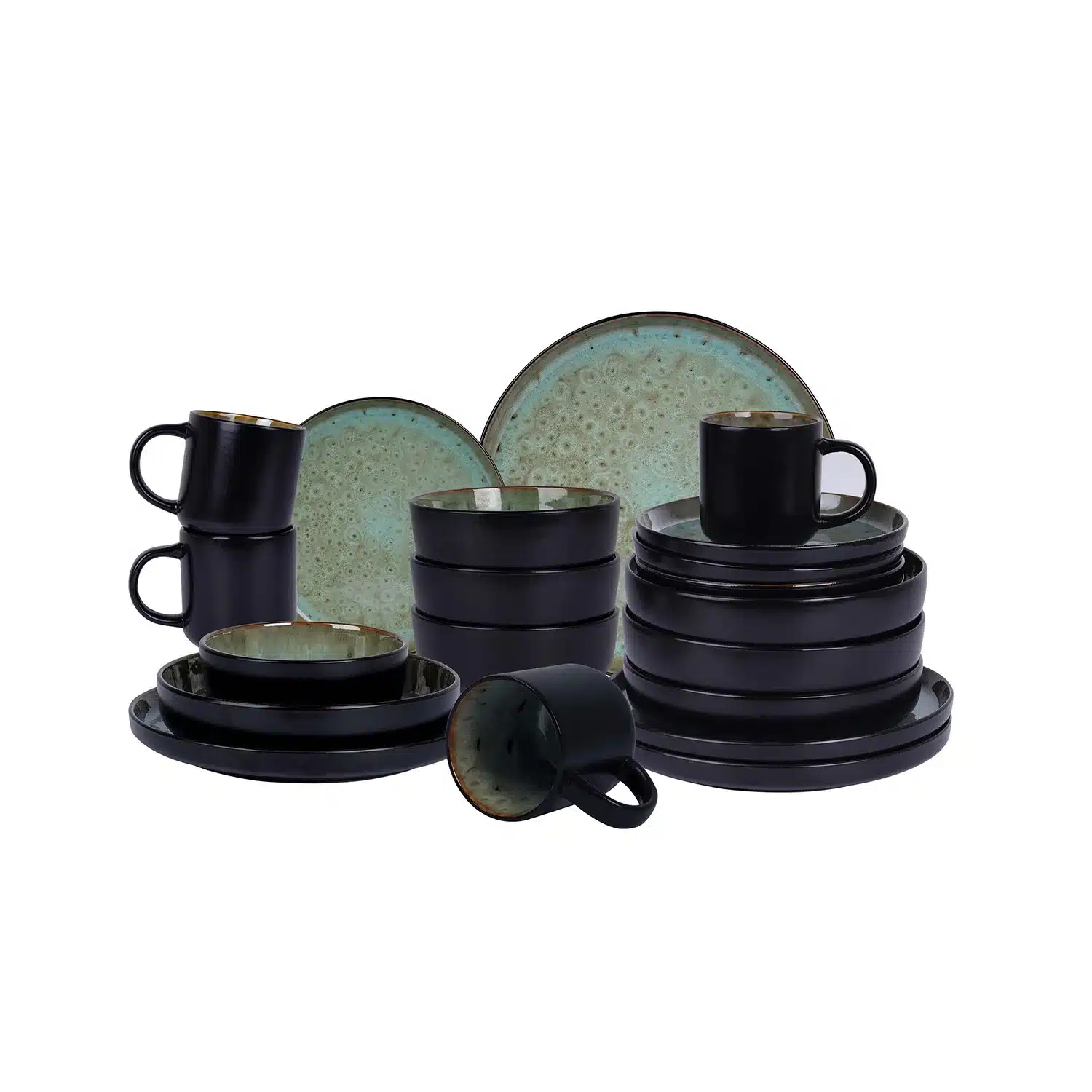
Super September Hot Selling 20 Pcs Reactive Glaze Bubble Green Ceramic Dinnerware Sets Stoneware Nordic Shape Dinner Set
For a unique blend of Nordic shape and reactive glaze artistry, consider the Super September Hot Selling 20 Pcs Reactive Glaze Bubble Green Ceramic Dinnerware Sets Stoneware Nordic Shape Dinner Set.
Frequently asked questions
Are ceramic dinnerware sets microwave safe?
Most ceramic dinnerware sets are microwave safe, but avoid pieces with metallic trim or gold accents. Always check the manufacturer’s label.
How do I prevent chipping in ceramic dinnerware?
Handle with care, avoid stacking heavy items on top, and use felt liners between plates. Hand washing is gentler than dishwasher cycles.
What’s the difference between stoneware and porcelain?
Stoneware is thicker, more durable, and often has a rustic look. Porcelain is finer, more translucent, and fired at higher temperatures, making it more delicate but elegant.
Can I mix ceramic dinnerware sets with other materials?
Absolutely! Mixing ceramic with wood, glass, or metal creates an eclectic table setting. Just ensure the pieces complement each other in color and style.
