
Blog
Choosing the Perfect Damascus Chef Knife: A Guide
Buying Guide
How to Choose a Damascus Chef Knife
A Damascus chef knife is more than a tool; it’s a partner in the kitchen. Finding the right one can transform your cooking experience.
What Makes a Damascus Chef Knife Special?
A Damascus chef knife is renowned for its distinctive wavy pattern and exceptional sharpness. This pattern is created by layering different types of steel, resulting in a blade that is both hard and flexible. The process, which dates back centuries, produces a knife that not only performs well but also looks beautiful on your counter.
When you hold a well-made Damascus knife, you feel the balance and weight that speak to its craftsmanship. The blade’s core often uses high-carbon steel, like VG10, which holds an edge longer and is easier to sharpen. The outer layers protect the core and add to the aesthetic.
But not all Damascus knives are created equal. Understanding the construction and materials helps you make an informed choice.
Key Factors to Consider When Buying
Before you buy, think about how you’ll use the knife. Here are the most important factors:
- Steel Type: High-carbon stainless steel like VG10 offers a good balance of edge retention and corrosion resistance. Look for a core that matches your needs.
- Blade Hardness: Measured on the Rockwell scale (HRC), a hardness of 60-62 is ideal for a chef’s knife. It’s hard enough to stay sharp but not so brittle that it chips easily.
- Handle Material: Common choices include wood, G10, and Micarta. G10 is durable, water-resistant, and provides a secure grip, making it a practical choice for busy kitchens.
- Balance and Weight: A well-balanced knife feels like an extension of your hand. Heavier knives can power through dense vegetables, while lighter ones offer more control for delicate tasks.
Damascus vs. Other Chef Knives
How does a Damascus chef knife compare to a standard stainless steel or carbon steel knife? Damascus knives typically offer superior edge retention and are less prone to rust than pure carbon steel. The layered construction also adds strength, reducing the risk of breakage.
However, Damascus knives often require a bit more care. They should be hand-washed and dried immediately to maintain the pattern and prevent staining. In contrast, standard stainless knives are more forgiving but may not hold an edge as long.
For most home cooks, a Damascus knife is a worthwhile investment if you value performance and aesthetics. It’s a tool that can last a lifetime with proper care.
How to Choose the Right Size and Shape
Chef knives typically range from 6 to 10 inches. An 8-inch blade is the most versatile, suitable for chopping, slicing, and dicing. Smaller blades offer more control for tasks like mincing garlic, while larger blades are better for cutting large vegetables or meat.
The shape of the blade also matters. A curved belly allows for a rocking motion, which is great for herbs. A straighter edge is better for push cuts. Many Damascus chef knives have a slight curve that balances both styles.
Consider your hand size and grip. A full tang (where the steel extends through the handle) provides better balance and durability. The handle should feel comfortable in your hand, whether you prefer a pinch grip or a handle grip.
Top Features to Look For
When shopping, look for these features:
- Full Tang: Ensures strength and balance.
- High-Carbon Core: VG10 or similar for long-lasting sharpness.
- Ergonomic Handle: G10 or Micarta for a secure, non-slip grip.
- Heat Treatment: Properly tempered blade to avoid brittleness.
- Edge Angle: A 15-20 degree angle per side is standard for chef knives.
Caring for Your Damascus Chef Knife
To keep your knife in top condition, hand wash with mild soap and dry immediately. Avoid the dishwasher, as harsh detergents and high heat can damage the blade and handle. Store in a knife block, magnetic strip, or with a blade guard to protect the edge.
Regular honing with a honing rod helps maintain the edge between sharpenings. For sharpening, use whetstones or take it to a professional. The Damascus pattern may fade over time if not cared for, but proper maintenance preserves its beauty.
Why Material Matters: VG10 and G10
VG10 is a high-carbon stainless steel known for its excellent edge retention and corrosion resistance. It’s often used as the core in Damascus knives because it takes a sharp edge and holds it well. The outer layers of softer steel add toughness.
G10 is a glass-fiber reinforced laminate that is extremely durable and resistant to moisture. It provides a secure grip even when wet, making it a popular handle material for professional kitchens. Unlike wood, it won’t crack or warp over time.
Combining VG10 steel with a G10 handle gives you a knife that performs reliably and lasts for years.
Making Your Final Decision
Ultimately, the best Damascus chef knife is one that feels right in your hand and fits your cooking style. Don’t be swayed by flashy patterns alone; focus on the blade’s performance and the handle’s comfort. A good knife will make your prep work more enjoyable and efficient.
Remember to set a budget. While high-end knives can cost hundreds, there are excellent options at more accessible prices. Look for trusted makers who use quality materials and offer good customer support.
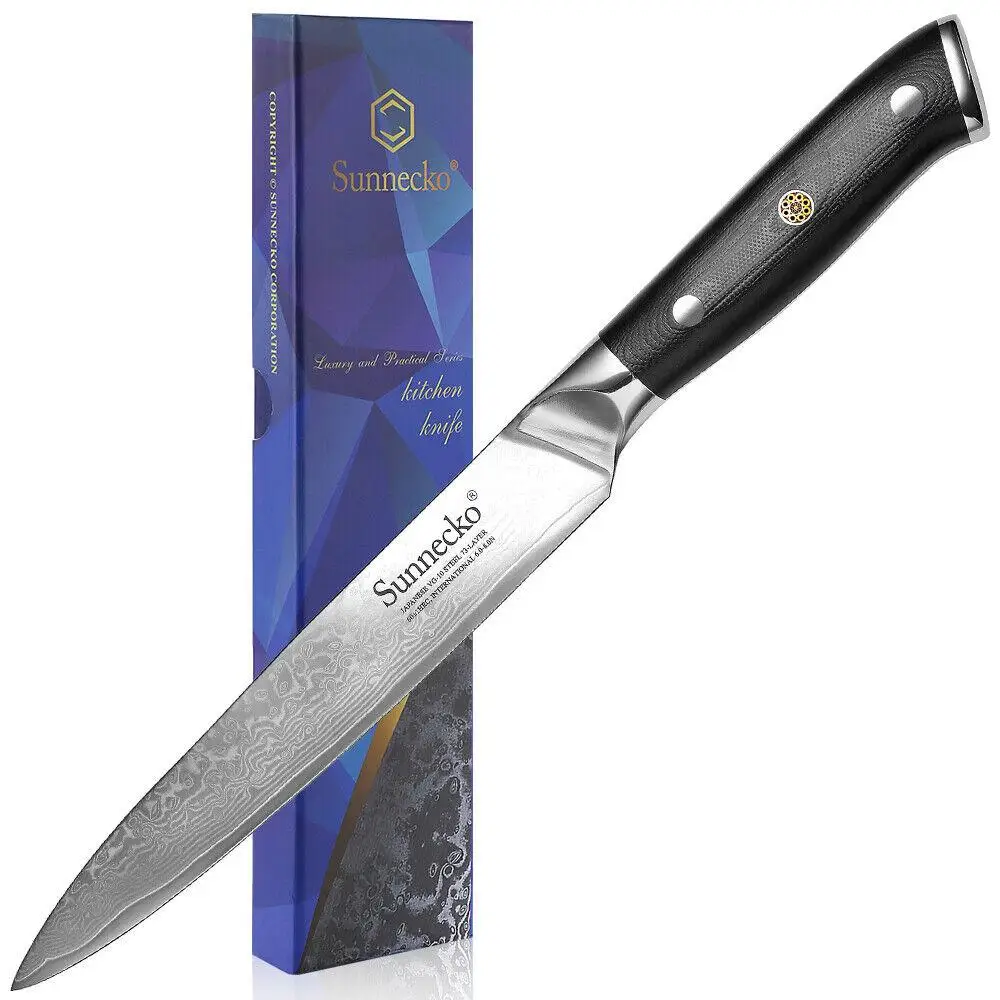
Sunnecko 8-Inch Damascus VG10 Steel Chef Knife with G10 Handle Made in China Kitchen Specialty Tool
For a reliable blend of performance and value, consider the Sunnecko 8-Inch Damascus VG10 Steel Chef Knife with G10 Handle, a well-balanced tool that suits everyday kitchen tasks.
Frequently asked questions
What is the best steel for a Damascus chef knife?
VG10 is a top choice for its hardness, edge retention, and corrosion resistance. It strikes a great balance for home cooks. Other good options include AEB-L and 52100, but VG10 is widely used in quality Damascus knives.
How do I maintain the Damascus pattern on my knife?
Hand wash and dry immediately after use. Avoid acidic foods sitting on the blade for long. The pattern is etched into the steel and can fade if exposed to harsh chemicals or abrasives. Occasional light polishing with a soft cloth can help, but it’s mostly cosmetic.
Is a Damascus chef knife worth the investment?
Yes, if you value sharpness, durability, and aesthetics. A good Damascus knife will outperform many standard knives and can last a lifetime with proper care. It’s a worthwhile upgrade for serious home cooks.
What size Damascus chef knife should I buy?
An 8-inch blade is the most versatile for most tasks. If you have small hands or do precise work, a 6-inch may be better. For heavy chopping, a 10-inch can be useful. Consider your typical prep work.
