Blog
The Ultimate Guide to Choosing a Concrete Coffee Table
Buying Guide
How to Choose the Perfect Concrete Coffee Table
A concrete coffee table is more than just a piece of furniture; it’s a statement of style and durability. This guide will help you navigate the key factors to consider when selecting the ideal concrete coffee table for your home.
Why Choose a Concrete Coffee Table?
Concrete coffee tables have surged in popularity for their raw, industrial aesthetic and incredible longevity. Unlike wood or glass, concrete resists scratches, heat, and moisture, making it ideal for busy living rooms. Its weight provides stability, and each piece develops a unique patina over time. Whether your decor leans minimalist or eclectic, a concrete coffee table anchors the space with understated strength.
Key Factors to Consider
Size and Proportion
Measure your seating area carefully. A concrete coffee table should be roughly two-thirds the length of your sofa and sit at the same height as the seat cushions (16-18 inches). Leave at least 18 inches of clearance around all sides for easy movement.
Shape and Style
Square tables work well with sectional sofas, while rectangular ones suit traditional layouts. Round tables soften sharp corners and are safer for households with children. The color of the concrete—from light gray to dark charcoal—can complement or contrast your existing palette.
Finish and Texture
Sealed concrete offers a smooth, stain-resistant surface, while unsealed concrete absorbs spills but develops a natural aged look. Troweled finishes add visual interest, and embedded aggregates (like pebbles or glass) create custom textures. Consider a matte sealant for a modern feel or a glossy one for a sleeker appearance.
- Sealed concrete: easier to clean, resists stains
- Unsealed concrete: porous, needs regular sealing
- Polished finish: smooth, reflects light
- Matte finish: subtle, hides fingerprints
Concrete Coffee Table in Different Decor Styles
In industrial lofts, a raw concrete table pairs well with exposed brick and steel. For mid-century modern rooms, a sleek concrete top on tapered wooden legs bridges old and new. Even in cozy Scandinavian interiors, a light gray concrete table adds warmth when paired with soft textiles and natural wood. The key is balancing concrete’s coolness with warm accents like rugs, throws, and plants.
Maintenance and Care Tips
Dust regularly with a soft cloth. Clean spills immediately with a mild soap and water—avoid acidic cleaners that can etch the surface. Apply a concrete sealer every 1-2 years to protect against stains. Use coasters under drinks and trivets under hot dishes to preserve the finish. Despite its toughness, concrete can crack if subjected to extreme force, so avoid dropping heavy objects.
Where to Place Your Concrete Coffee Table
The living room is the most common spot, but concrete coffee tables also shine in home offices, sunrooms, or even outdoor covered patios (if sealed for weather resistance). Ensure the floor can support the weight—concrete tables often exceed 100 pounds. Use felt pads on the bottom to protect hardwood or tile floors.
Environmental Impact and Sustainability
Concrete is made from natural materials (cement, water, aggregates) and can be recycled. Many manufacturers now use fly ash or recycled glass to reduce environmental footprint. For more on sustainable building materials, see Sustainable Architecture on Wikipedia.
Budgeting for Your Concrete Coffee Table
Prices vary widely based on size, finish, and brand. Handcrafted pieces cost more but offer unique character. Mass-produced options are more affordable but may lack individuality. Consider your budget and prioritize the features that matter most—durability, style, or customizability.
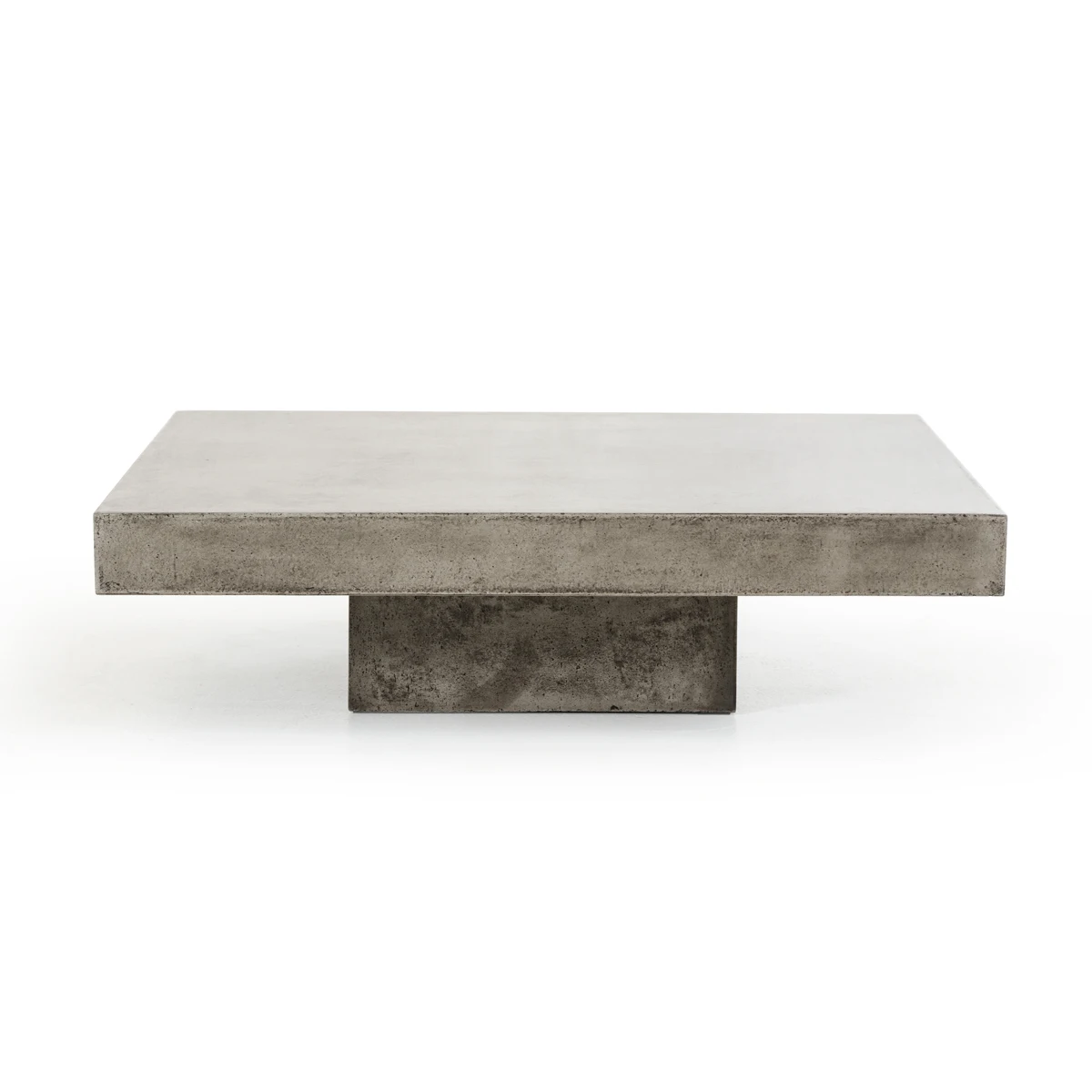
Goldoma 43″ Concrete Square Block Coffee Table – Gray & Dark Gray
For a balanced blend of durability and modern design, consider the Goldoma 43″ Concrete Square Block Coffee Table in Gray & Dark Gray—a piece that embodies the raw elegance of concrete.
Frequently asked questions
Are concrete coffee tables too heavy for regular use?
Concrete tables are heavy, typically over 100 pounds, but this weight provides stability and prevents tipping. Ensure your floor can support it, and use furniture sliders to move it if needed.
How do I clean a concrete coffee table?
Dust with a soft cloth and clean spills with mild soap and water. Avoid harsh chemicals. Apply a concrete sealer every 1-2 years to maintain stain resistance.
Can concrete coffee tables crack?
While durable, concrete can crack under extreme force or if not properly reinforced. Most quality tables use steel mesh or fiberglass to minimize cracking. Avoid dropping heavy objects on it.
Do concrete coffee tables stain easily?
Sealed concrete is highly stain-resistant. Unsealed concrete can absorb liquids and stain, so sealing is recommended. Always use coasters for drinks.