
Blog
How to Choose the Perfect Console Table for Your Home
Buying Guide
The Ultimate Console Table Buying Guide
A console table is one of the most versatile pieces of furniture you can own. Whether you need a spot for keys in the entryway or a display surface in the living room, the right console table can tie a room together.
What Is a Console Table?
A console table is a long, narrow table typically placed against a wall. Unlike a dining table, it’s designed for spaces where depth is limited—think hallways, entryways, or behind a sofa. Its slim profile makes it perfect for adding surface area without crowding a room.
Originally, console tables were supported by brackets attached to the wall. Today, they come with legs or pedestals, but the space-saving essence remains. You’ll often see them in foyers, where they serve as a landing spot for mail and keys.
Why You Need a Console Table in Your Home
A console table isn’t just decorative—it’s functional. In an entryway, it provides a place to drop bags and display a lamp. In a living room, it can anchor a sofa or hold a TV. Even in a narrow hallway, a slim console table can offer storage without blocking traffic.
Beyond utility, a console table adds personality. It can showcase art, plants, or family photos. With the right styling, it becomes a focal point that reflects your taste.
How to Choose the Right Size Console Table
Size matters. A console table that’s too large will overwhelm a small hallway, while one that’s too small will look lost in a grand entry. Measure your wall space first. The table should be about two-thirds the length of the wall it sits against. Depth is crucial: keep it between 12 and 18 inches so it doesn’t obstruct traffic.
Height is also key. Standard console tables are 30 to 36 inches tall—similar to a dining table. If you’re placing it behind a sofa, choose a height that’s slightly lower than the sofa back for a cohesive look.
Materials and Styles: From Rustic to Modern
Console tables come in wood, metal, glass, and more. Each material sets a different tone. Wood offers warmth and durability, perfect for farmhouse or traditional spaces. Metal and glass lean modern and airy, great for contemporary homes.
For a timeless look, consider a solid wood console table. It ages well and can be refinished if needed. If you want something lighter, a glass top with metal legs creates an illusion of space. Mixing materials—like a wood top with metal base—adds visual interest. For more on wood types, see this Wikipedia article on wood.
Placement Ideas: Where to Put Your Console Table
The most common spot is the entryway. Place it against a wall with a mirror above for a functional drop zone. In a living room, a console table behind a sofa can hold lamps and decor. In a bedroom, use it as a vanity or desk. Even in a dining room, a console table can serve as a buffet for serving dishes.
Don’t forget hallways. A narrow console table can break up a long corridor. Add a vase or a stack of books to make the space feel intentional. The key is to choose a spot where the table won’t block natural pathways.
Styling Your Console Table: Tips for a Polished Look
Styling a console table is about balance. Start with a focal point—a large mirror, art piece, or lamp. Then layer in smaller items like books, vases, or trays. Vary heights to create visual rhythm. For example, pair a tall lamp with a low bowl.
Use odd numbers in groupings—three items often look more dynamic than two. And don’t clutter: leave some empty space to let the eye rest. A console table should feel curated, not crowded.
Console Table vs. Sofa Table: What’s the Difference?
People often use the terms interchangeably, but there’s a subtle difference. A sofa table is specifically designed to go behind a sofa, often with a lower shelf for storage. A console table is more general—it can go anywhere. Both are long and narrow, but sofa tables tend to be a bit taller and sturdier.
When shopping, focus on dimensions and your intended use. If it’s for behind a sofa, a sofa table might offer better proportions. For an entryway or hallway, a console table is usually the better choice.
Final Thoughts on Finding the Perfect Console Table
Choosing a console table comes down to your space and style. Measure carefully, consider the material, and think about how you’ll use it. A well-chosen console table can be a workhorse and a statement piece.
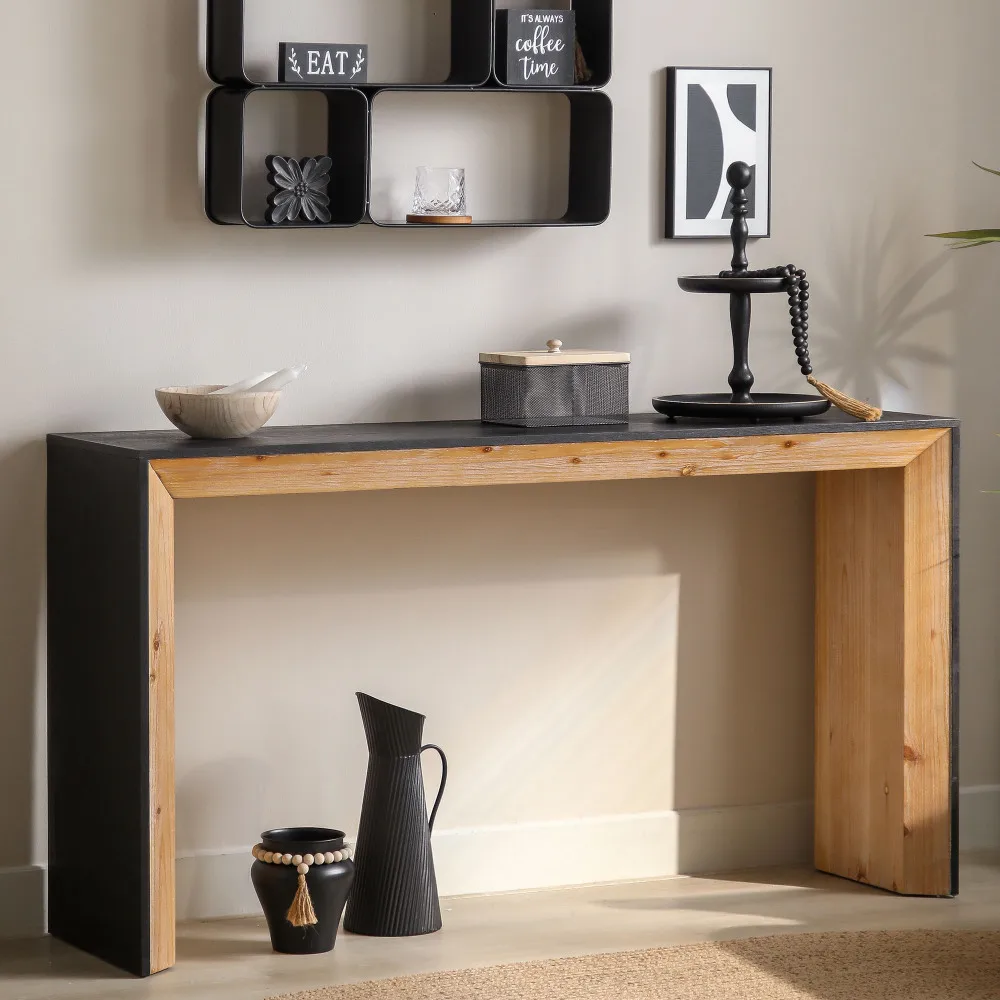
If you’re looking for a versatile option, the Goldoma 59-Inch Modern Wood Console Table with Two-Tone Rustic Finish offers a warm, durable surface that suits both entryways and living rooms. It’s a solid choice for those who want quality without sacrificing style.
Goldoma 59-Inch Modern Wood Console Table with Two-Tone Rustic Finish
If you’re looking for a versatile option, the Goldoma 59-Inch Modern Wood Console Table with Two-Tone Rustic Finish offers a warm, durable surface that suits both entryways and living rooms.
Frequently asked questions
What is the standard height of a console table?
Most console tables are 30 to 36 inches tall, similar to a dining table. This height works well for entryways and behind sofas.
Can a console table be used as a desk?
Yes, a console table can double as a desk if it’s wide enough (at least 18 inches deep) and at a comfortable height for typing.
How do I style a console table in a small hallway?
Keep it simple: use a narrow table, add a mirror above, and place one or two small decor items like a vase or a tray to avoid clutter.
What is the best material for a console table?
Wood is a popular choice for its durability and warmth. Metal and glass work well for modern spaces. Consider your decor style and maintenance needs.