
Blog
Damascus Steel Chef Knife: A Complete Buying Guide
Knife Guide
The Ultimate Damascus Steel Chef Knife Guide
A Damascus steel chef knife is more than a tool—it’s a companion in the kitchen. Whether you’re a home cook or a professional, choosing the right one can transform your cooking experience.
Understanding Damascus Steel
Damascus steel is renowned for its distinctive wavy patterns and exceptional performance. Historically, it was forged from layers of high-carbon and low-carbon steel, creating a blade that is both hard and flexible. Modern Damascus steel often uses a core of high-performance steel like VG10, sandwiched between softer layers for pattern and protection. This combination gives you a sharp edge that lasts and a blade that resists chipping.
Key Features to Look For
When shopping for a Damascus chef knife, focus on the core steel, number of layers, and the blade’s hardness rating (Rockwell scale). A VG10 core is a popular choice for its balance of sharpness and ease of sharpening. Look for at least 67 layers for a clear pattern, but more layers can mean a more refined look. Handle material matters too: wood handles offer a classic feel, while synthetic materials provide durability.
Blade Geometry
A chef knife’s blade should have a gentle curve from heel to tip, allowing for a rocking motion during chopping. The spine thickness affects balance—a thicker spine adds weight, while a thinner one makes the knife nimble.
Handle Comfort and Balance
The handle should fit your hand comfortably, with no sharp edges. A full tang (metal extending through the handle) provides better balance and durability. Wood handles like walnut or rosewood are ergonomic and absorb shock, but require occasional oiling. The knife’s balance point should be just in front of the bolster (the ridge between blade and handle).
Edge Retention and Sharpening
Damascus steel knives hold their edge longer than standard stainless steel, but they still need sharpening. Use a whetstone or a honing rod regularly. Avoid pull-through sharpeners as they can damage the blade’s edge. A knife with a Rockwell hardness of 60-62 is ideal for everyday use.
Caring for Your Damascus Knife
Hand wash only with mild soap and dry immediately. Never put it in the dishwasher. Store in a knife block, magnetic strip, or with blade guards. Periodically oil the blade to prevent rust, especially if it’s high-carbon steel.
Top Uses for a Chef Knife
A chef knife is versatile: slice vegetables, mince herbs, cut meat, and chop nuts. Its curved blade allows for a rocking motion, making it perfect for dicing onions or garlic. Use the flat part of the blade for crushing garlic or transferring ingredients.
What to Avoid
Avoid knives with a hollow handle or partial tang, as they can break. Be wary of extremely cheap Damascus knives—they may be etched with a pattern rather than forged. Also, avoid knives with a very high Rockwell hardness (above 64) as they can be brittle.
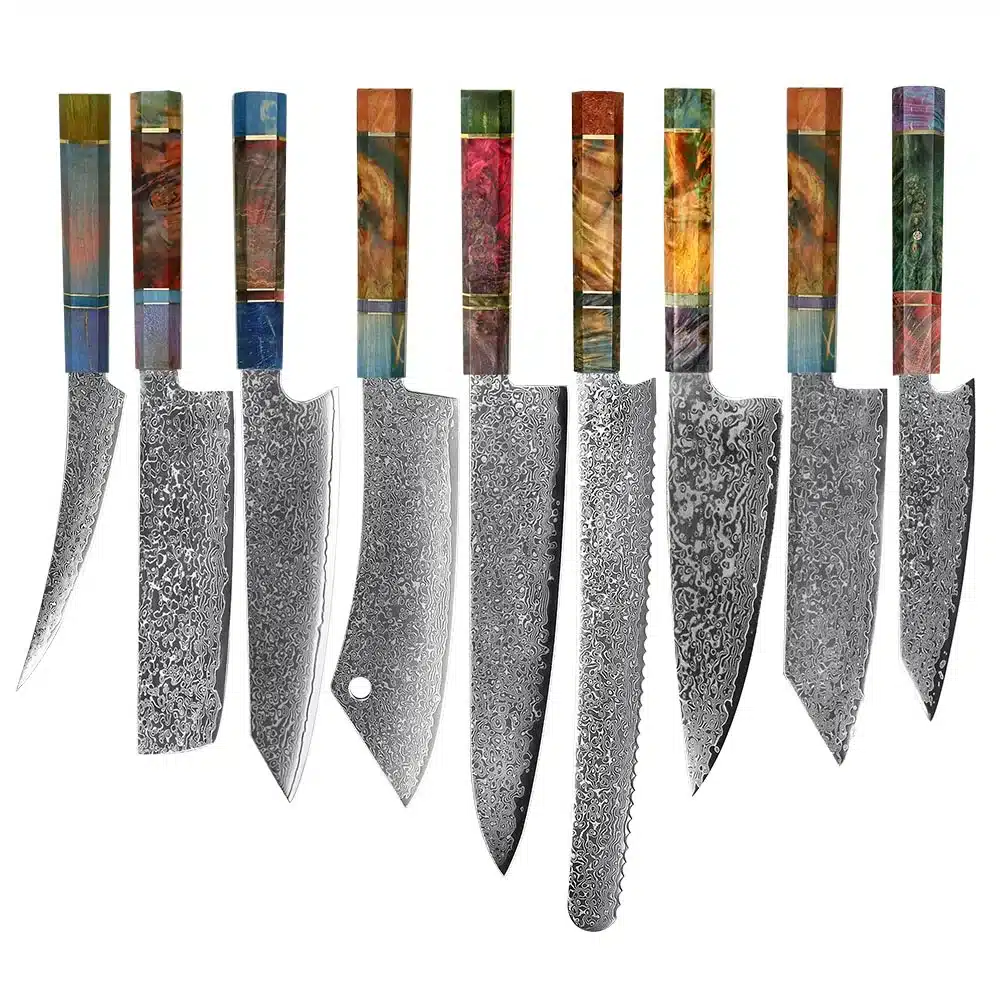
AMBER Kitchen Knife Set VG10 Damascus Steel Chef Knife Kitchen Accessories Professional Chef knives Cooking Tools Wood Handle
For a reliable choice, consider the AMBER Kitchen Knife Set VG10 Damascus Steel Chef Knife, featuring a VG10 core, 67 layers of Damascus, and an ergonomic wood handle—a balanced performer for daily use.
Frequently asked questions
Is Damascus steel better than regular stainless steel for chef knives?
Damascus steel offers a unique combination of hardness and flexibility, often resulting in better edge retention and a sharper edge. However, it requires more care to prevent rust. For most home cooks, a high-quality stainless steel knife is also a great choice. Damascus is more about aesthetics and tradition.
How do I maintain the pattern on my Damascus knife?
The pattern is created by etching the blade with acid, which reveals the layers. To maintain it, avoid abrasive cleaners and always dry the knife after washing. Some users apply a light coat of mineral oil to the blade to preserve the contrast.
Can I use a Damascus chef knife for cutting bones?
No, a chef knife is not designed for cutting through bones. The thin edge can chip. Use a cleaver or a boning knife for heavy-duty tasks like cutting through joints or bones.
How often should I sharpen my Damascus knife?
It depends on usage. For daily home cooking, honing with a steel rod before each use and sharpening on a whetstone every few months is sufficient. If you notice the knife struggling to cut through a tomato, it’s time to sharpen.
