
Blog
Damascus Steel Knife Set: A Buyer’s Guide
Kitchen Essentials
Choosing the Perfect Damascus Steel Knife Set
A Damascus steel knife set can transform your cooking experience, but with so many options, finding the right one takes a bit of know-how.
Understanding Damascus Steel
Damascus steel is renowned for its distinctive wavy patterns and exceptional hardness. Historically made by forging layers of steel together, modern versions often use high-carbon stainless steel for a balance of sharpness and rust resistance. The pattern isn’t just for looks—it indicates a layered structure that can create micro-serrations for better cutting performance.
Key Features to Look For
- Steel Core: Look for high-carbon stainless steel (e.g., VG-10, 440C) for edge retention and ease of sharpening.
- Layer Count: More layers (e.g., 67 or 101) often mean a finer pattern, but quality matters more than quantity.
- Handle Comfort: Ergonomics matter—ABS handles offer durability and a secure grip, even when wet.
- Balance: A well-balanced knife reduces fatigue during prolonged use.
Types of Knives in a Set
A typical Damascus steel knife set includes essential blades: a chef’s knife for chopping and slicing, a utility knife for smaller tasks, a paring knife for peeling and detail work, and a bread knife with a serrated edge. Some sets add a Santoku or carving knife. Consider your cooking style when selecting a set—if you rarely bake, a bread knife might be less critical.
Chef’s Knife
This is your workhorse, usually 8 inches long. Look for a full tang (blade extending into the handle) for stability. A slight curve allows a rocking motion for efficient chopping.
Paring Knife
A 3-4 inch blade for intricate tasks like deveining shrimp or coring fruits. A pointed tip adds versatility.
Bread Knife
A serrated edge (often scalloped) to slice through crusty bread without crushing it. Look for a blade length of 8-10 inches.
Handle Materials and Ergonomics
Handles come in various materials: wood, plastic, metal, or composites. Wood offers warmth but requires maintenance. ABS handles are non-porous, resistant to moisture, and provide a secure grip—ideal for busy kitchens. Ergonomic shapes reduce wrist strain, especially during extended prep sessions. Always hold a knife before buying if possible; your hand size and grip preference matter.
Caring for Your Damascus Steel Knife Set
To maintain the beauty and performance of Damascus steel, hand wash with mild soap and dry immediately—dishwashers can cause pitting and dull the edge. Store knives in a block, magnetic strip, or sheath to protect the blades. Hone regularly with a steel rod and sharpen occasionally with whetstones. Avoid cutting on glass or stone surfaces; use wood or plastic cutting boards.
Budget and Value Considerations
Damascus steel knife sets range from affordable to premium. Entry-level sets (under $100) offer decent performance for home cooks, while mid-range ($100-$250) often feature better steel and construction. High-end sets ($250+) may include hand-forged blades with intricate patterns. Consider how often you cook and your willingness to maintain the knives. A good set should last decades with proper care.
What to Avoid
- Sets with too many knives you won’t use—stick to essentials.
- Cheap stainless steel that won’t hold an edge.
- Poorly balanced knives—they feel awkward and can be unsafe.
- Overly decorative handles that compromise grip.
Final Thoughts
Choosing a Damascus steel knife set is about balancing aesthetics, performance, and budget. Focus on the core knives, handle comfort, and steel quality. With the right set, you’ll enjoy precision cutting for years to come.
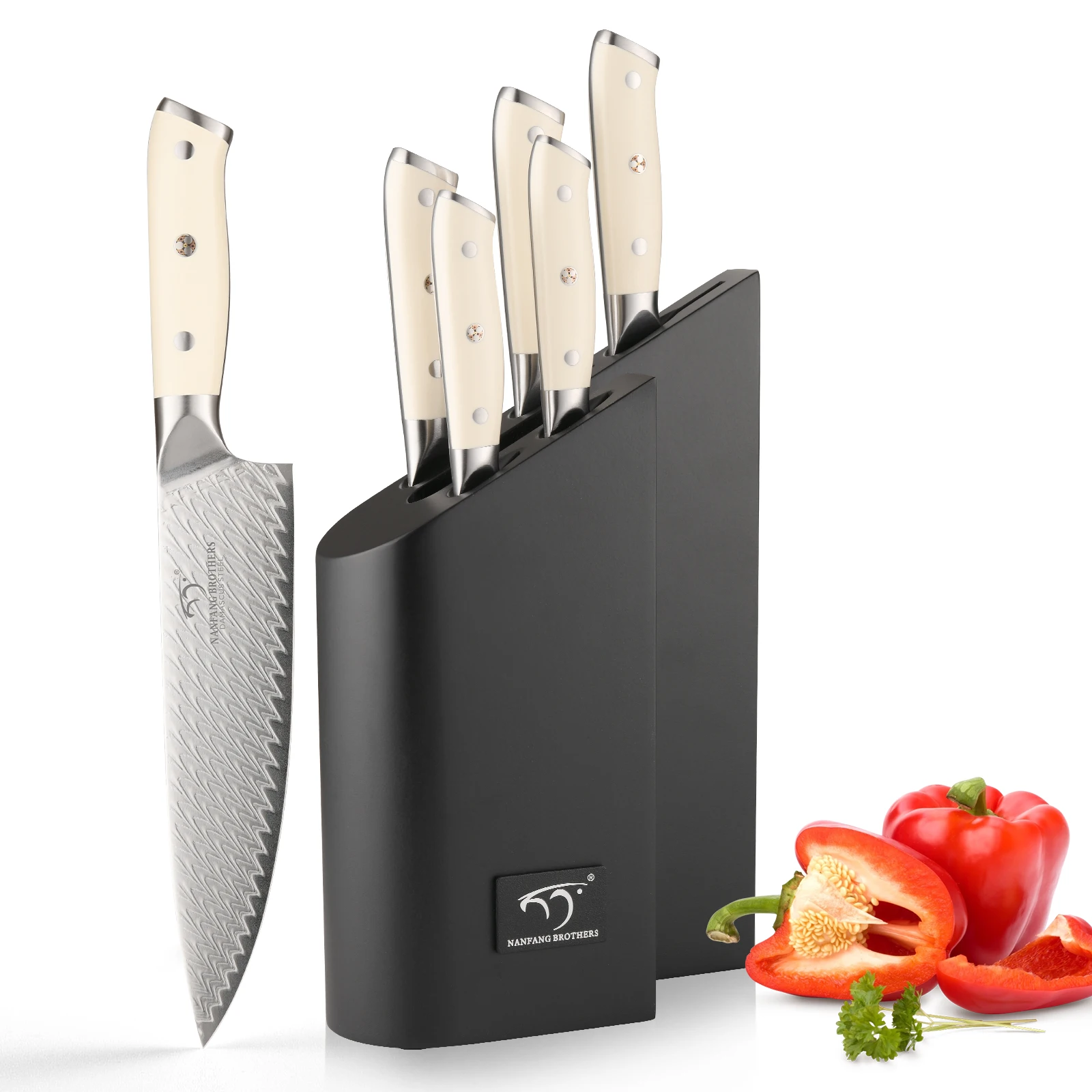
6-piece High Quality Non-Stick Portable Damascus Steel Kitchen Knife Set With ABS Handle
For a reliable entry into Damascus steel, consider the 6-piece High Quality Non-Stick Portable Damascus Steel Kitchen Knife Set With ABS Handle, which balances performance and value.
Frequently asked questions
Is Damascus steel better than regular stainless steel?
Damascus steel offers a unique pattern and often better edge retention due to its layered construction, but performance depends on the specific steel used. High-carbon stainless Damascus can outperform standard stainless, but it requires more care to prevent rust.
How do I maintain the pattern on Damascus steel knives?
To preserve the pattern, avoid abrasive cleaners and never put them in the dishwasher. Hand wash and dry immediately. Over time, the pattern may become more pronounced with use, but you can etch it with mild acid (like vinegar) if needed.
Do I need a full set or just a few knives?
A set of 6-8 essential knives (chef’s, paring, utility, bread, and sometimes a Santoku) covers most tasks. Avoid large sets with specialty knives you rarely use—they take up space and cost more.
Can Damascus steel knives be sharpened easily?
Yes, most Damascus steel knives can be sharpened with standard whetstones or honing rods. The hardness of the steel means they may hold an edge longer but require more effort to sharpen when dull. Regular honing extends time between sharpenings.
