
Blog
The Perfect Digital Kitchen Scale for Precise Cooking
Buying Guide
Choose the Right Digital Kitchen Scale for You
A digital kitchen scale is an essential tool for any home cook who values precision. Whether you’re measuring flour for bread or portioning ingredients for a recipe, accuracy matters.
Why a Digital Kitchen Scale Matters
A digital kitchen scale brings precision to your cooking and baking. Unlike measuring cups, which can vary, a scale ensures consistent results every time. It’s especially useful for recipes that require exact ratios, like sourdough or macarons.
Key Features to Consider
Accuracy and Units
Look for a scale with 0.1g or 0.01g increments for fine measurements. Most scales support grams, ounces, pounds, and milliliters. A tare function lets you zero out the container weight.
Capacity
Standard capacities range from 500g to 5kg. For most home use, 500g to 2kg is sufficient. If you bake large batches, consider a higher capacity.
Display and Buttons
A backlit LCD display is easy to read. Touch buttons or membrane switches are easier to clean than mechanical ones.
Types of Digital Kitchen Scales
There are two main types: compact pocket scales and larger platform scales. Pocket scales are portable and great for small quantities, while platform scales handle larger bowls and ingredients. Choose based on your typical use.
Material and Build Quality
Stainless steel surfaces are durable and easy to wipe clean. Tempered glass is also popular but can be fragile. A non-slip base prevents sliding during use.
Battery Life and Power Source
Most scales use AAA batteries or CR2032 coin cells. Rechargeable models are available but less common. Look for auto-off features to save battery.
How to Test a Scale’s Accuracy
Use a known weight, like a nickel (5g) or a calibration weight. Place it on the scale and check the reading. A good scale should be accurate within 0.1g. For more on measurement standards, see Weighing scale on Wikipedia.
Caring for Your Scale
Keep the scale clean and dry. Avoid dropping it or exposing it to extreme temperatures. Store it in a protective case if possible. Calibrate periodically if the scale allows.
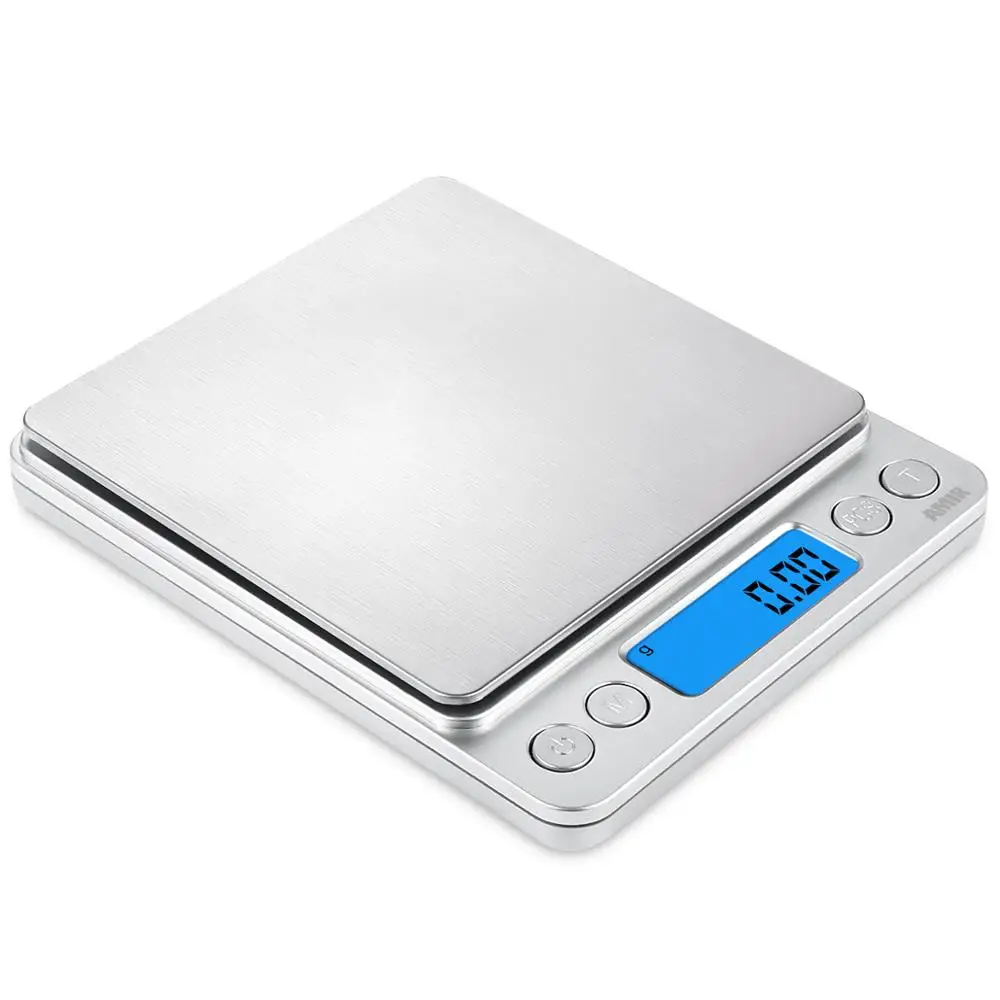
AMIR Digital Kitchen Scale Mini Pocket Stainless Steel Food Baking Scale 500g/0.01g LCD Display Electronic Kitchen Scales
For a reliable option, consider the AMIR Digital Kitchen Scale Mini Pocket Stainless Steel Food Baking Scale, which offers 500g capacity with 0.01g precision in a compact design.
Frequently asked questions
What is the difference between a digital kitchen scale and a mechanical one?
Digital scales provide precise readings with easy-to-read displays, while mechanical scales use springs and dials, which can be less accurate over time.
Can I use a digital kitchen scale for liquids?
Yes, many scales have a milk or water mode that converts grams to milliliters. However, for best accuracy, use the tare function with a container.
How do I clean my digital kitchen scale?
Wipe the surface with a damp cloth and mild soap. Avoid submerging the scale in water. Remove batteries before cleaning if possible.
What capacity scale do I need for baking?
For most home baking, a 500g to 2kg capacity is sufficient. If you make large batches of dough, consider a 5kg scale.
