
Blog
The Ultimate Guide to Choosing an Eco-Friendly Dining Table
Sustainable Living
Your Guide to an Eco-Friendly Dining Table
An eco-friendly dining table is more than a piece of furniture—it’s a commitment to the planet. Whether you’re furnishing your first home or upgrading, choosing sustainable materials and ethical production methods can make a world of difference.
Why Choose an Eco-Friendly Dining Table?
When you invest in an eco-friendly dining table, you’re supporting responsible forestry and reducing your carbon footprint. Many conventional tables use particleboard or veneers that off-gas harmful chemicals. In contrast, eco-friendly options prioritize solid wood from certified sources, natural finishes, and durable construction that lasts for decades. According to the Wikipedia article on sustainable furniture, choosing pieces that are built to last is one of the most impactful choices you can make.
Key Materials for Sustainable Tables
Solid wood is the gold standard, but not all wood is equal. Look for reclaimed wood, FSC-certified lumber, or rapidly renewable species like bamboo. Avoid composite woods that contain formaldehyde glues. Walnut, oak, and teak are excellent choices when sourced responsibly. The finish matters too—opt for water-based or natural oil finishes rather than polyurethane or varnish.
- Reclaimed Wood: Gives new life to old timber, reducing waste.
- FSC-Certified Wood: Ensures the wood comes from responsibly managed forests.
- Bamboo: Grows quickly and regenerates without replanting.
- Natural Finishes: Linseed oil, beeswax, or shellac are biodegradable and non-toxic.
How to Verify Eco-Friendly Claims
Greenwashing is common. Look for third-party certifications like FSC, Greenguard, or Cradle to Cradle. Ask the manufacturer about their supply chain and whether they use renewable energy in production. A truly eco-friendly dining table will come with transparency about its origins.
Size and Shape: Finding Your Perfect Fit
An eco-friendly dining table should suit your space and needs. Rectangular tables are classic and fit most rooms, while round tables encourage conversation and work well in smaller areas. Measure your dining area, leaving at least 36 inches around the table for chairs and movement. Extendable tables are a smart choice for flexibility without buying a second piece.
Durability and Maintenance
A sustainable table is one you won’t need to replace. Solid wood can be sanded and refinished, extending its life indefinitely. Avoid tables with soft woods like pine if you have kids or entertain often. Walnut is a hard, dense wood that resists dents and scratches. For daily care, use coasters and placemats, and clean with a damp cloth—no harsh chemicals needed.
Styling an Eco-Friendly Dining Table
Your eco-friendly dining table can be the centerpiece of a sustainable home. Pair it with reclaimed wood benches or chairs made from recycled materials. Use natural fiber tablecloths or runners, and decorate with potted plants or beeswax candles. The goal is a cohesive look that reflects your values without sacrificing aesthetics.
Budget Considerations
Eco-friendly often implies higher upfront cost, but consider it an investment. A well-made solid wood table can last a lifetime, whereas cheap tables end up in landfills. Set a budget that prioritizes quality over quantity. Sometimes buying second-hand is the most sustainable option; refinish a vintage find for a fraction of the price.
Our Recommendation
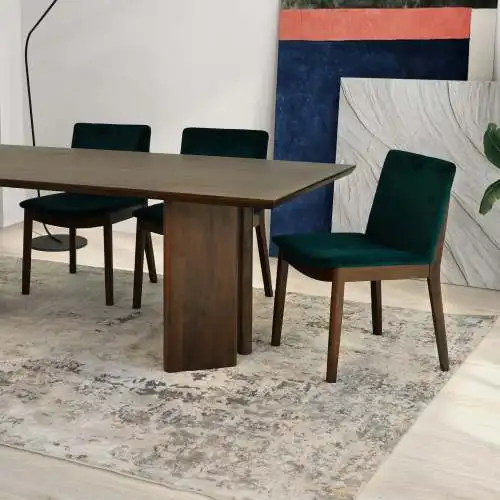
For those seeking a blend of sustainability and timeless design, the Modern Alden Solid Wood Dining Table – Eco-Friendly & Durable Walnut is a standout choice. Crafted from responsibly sourced walnut with a natural oil finish, it offers durability and elegance while aligning with eco-conscious values.
Modern Alden Solid Wood Dining Table – Eco-Friendly & Durable Walnut
For a perfect balance of sustainability and style, consider the Modern Alden Solid Wood Dining Table – Eco-Friendly & Durable Walnut.
Frequently asked questions
What makes a dining table eco-friendly?
An eco-friendly dining table is made from sustainable materials like FSC-certified wood, reclaimed timber, or rapidly renewable resources. It uses non-toxic finishes and is built to last, reducing waste. Look for certifications like FSC or Greenguard.
Is solid wood always eco-friendly?
Not necessarily. Solid wood is preferable to composite, but its eco-friendliness depends on sourcing. Avoid wood from illegal logging or endangered species. Opt for reclaimed or certified sustainable wood.
How do I care for an eco-friendly dining table?
Use coasters and placemats to prevent stains. Clean with a damp cloth and mild soap if needed. Avoid harsh chemicals. Periodically apply natural oil or wax to maintain the finish. Solid wood can be sanded and refinished.
Are eco-friendly dining tables more expensive?
They can be, but consider the long-term value. A durable table that lasts decades is more cost-effective than replacing a cheap one every few years. Second-hand or reclaimed tables can be budget-friendly.
