
Blog
The Ultimate Guide to Choosing an Enamel Cast Iron Pot
Kitchen Essentials
Find Your Perfect Enamel Cast Iron Pot
An enamel cast iron pot is a kitchen workhorse that combines heat retention with easy cleaning. Whether you’re braising, stewing, or baking, this versatile piece belongs in every home cook’s arsenal.
Why Choose an Enamel Cast Iron Pot?
An enamel cast iron pot offers the best of both worlds: the superior heat distribution and retention of cast iron, plus a non-reactive, easy-to-clean enamel coating. Unlike bare cast iron, it doesn’t require seasoning and can handle acidic foods like tomato sauce without any metallic taste. It’s perfect for slow-cooked stews, braised meats, soups, and even baking bread. The enamel surface is also resistant to staining and chipping when properly cared for.
Key Features to Look For
When shopping for an enamel cast iron pot, consider these important factors:
- Weight: Heavier pots indicate thicker cast iron, which means better heat retention. However, make sure you can comfortably lift it when full.
- Enamel Quality: Look for a smooth, glossy finish without bubbles or pinholes. High-quality enamel is more durable and less likely to chip.
- Lid Fit: A tight-fitting lid locks in moisture, essential for braising and stewing. Check for a heavy lid that seals well.
- Handle Design: Wide, sturdy handles make it easier to lift the pot, even with oven mitts. Some pots have helper handles for added stability.
- Color Options: While aesthetic, lighter colors may show stains more easily. Darker interiors are better for searing as they don’t show burnt bits as much.
Understanding Heat Retention and Distribution
Cast iron is renowned for its ability to hold heat, and the enamel coating doesn’t diminish that property. An enamel cast iron pot heats evenly across the bottom and sides, reducing hot spots that can burn food. This makes it ideal for slow cooking methods where consistent temperature is key. To get the most out of your pot, preheat it over medium heat for a few minutes before adding oil or food. Avoid using high heat, as it can damage the enamel and cause food to stick.
Cooking Versatility: From Stovetop to Oven
One of the greatest strengths of an enamel cast iron pot is its versatility. It can go from stovetop to oven (typically up to 500°F / 260°C) without any issues. Use it for:
- Braising and pot roasting
- Stewing and soup making
- Frying and sautéing
- Baking bread (the lid traps steam for a crispy crust)
- Deep frying (the high sides contain splatters)
Always check the manufacturer’s temperature limits for your specific pot.
Care and Maintenance Tips
To keep your enamel cast iron pot looking and performing its best:
- Hand wash with mild detergent and a soft sponge; avoid abrasive cleaners.
- Allow the pot to cool completely before washing to prevent thermal shock.
- For stubborn stains, soak with baking soda and water, or use a gentle cleaner like Bar Keepers Friend.
- Store with a paper towel between the lid and pot to absorb moisture and prevent odors.
- Never use metal utensils; opt for wood, silicone, or nylon to avoid scratching the enamel.
Comparing Sizes: What’s Right for You?
Enamel cast iron pots come in various sizes, typically from 1.5 quarts to 7+ quarts. A 1.5-2 quart pot is great for sauces, side dishes, or small batches. A 4-5 quart pot is ideal for family meals, while 6+ quarts suit large gatherings or batch cooking. Consider your typical cooking needs and kitchen storage space. A medium-sized pot (around 3-4 quarts) is often the most versatile starting point.
Health and Safety Considerations
Enamel coating is non-reactive and does not leach iron or other metals into food, making it safe for daily use. Unlike non-stick pans that may contain PFOA or PTFE, high-quality enamel is inert and free of these chemicals. However, if the enamel chips, the underlying cast iron can rust and should not be used until repaired. Inspect your pot regularly and handle with care to avoid impacts.
For more on the history and manufacturing of enameled cast iron, see Wikipedia’s article on cast-iron cookware.
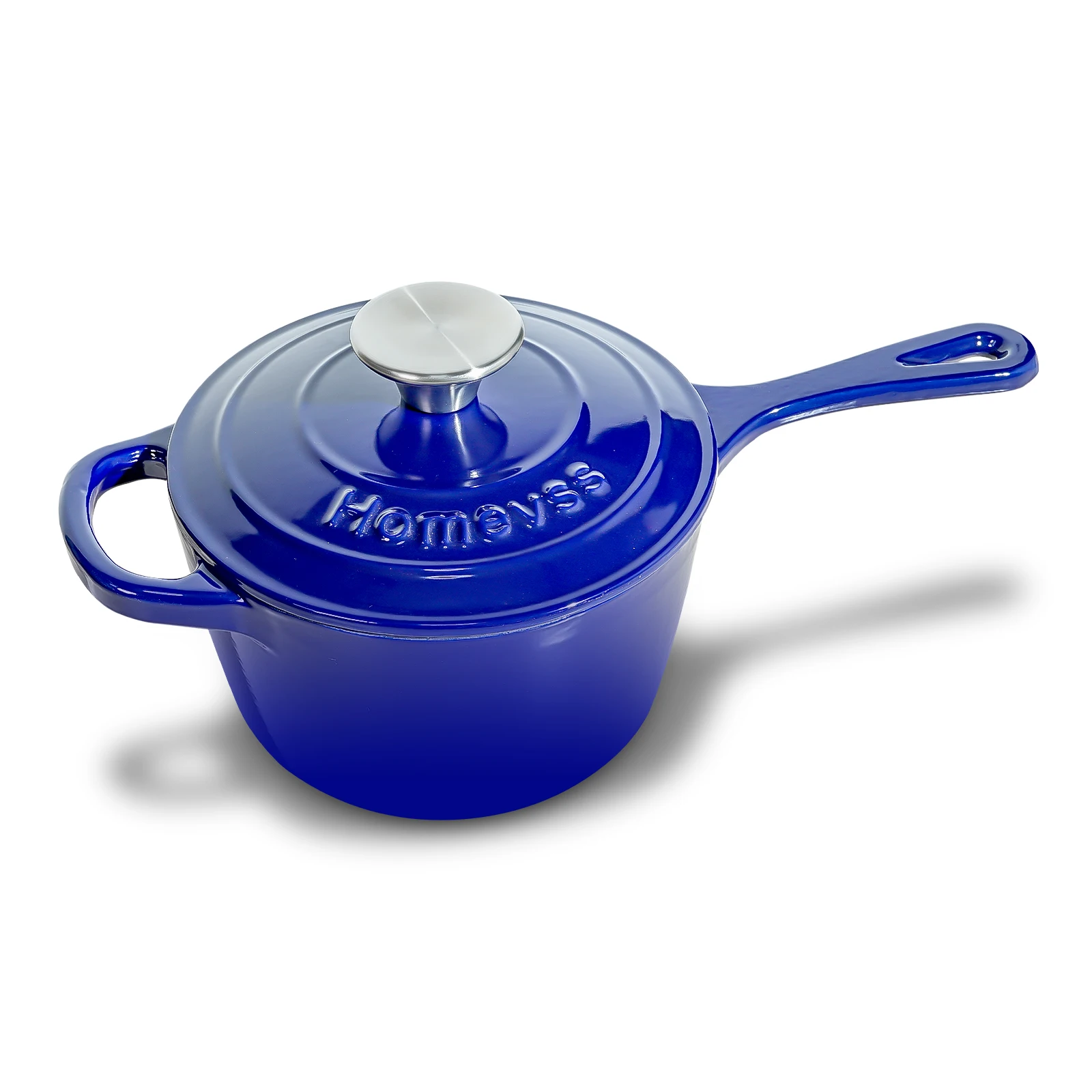
1.75QT Best-selling Household Cast Iron Enamel Pots Ceramic Non-stick Pans Multi-functional Stew Pots Flat-bottom Pans
For a reliable everyday option, consider the 1.75QT Best-selling Household Cast Iron Enamel Pots Ceramic Non-stick Pans, which offer excellent heat retention and a versatile flat-bottom design.
Frequently asked questions
Can I use an enamel cast iron pot on an induction cooktop?
Yes, most enamel cast iron pots are compatible with induction cooktops because they have a magnetic base. Check the product specifications to be sure.
How do I remove burnt food from an enamel cast iron pot?
Fill the pot with water and add a few tablespoons of baking soda. Bring to a boil, then let it simmer for 10-15 minutes. Let it cool, then scrub gently with a non-abrasive sponge.
Is it safe to put an enamel cast iron pot in the dishwasher?
While some manufacturers claim dishwasher safety, hand washing is recommended to preserve the enamel’s appearance and longevity. The high heat and harsh detergents in dishwashers can dull the finish over time.
What is the difference between enameled and bare cast iron?
Bare cast iron requires seasoning and is reactive to acidic foods, while enameled cast iron has a glass-like coating that is non-reactive and easier to clean. Enameled pots do not need seasoning and can be used with all types of ingredients.