
Blog
Essential Kitchen Utensils for Every Home Cook
Kitchen Essentials
Your Guide to Choosing Kitchen Utensils
Kitchen utensils are the backbone of any culinary endeavor, turning raw ingredients into delicious meals. Whether you’re a novice or a seasoned chef, having the right tools makes all the difference.
Why Quality Kitchen Utensils Matter
Investing in good kitchen utensils isn’t just about aesthetics—it’s about functionality and durability. High-quality tools perform better, last longer, and make cooking more enjoyable. They resist rust, withstand high heat, and offer comfortable grips, reducing hand fatigue during meal prep.
Materials: What to Look For
The material of your utensils impacts their performance and lifespan. Here are common options:
- Stainless Steel: Durable, non-reactive, and easy to clean. Ideal for most cooking tasks.
- Silicone: Heat-resistant and gentle on non-stick pans. Great for baking and stirring.
- Wood: Classic and gentle on cookware, but requires more care to prevent cracking.
- Nylon: Lightweight and heat-resistant up to a point, but can melt at high temperatures.
Stainless Steel: The Workhorse
Stainless steel utensils are a kitchen staple. They don’t rust or react with acidic foods, and they can handle high heat. Look for utensils with a comfortable, heat-insulated handle to protect your hands.
Must-Have Kitchen Utensils
Every kitchen needs a core set of utensils. Here’s a list to get you started:
- Spatula: For flipping and spreading.
- Ladle: Essential for soups, stews, and sauces.
- Slotted Spoon: Perfect for draining liquids from solid foods.
- Whisk: For blending ingredients smooth.
- Tongs: Great for grabbing and turning food.
The Versatile Ladle
A good ladle is a multi-tasker. Use it for serving soup, dishing out stews, or even for portioning batter. Look for one with a deep bowl and a comfortable handle.
Slotted Spoons: Why You Need One
A slotted spoon, also known as a skimmer, is invaluable for lifting food out of liquids—think dumplings, poached eggs, or blanched vegetables. The slots allow water or oil to drain away, leaving you with perfectly cooked food.
When choosing a slotted spoon, consider the slot size and handle length. A heat-insulated handle is a plus for safety.
Heat-Insulated Handles for Safety
Hot handles are a common kitchen hazard. Utensils with heat-insulated handles stay cool to the touch, even when left in a hot pot. This feature is especially important for ladles and slotted spoons used in simmering soups.
Look for handles made from silicone, rubber, or hollow stainless steel that doesn’t conduct heat.
Caring for Your Kitchen Utensils
Proper care extends the life of your utensils. Here are some tips:
- Hand wash when possible, especially wood and silicone.
- Avoid abrasive cleaners on stainless steel to prevent scratches.
- Store in a utensil crock or drawer organizer to keep them accessible.
- Check handles periodically for looseness or wear.
With minimal care, good utensils can last for years.
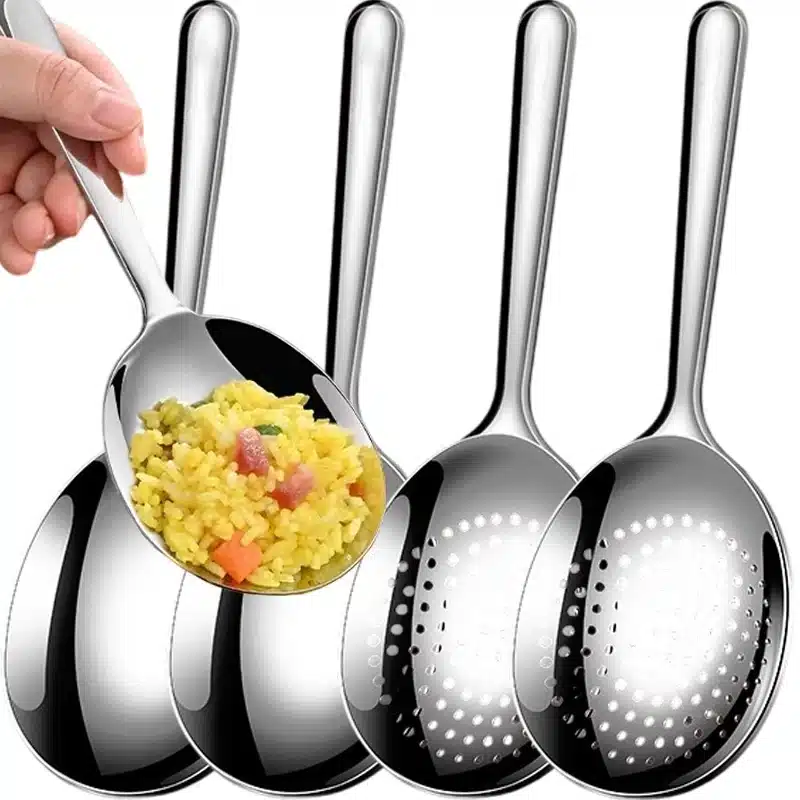
Stainless Steel Round Spoon Ladles Dining Soup Rice Spoon with Drain Hole Heat Insulated Handle Kitchen Utensils Serving Spoons
For a reliable all-rounder, consider the Stainless Steel Round Spoon Ladle with Drain Hole and Heat Insulated Handle—ideal for serving soups and rice with comfort.
Frequently asked questions
What kitchen utensils do I need as a beginner?
Start with a spatula, ladle, slotted spoon, whisk, and tongs. These cover most basic cooking tasks.
Are silicone utensils better than stainless steel?
Silicone is gentler on non-stick pans, but stainless steel is more durable and versatile. Many cooks have both.
How do I clean stainless steel utensils?
Wash with warm soapy water and a soft sponge. Avoid steel wool to prevent scratches. Dry thoroughly to prevent water spots.
Can I use metal utensils on non-stick pans?
It’s best to avoid metal utensils on non-stick cookware as they can scratch the coating. Use silicone or wood instead.
