
Blog
How to Choose an Extendable Dining Table for Your Home
Buying Guide
Your Guide to the Perfect Extendable Dining Table
An extendable dining table is a versatile solution for homes that need flexibility. Whether you’re hosting holiday dinners or enjoying quiet weeknight meals, the right table adapts to your life.
Why Choose an Extendable Dining Table?
An extendable dining table offers the best of both worlds: a compact footprint for daily use and expanded surface when guests arrive. Unlike fixed tables, these designs let you reclaim space without sacrificing style. For many homes, especially apartments or smaller dining rooms, an extendable table is a practical investment that grows with your needs.
Key Features to Consider
When shopping for an extendable dining table, focus on the extension mechanism, material, and base stability. Common mechanisms include butterfly leaves, drop-leaf designs, and pull-out slides. Butterfly leaves store inside the table and flip out, while drop-leaf sides can be raised. Pull-out slides are smooth but require space. Learn more about dining table types on Wikipedia.
Materials and Durability
Solid wood offers warmth and longevity, but engineered wood with veneers can be more affordable and resistant to warping. Metal frames add industrial flair, while glass tops create an airy feel. Consider your household: families with kids might prefer scratch-resistant finishes.
Sizing Your Extendable Dining Table
Measure your room before buying. Allow at least 36 inches of clearance around the table for chairs and movement. When extended, ensure the table still leaves comfortable walkways. A typical extendable dining table seats 4–6 when closed and 6–8 when open. For tight spaces, consider round or oval shapes that feel less bulky.
Styles to Match Your Decor
From rustic farmhouse to sleek modern, extendable tables come in every aesthetic. Mid-century modern designs with tapered legs are popular, as are industrial tables with metal bases. Choose a finish that complements your existing furniture—warm wood tones for cozy rooms, black or white for contemporary spaces.
Maintenance and Care Tips
Protect the surface with placemats and coasters. Clean spills immediately, especially on wood. For extension mechanisms, occasionally lubricate moving parts to ensure smooth operation. Avoid placing heavy items on the extended section without support.
Budgeting for Your Table
Prices vary widely based on material, size, and brand. Entry-level tables start around $300, while solid hardwood designs can exceed $2000. Set a budget but prioritize quality—a well-made extendable dining table lasts decades. Look for sturdy joints and smooth extension.
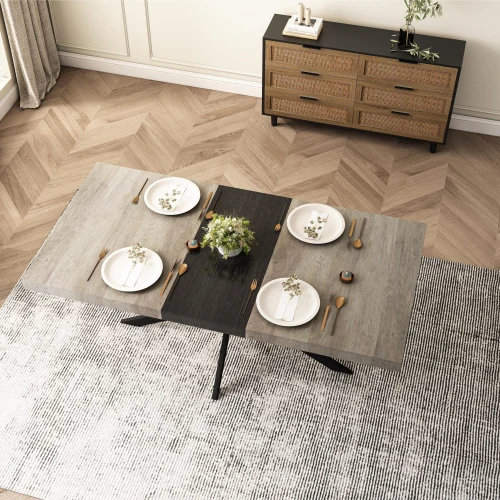
Retro Extendable Rectangular Dining Table with Grey Carole Top, Black Embossed Center Plate, X-Frame Base, and Storage Box
For a timeless option, consider the Retro Extendable Rectangular Dining Table with Grey Carole Top, Black Embossed Center Plate, X-Frame Base, and Storage Box—it combines style and function seamlessly.
Frequently asked questions
How do I measure for an extendable dining table?
Measure your dining area length and width, leaving at least 36 inches for chair clearance. Check the table’s dimensions both closed and fully extended to ensure it fits comfortably.
What is the best material for an extendable dining table?
Solid wood is durable and classic, but veneers offer affordability. Metal bases add stability, while glass tops are easy to clean but require careful handling.
How many people can an extendable dining table seat?
Most seat 4–6 when closed and 6–8 when extended. Always check the manufacturer’s specifications for exact capacity.
Are extendable dining tables sturdy?
Yes, when well-built. Look for tables with a solid base and secure locking mechanisms. Avoid models with flimsy extension supports.