
Blog
The Complete Guide to Choosing a Floating Bathroom Vanity
Buying Guide
Find Your Perfect Floating Bathroom Vanity
A floating bathroom vanity can transform your space, offering both style and practicality. Whether you’re renovating or just refreshing, understanding the key features will help you make the right choice.
Why Choose a Floating Bathroom Vanity?
Floating vanities, also known as wall-mounted vanities, are attached directly to the wall, leaving the floor beneath open. This design creates an airy, spacious feel, making even small bathrooms appear larger. The open floor also simplifies cleaning—no more maneuvering around legs or baseboards. Plus, you can install under-vanity lighting or storage baskets for added function.
Key Features to Look For
Material and Durability
Most floating vanities are made from plywood, MDF, or solid wood. Plywood offers excellent moisture resistance and strength, making it a popular choice. Look for vanities with a sealed finish to protect against humidity.
Size and Configuration
Measure your wall space carefully. Standard widths range from 24 to 60 inches. A 36-inch vanity is a versatile option for medium-sized bathrooms. Consider the depth as well—deeper vanities offer more counter space but may feel bulky in tight areas.
Storage Options
Floating vanities often feature drawers, cabinets, or open shelving. Soft-close hinges and drawers are a plus for quiet operation. If you need more storage, choose a model with a large cabinet or multiple drawers.
Installation Considerations
Proper installation is crucial for safety. Wall-mounted furniture requires sturdy wall anchors or blocking behind drywall. Ensure your wall can support the weight of the vanity and sink. Most vanities come with mounting brackets and instructions. If you’re not comfortable with DIY, hire a professional.
Style and Design
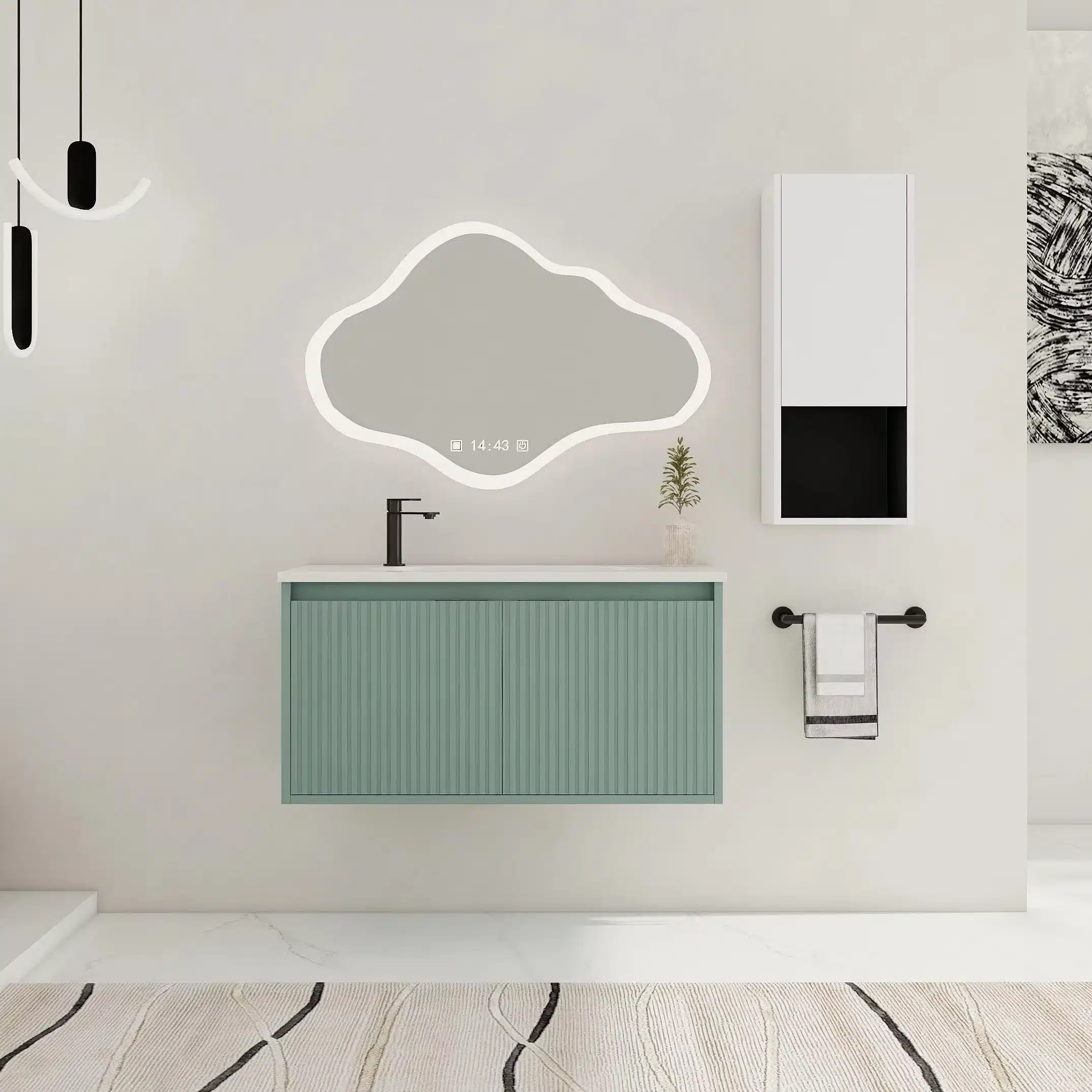
Floating bathroom vanities come in various styles: modern, rustic, minimalist, and more. Colors like white, gray, and wood tones are timeless. A two-tone finish, such as green and white, adds visual interest. The sink shape also matters—a drop-shaped basin offers a unique aesthetic while being functional.
Maintenance Tips
To keep your floating vanity looking new, wipe spills immediately and use a damp cloth for regular cleaning. Avoid harsh chemicals that can damage the finish. Check the mounting hardware periodically to ensure it remains secure.
Cost and Value
Prices vary widely based on material, size, and brand. Expect to spend between $200 and $1,500. Investing in a quality vanity pays off in longevity and daily enjoyment. Remember to factor in installation costs if needed.
36 Inch Bathroom Vanity and Sink Floating Plywood Cabinet with 2 Soft Close Doors Drop-Shaped Basin, Green and White Homein
For a stylish and functional option, consider the 36 Inch Bathroom Vanity and Sink Floating Plywood Cabinet with 2 Soft Close Doors Drop-Shaped Basin, Green and White Homein, which combines durable plywood construction with a unique drop-shaped basin.
Frequently asked questions
Can a floating vanity be installed on any wall?
Floating vanities need a wall that can support their weight. Drywall alone is not enough; you need to anchor into studs or use heavy-duty toggle bolts. For tile or stone walls, special anchors may be required.
How much weight can a floating vanity hold?
Most floating vanities can hold 100-200 pounds, including the weight of the sink and countertop. Always check the manufacturer’s specifications and ensure proper installation to avoid accidents.
Do floating vanities require special plumbing?
No, they use standard plumbing connections. However, the drain pipe and water supply lines need to be routed through the wall, which may require additional work if your current setup is floor-mounted.
Are floating vanities more expensive than traditional ones?
They can be slightly more expensive due to the wall-mounting hardware and installation. However, prices are comparable, and many find the aesthetic and cleaning benefits worth the extra cost.