
Blog
The Ultimate Floating TV Stand Buying Guide
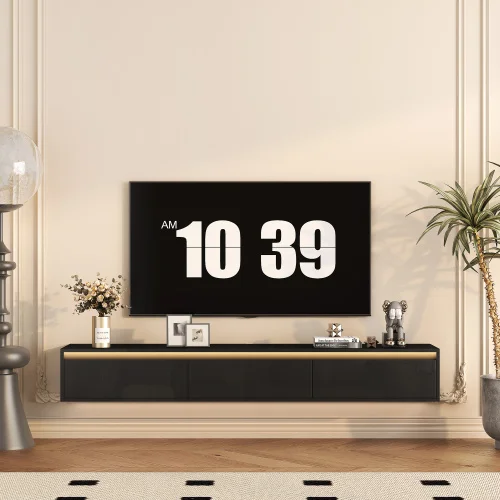
Buying Guide
Choose the Perfect Floating TV Stand for Your Home
A floating TV stand can transform your living room, offering a sleek, modern look while saving floor space. Whether you’re mounting a new TV or upgrading your media setup, choosing the right floating TV stand is key to achieving both style and function.
Why Choose a Floating TV Stand?
A floating TV stand is mounted to the wall, creating a clean, uncluttered appearance. Unlike traditional TV stands that sit on the floor, a floating design gives the illusion of more space, making it ideal for small or minimalist rooms. It also keeps the floor clear for easier cleaning and a more open feel.
Key Factors to Consider
Size and Weight Capacity
Measure your TV’s width and ensure the stand is at least a few inches wider for stability. Check the weight limit—most floating stands can hold 50–100 lbs, but heavier TVs may require a sturdier mount. Always verify the stand’s VESA compatibility if it includes a mount.
Material and Build Quality
Common materials include engineered wood (MDF, particleboard) and solid wood. MDF is affordable and smooth for painting, while solid wood offers durability and a premium feel. Look for reinforced brackets and a sturdy wall-mounting system. Learn more about MDF on Wikipedia.
Installation Tips for a Floating TV Stand
Installation requires locating wall studs (use a stud finder) and using heavy-duty anchors if needed. Most floating TV stands come with a mounting template. Ensure the stand is level and securely attached. If you’re not confident, hire a professional to avoid accidents.
Style and Design Options
Floating TV stands come in various finishes—white, black, walnut, or rustic wood. Some feature open shelving for media devices, while others have cabinets to hide clutter. Consider LED lighting for ambiance and built-in power outlets for convenience.
Maximizing Cable Management
A clean setup requires hiding cables. Look for a floating TV stand with cutouts or channels to route cords behind the unit. Use cable raceways or in-wall kits for a seamless look. Proper cable management enhances the minimalist appeal.
Safety and Childproofing
Wall-mounted stands reduce tipping hazards compared to floor units. Ensure the stand is anchored to studs and that heavy items are placed low. For homes with children, consider stands with rounded corners and secure fastenings.
Maintenance and Longevity
Dust regularly with a soft cloth. Avoid moisture near the stand. Check wall mounts annually for tightness. With proper care, a quality floating TV stand can last for years.
Goldoma Floating Floor Mount TV Stand with LED Lights and Power Outlet
For a complete solution, consider the Goldoma Floating Floor Mount TV Stand with LED Lights and Power Outlet, which combines style and functionality in one package.
Frequently asked questions
Can a floating TV stand hold a heavy TV?
Yes, most floating TV stands have a weight capacity of 50–100 lbs. Always check the manufacturer’s specifications and ensure the stand is mounted into wall studs for maximum support.
Do I need a professional to install a floating TV stand?
If you’re comfortable with basic tools and finding wall studs, you can install it yourself. However, for larger units or if you’re unsure, hiring a professional ensures safety and proper alignment.
What tools are needed for installation?
Common tools include a stud finder, drill, level, screwdriver, and possibly a socket wrench. Most stands come with mounting hardware, but you may need additional anchors for drywall.
Are floating TV stands safe for homes with children?
Yes, floating TV stands are generally safer than floor stands because they are wall-mounted and less likely to tip over. Ensure the stand is securely attached to studs and that heavy items are placed on lower shelves.
