
Blog
How to Choose the Perfect Freestanding Bathroom Vanity
Buying Guide
Your Guide to the Perfect Freestanding Bathroom Vanity
A freestanding bathroom vanity can transform your daily routine with style and storage. The right choice balances function and design for years of use.
Why Choose a Freestanding Bathroom Vanity?
A freestanding bathroom vanity stands alone, offering flexibility and a furniture-like look. Unlike wall-mounted options, it doesn’t require sturdy wall support, making it ideal for renovations or rentals. Its floor-supported design often provides more storage and a classic aesthetic that complements traditional and modern bathrooms alike. When shopping, consider how the vanity’s footprint will fit your layout and traffic flow.
Size and Layout Considerations
Measure your bathroom carefully before selecting a freestanding bathroom vanity. Standard widths range from 24 to 72 inches, with 36 inches being a popular choice for medium-sized bathrooms. Leave at least 21 inches of clearance in front for comfortable use, and ensure the vanity doesn’t block doors or fixtures. If your space is tight, a narrower model with a compact sink can maximize floor area while still offering essential storage.
Materials and Construction Quality
The durability of a freestanding bathroom vanity depends on its materials. Solid wood like oak or maple offers longevity and can be refinished, while plywood with a veneer balances cost and moisture resistance. Avoid particleboard in damp environments. Look for soft-close hinges and drawer slides, which prevent slamming and extend the life of the vanity. A quality finish—such as a multi-coat paint or stain—protects against humidity and daily wear.
Storage Solutions and Organization
Think about what you’ll store: toiletries, towels, cleaning supplies. A freestanding bathroom vanity with drawers is excellent for smaller items, while cabinets with shelves handle bulkier goods. Deep drawers can accommodate hair tools or baskets, and adjustable shelves let you customize the space. Some vanities include built-in dividers or cutouts for plumbing, but you can always add organizers later. Prioritize features that match your daily habits.
Drawers vs. Cabinets
Drawers offer easy access without bending or digging, ideal for everyday items like makeup or toothbrushes. Cabinets with doors work well for larger items like extra toilet paper or cleaning products. A combination of both in a single vanity provides the best of both worlds.
Style and Design Options
Your freestanding bathroom vanity sets the room’s tone. Traditional styles often feature carved legs, raised panels, and warm wood tones. Modern designs favor clean lines, flat fronts, and neutral colors like white or gray. Mid-century or farmhouse looks incorporate tapered legs and distressed finishes. Don’t forget the countertop: quartz, marble, or solid surface each bring different maintenance and aesthetic qualities. Choose a style that harmonizes with your existing tiles and fixtures.
Sink and Faucet Compatibility
Most freestanding bathroom vanities come with a pre-drilled countertop for a drop-in or undermount sink. Undermount sinks create a seamless look and are easier to wipe clean, while vessel sinks add a sculptural element but require more counter space. Ensure the vanity’s countertop material can handle the sink type. Faucet holes may be predrilled for a single-hole or widespread faucet; check the spread before purchasing. Also verify that the vanity accommodates your plumbing configuration (e.g., wall or floor drain).
Installation and Maintenance Tips
Installing a freestanding bathroom vanity is often simpler than wall-mounted options. Level the floor, then secure the vanity to the wall studs for stability. Use silicone caulk to seal the back edge against the wall to prevent water damage. For maintenance, wipe spills promptly and avoid harsh cleaners that can strip the finish. Periodically tighten hardware and lubricate drawer slides. With proper care, a quality freestanding vanity can last decades. For more on bathroom design principles, consult Wikipedia’s bathroom article.
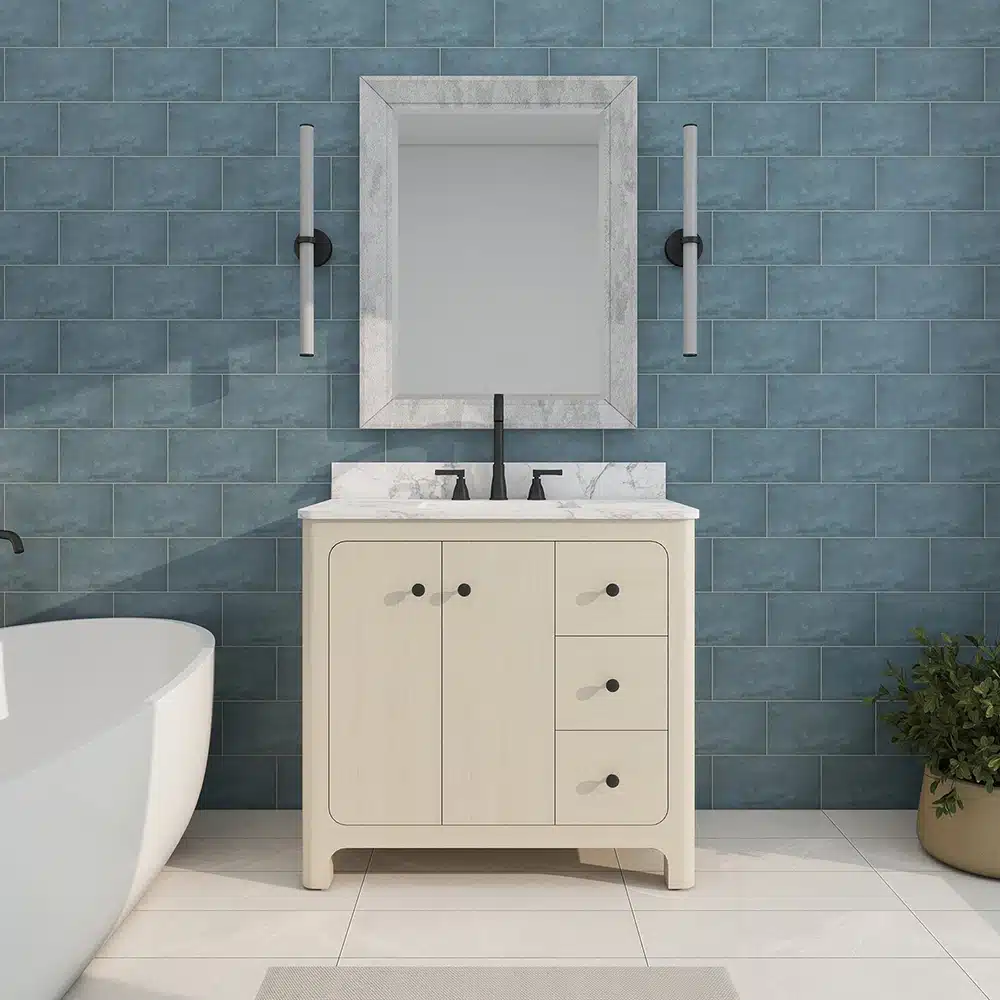
36″ Modern Freestanding Fully Assembled Soft Close Drawers Bathroom Vanity Cabinet with Sink
For a durable and stylish option, our 36″ Modern Freestanding Fully Assembled Soft Close Drawers Bathroom Vanity Cabinet with Sink offers ample storage and a sleek design.
Frequently asked questions
What is the standard height for a freestanding bathroom vanity?
Standard height is 32 to 36 inches, with 34 inches being common for comfort. Taller options (36-38 inches) are available for ergonomic preferences.
Can a freestanding vanity be used in a small bathroom?
Yes, compact models (24-30 inches wide) work well. Look for designs with a shallow depth (18-20 inches) to save space while still providing storage.
How do I clean and maintain a freestanding vanity?
Wipe with a damp cloth and mild soap; avoid abrasive cleaners. For wood vanities, use a furniture polish occasionally. Check for loose hardware yearly.
What type of sink is best for a freestanding vanity?
Undermount sinks are popular for easy cleaning and a seamless look. Vessel sinks add style but require more counter space. Drop-in sinks are budget-friendly and simple to replace.