
Blog
The Complete Guide to Choosing a Freestanding Kitchen Cabinet
Storage Solutions
Find Your Perfect Freestanding Kitchen Cabinet
A freestanding kitchen cabinet offers flexibility and style, allowing you to reconfigure your space without renovation. Whether you need extra storage or a statement piece, this guide helps you choose wisely.
Why Choose a Freestanding Kitchen Cabinet?
Freestanding cabinets provide mobility and easy installation, unlike built-ins. They can be moved when you rearrange your kitchen or move homes. Plus, they often come in designs that add character—from vintage to modern. For more on kitchen storage history, see this Wikipedia article.
Key Features to Look For
When shopping for a freestanding kitchen cabinet, consider material, size, and door style. Solid wood offers durability, while engineered wood is budget-friendly. Ensure the cabinet fits your counter height and depth. Adjustable shelves maximize storage for dishes, pantry items, or small appliances.
Material Choices
- Solid wood: timeless, sturdy, but heavier
- MDF with veneer: affordable, smooth finish
- Metal: industrial look, easy to clean
Styles to Match Your Decor
From farmhouse to contemporary, a freestanding kitchen cabinet can anchor your design. Shaker doors suit traditional kitchens, while flat-panel doors look modern. Open shelving on top displays dishware, and closed storage hides clutter. Choose a finish that complements your countertops and flooring.
Storage and Organization Tips
Maximize your freestanding cabinet with pull-out drawers, spice racks, or wine cubbies. Use clear bins for dry goods and label shelves. For deep cabinets, install a lazy Susan. A well-organized cabinet makes cooking easier and reduces countertop mess.
Measuring Your Space
Before buying a freestanding kitchen cabinet, measure width, depth, and height. Allow clearance for doors and drawers to open fully. Consider traffic flow—leave at least 36 inches of walkway. If placing near an appliance, check heat or moisture exposure.
Installation and Maintenance
Most freestanding cabinets require simple assembly: attach legs or base, then secure anti-tip brackets if needed. Level the cabinet with shims. Clean with a damp cloth and avoid harsh chemicals. Tighten hardware yearly to keep doors aligned.
Budget and Value
Prices range from $100 to $1,000+ depending on material and brand. Invest in quality if you plan to keep it long-term. A mid-range freestanding kitchen cabinet often offers the best balance of cost and durability. Check return policies and warranty before purchase.
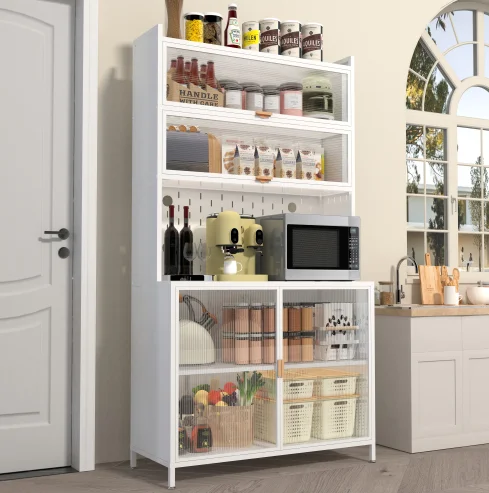
Modern Dustproof Freestanding Kitchen Storage Cabinet Flip Door Iron Sideboard by Manufacturer
For a durable and stylish option, consider our Modern Dustproof Freestanding Kitchen Storage Cabinet Flip Door Iron Sideboard by Manufacturer.
Frequently asked questions
Can a freestanding kitchen cabinet support heavy items like a microwave?
Yes, many models are built to hold microwaves or cookbooks, but always check the weight capacity per shelf. Solid wood or metal cabinets are best for heavy loads.
How do I prevent a freestanding cabinet from tipping over?
Use anti-tip brackets that attach the cabinet to the wall. This is especially important in homes with children or pets. Most cabinets include these brackets.
Are freestanding cabinets easy to assemble?
Most require basic assembly—attaching legs, shelves, and doors. Clear instructions and tools are usually included. Allow 30–60 minutes for setup.
Can I paint a freestanding kitchen cabinet?
Yes, if the material is paintable (wood or MDF). Lightly sand and prime first. Use a semi-gloss or satin finish for easy cleaning.
