
Blog
Best Fridge Storage Containers for Freshness & Organization
Kitchen Organization
Your Guide to Choosing Fridge Storage Containers
Finding the right fridge storage containers can transform your kitchen from chaotic to calm. Whether you’re meal prepping or just trying to keep produce crisp, the right containers make all the difference.
Why Good Fridge Storage Containers Matter
Proper fridge storage containers do more than just tidy up your shelves. They help extend the life of fruits and vegetables by controlling humidity and airflow. Airtight seals prevent odors from mingling, and clear containers let you see what you have at a glance, reducing food waste. According to the USDA, maintaining proper fridge organization is key to food safety.
Material Matters: Plastic, Glass, or Silicone?
Each material offers distinct benefits. Plastic containers are lightweight, shatterproof, and often more affordable. Look for BPA-free options. Glass containers are heavier but non-porous, stain-resistant, and safe for microwave and oven use. Silicone containers are flexible, collapsible, and great for saving space. Consider your daily use—if you’re often on the go, plastic might be best; for long-term storage, glass shines.
Plastic Containers
- Pros: Lightweight, durable, usually stackable
- Cons: Can stain or absorb odors over time
- Best for: Everyday use, meal prep, and leftovers
Glass Containers
- Pros: Non-porous, easy to clean, see-through
- Cons: Heavy, breakable, more expensive
- Best for: Baking, storing acidic foods, and reheating
Silicone Containers
- Pros: Collapsible, space-saving, flexible
- Cons: Can be flimsy, may not be fully airtight
- Best for: Travel, snacks, and odd-shaped items
Size and Shape: What Works Best for Your Fridge
Not all fridge storage containers are created equal. Rectangular shapes maximize shelf space, while square ones fit snugly in corners. Consider your typical grocery haul: deep containers for lettuce, shallow ones for berries, and narrow ones for condiments. A mix of sizes ensures you have the right container for every item. Measure your fridge shelves before buying to avoid containers that don’t fit.
Airtight Seals and Ventilation
For produce, ventilation is crucial. Many fridge storage containers feature adjustable vents to control humidity. Leafy greens need high humidity, while fruits like apples prefer lower humidity. Airtight seals are perfect for leftovers and dry goods. Look for silicone gaskets and sturdy latches that keep air out and freshness in. Poor seals lead to soggy vegetables or dried-out leftovers.
Cleaning and Maintenance Tips
Keep your fridge storage containers in top shape by washing them after each use. Most are dishwasher safe, but check the manufacturer’s instructions. Avoid using abrasive scrubbers on plastic to prevent scratches where bacteria can hide. For stubborn odors, soak containers in a baking soda solution. Regular cleaning prevents mold and keeps your fridge smelling fresh.
How to Organize Your Fridge with Containers
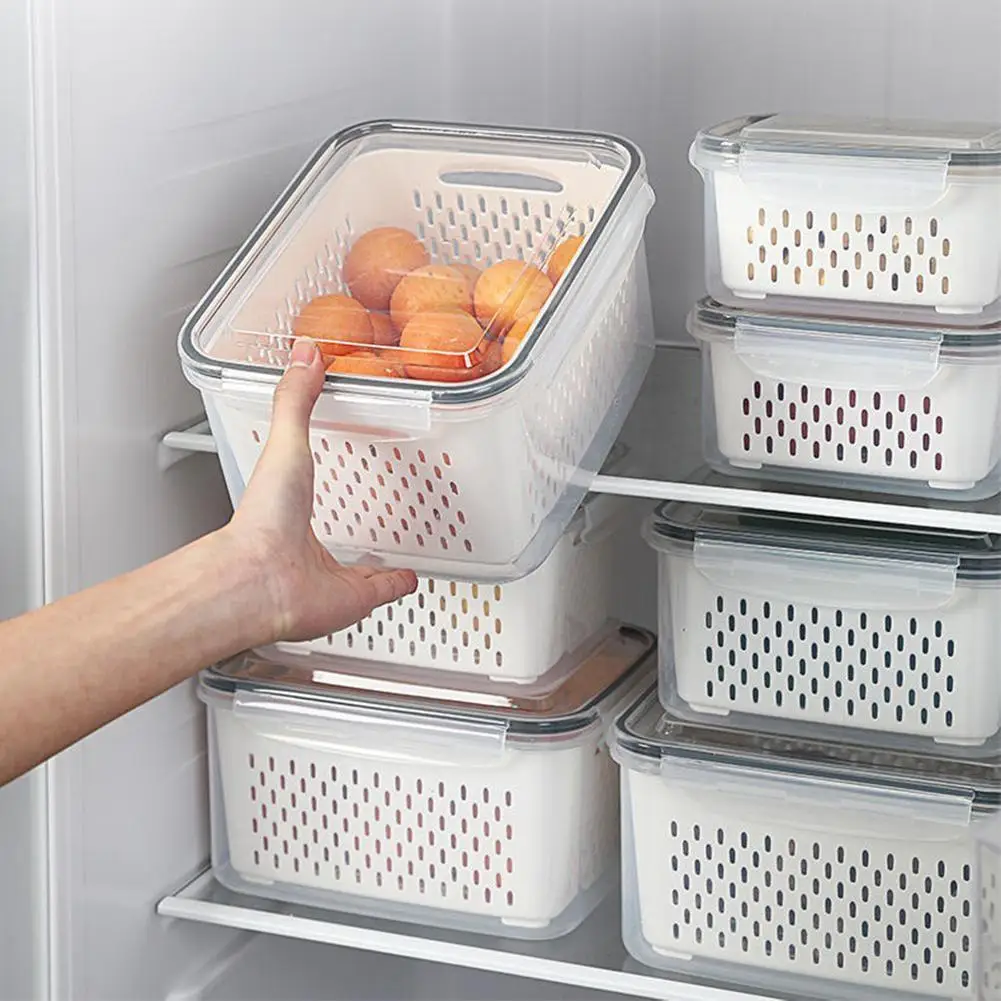
Start by grouping similar items: dairy together, meats on the bottom shelf, and produce in designated bins. Use clear fridge storage containers so you can see contents without opening. Label containers with dates to track freshness. Store leftovers in uniform containers for easy stacking. A well-organized fridge not only looks great but also saves time and reduces food waste. Consider our Refrigerator Storage Box Fridge Organizer Fresh Vegetable Fruit Boxes Drain Basket Storage Containers Pantry Kitchen Organizer for a versatile solution that fits most shelves.
Eco-Friendly and Sustainable Options
If you’re environmentally conscious, choose reusable containers over disposables. Glass and stainless steel are long-lasting and recyclable. Avoid single-use plastic bags. Many brands now offer containers made from recycled materials. By investing in quality fridge storage containers, you reduce your carbon footprint and save money in the long run.
Refrigerator Storage Box Fridge Organizer Fresh Vegetable Fruit Boxes Drain Basket Storage Containers Pantry Kitchen Organizer
For a versatile option that keeps produce fresh and your fridge tidy, consider our Refrigerator Storage Box Fridge Organizer Fresh Vegetable Fruit Boxes Drain Basket Storage Containers Pantry Kitchen Organizer.
Frequently asked questions
Can I use any container in the fridge?
Most containers are safe for fridge use, but check for temperature ratings. Avoid containers not designed for cold temperatures, as they may crack.
How do I prevent my containers from smelling?
Wash with warm soapy water and baking soda. For tough odors, soak in a vinegar solution. Glass containers are less prone to absorbing smells.
Are glass containers better than plastic?
Glass is non-porous and doesn’t stain, but it’s heavier and breakable. Plastic is lighter and cheaper but may scratch. Choose based on your needs.
What size containers should I buy?
Start with a set of mixed sizes: small (1-2 cups) for snacks, medium (4-6 cups) for leftovers, and large (8+ cups) for produce. Measure your fridge shelves first.