
Blog
The Heart Baking Mold Guide: Tips & Recipes
Baking Essentials
Find the Perfect Heart Baking Mold for Your Kitchen
A heart baking mold can transform simple desserts into heartfelt creations. Whether for Valentine’s Day or a casual weekend bake, the right heart baking mold makes all the difference.
Why Choose a Heart Baking Mold?
A heart baking mold adds a personal touch to cakes, brownies, and more. Unlike standard shapes, hearts instantly convey love and care. Silicone versions are flexible, easy to release, and dishwasher-safe. Plus, they withstand temperatures from -40°F to 446°F, making them suitable for freezing and baking.
Consider the size: mini hearts for cupcakes, larger ones for layer cakes. Depth matters too—shallow molds for cookies, deeper for muffins. Always check if the mold is BPA-free and food-grade.
Top Uses for a Heart Baking Mold
- Cakes & Brownies: Pour batter directly for shaped treats.
- Chocolates & Candies: Melt and pour for homemade gifts.
- Soap & Crafts: Use for non-edible projects like resin or soap.
- Ice Cubes & Jell-O: Fun shapes for parties.
For best results, lightly grease the mold even if non-stick. Silicone molds may need a quick spray for intricate details.
How to Care for Your Heart Baking Mold
Hand wash with mild soap and water, or place on the top rack of the dishwasher. Avoid sharp utensils that could puncture silicone. Store flat or rolled (not folded) to prevent creases. With proper care, a quality heart baking mold lasts for years.
For more on silicone bakeware safety, see Wikipedia’s silicone safety page.
Recipes Perfect for a Heart Baking Mold
Classic Red Velvet Hearts
Use your favorite red velvet batter, fill hearts 2/3 full, bake at 350°F for 12-15 minutes. Cool completely before removing. Dust with powdered sugar.
Chocolate Ganache Hearts
Bake simple chocolate cake in heart molds. Once cooled, dip in ganache (1:1 cream to chocolate) and refrigerate. Decorate with sprinkles.
Fruit-Filled Mini Hearts
Add a dollop of raspberry jam before baking for a surprise center. Pair with vanilla frosting.
Choosing the Right Material: Silicone vs. Metal
Silicone heart baking molds are flexible, non-stick, and easy to store. Metal molds give sharper edges but require greasing. Silicone is ideal for intricate shapes and beginners. Metal works better for high-heat browning but can rust over time. Consider your baking style: if you make delicate macarons, silicone is a must.
Heart Baking Mold Gift Ideas
Pair a heart baking mold with a recipe book, sprinkles set, or baking mix for a thoughtful present. Add a handwritten card with a favorite recipe. It’s a gift that encourages creativity in the kitchen.
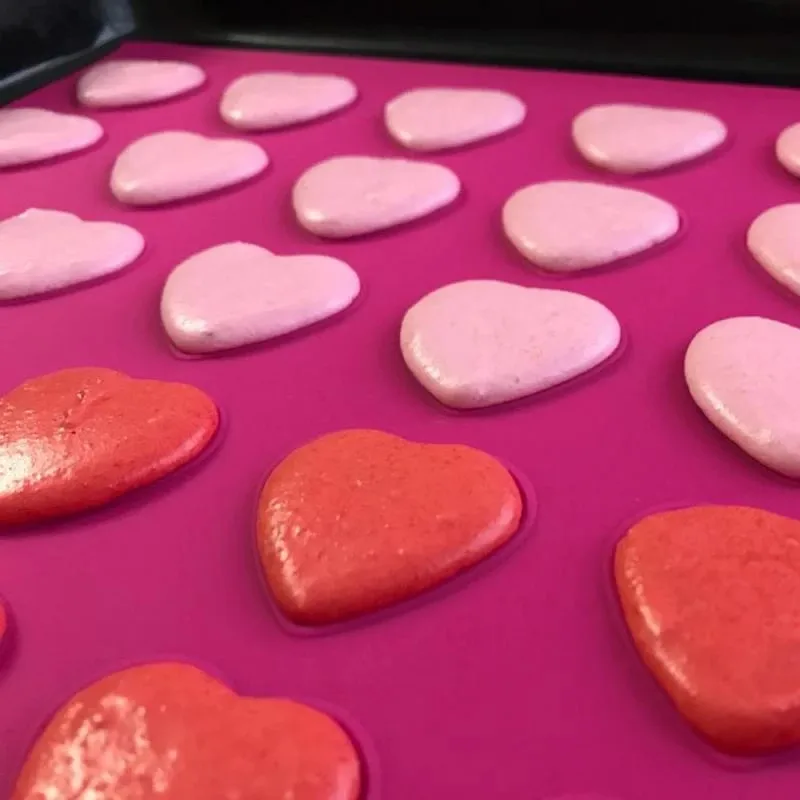
Hearts Shape Silicone Macaron Mold Non-Stick Muffin Oven Pad DIY Baking Mold Mat DIY Bakeware Cake Making Tools
Consider the Hearts Shape Silicone Macaron Mold Non-Stick Muffin Oven Pad DIY Baking Mold Mat DIY Bakeware Cake Making Tools for a reliable, versatile option.
Frequently asked questions
Can I use a heart baking mold in the microwave?
Yes, if it’s silicone and labeled microwave-safe. Avoid metal molds.
How do I prevent sticking in a silicone heart mold?
Lightly grease with butter or cooking spray even if non-stick.
What’s the best temperature for silicone heart baking molds?
Most silicone molds tolerate up to 446°F (230°C). Check manufacturer guidelines.
Can I freeze batter in a heart baking mold?
Yes, silicone molds are freezer-safe. Fill and freeze, then pop out frozen shapes.
