
Blog
The Ultimate Guide to Choosing a Japanese Chef Knife
Knife Guide
Your Perfect Japanese Chef Knife Awaits
A Japanese chef knife is more than a tool—it’s an extension of your hand, precision-engineered for years of flawless cuts. Whether you’re a home cook or a professional, finding the right blade transforms your kitchen experience.
Understanding the Japanese Chef Knife
The Japanese chef knife, often referred to as a gyuto, is a versatile blade that excels in slicing, dicing, and mincing. Its thinner edge and harder steel allow for razor-sharp cuts with minimal effort. Unlike Western knives, which are typically thicker and heavier, a Japanese chef knife prioritizes precision and edge retention. The history of these knives dates back to traditional samurai sword-making, where each blade was forged with meticulous care. Modern versions combine centuries of craftsmanship with contemporary materials, offering home cooks and professionals alike an unparalleled cutting experience.
Key Types of Japanese Chef Knives
When exploring Japanese chef knives, you’ll encounter several distinct styles. The gyuto is the all-purpose workhorse, similar to a Western chef’s knife but with a flatter profile and sharper edge. The santoku is a shorter, multi-purpose knife with a sheep’s foot tip, ideal for chopping, slicing, and mincing. For detailed work, consider a petty knife, which is like a small chef’s knife. Each type has its strengths, but for most tasks, a gyuto or santoku is a great starting point. As you build your collection, you may also want a nakiri for vegetables or a deba for fish.
Steel Choices: Carbon vs. Stainless Steel
The steel used in a Japanese chef knife greatly affects its performance and maintenance. Carbon steel knives are prized for their exceptional sharpness and ease of sharpening, but they require immediate drying and oiling to prevent rust. Stainless steel knives, on the other hand, are more resistant to corrosion and easier to maintain, though they may not hold an edge as long. High-end stainless steels like VG-10 or SG2 offer a good balance of hardness and stain resistance. For most home cooks, a stainless steel Japanese chef knife is a practical choice, offering durability and low maintenance. If you’re willing to put in extra care, carbon steel rewards you with unmatched sharpness.
Handle Styles and Ergonomics
Japanese chef knives typically feature either a Western-style handle or a traditional Japanese (wa) handle. Western handles are usually made of synthetic materials like POM or Micarta, providing a comfortable, balanced grip. Japanese handles are often octagonal or D-shaped from magnolia wood or pakka wood, offering a lighter feel and better control for pinch grips. The choice is personal: if you have larger hands or prefer a heavier knife, a Western handle might suit you. If you value precision and a lighter touch, a wa handle could be ideal. Try holding different styles to see what feels most natural.
Handle Materials to Consider
- Pakka wood: Durable and water-resistant, common in entry-level Japanese knives.
- Magnolia wood: Lightweight and traditional, often used with carbon steel blades.
- Micarta: A synthetic composite that is very durable and grippy when wet.
- POM (polyoxymethylene): A hard, smooth plastic that resists moisture and cracking.
Your grip and cutting style should guide your choice. A well-balanced handle reduces fatigue during long prep sessions.
Edge Geometry and Sharpening
The edge of a Japanese chef knife is ground at a more acute angle than Western knives, typically 15 degrees per side or even less. This creates a sharper but more delicate edge. To maintain it, you’ll need a whetstone—avoid electric sharpeners that can damage the blade. Start with a medium grit (1000) to sharpen, then a fine grit (3000-6000) to polish. Proper technique involves holding the knife at a consistent angle and applying light pressure. Regular honing with a ceramic rod can also prolong the edge. With practice, you can keep your knife performing like new for years.
Caring for Your Japanese Chef Knife
To preserve the quality of your Japanese chef knife, follow a few simple rules. Always hand wash with mild soap and dry immediately—never put it in the dishwasher. Store it in a knife block, magnetic strip, or blade guard to protect the edge. Avoid cutting on hard surfaces like glass or stone; use wood or plastic cutting boards. For carbon steel knives, wipe the blade after each use and apply a thin coat of mineral oil if storing for long periods. With proper care, your knife will remain sharp and beautiful for decades.
For a deeper dive into the history and craftsmanship of Japanese blades, check out this Wikipedia article on Japanese kitchen knives.
Popular Blade Shapes and Their Uses
Beyond the gyuto and santoku, Japanese chef knives come in specialized shapes. The sujihiki is a long, narrow slicer perfect for carving meats. The yanagiba is a single-bevel knife used for sushi and sashimi. The usuba is a thin, straight-edged vegetable knife for precise cuts. While these are more advanced, understanding their purposes helps you decide if your cooking style calls for one. For most home kitchens, a gyuto or santoku covers 90% of tasks, and adding a petty knife handles smaller jobs.
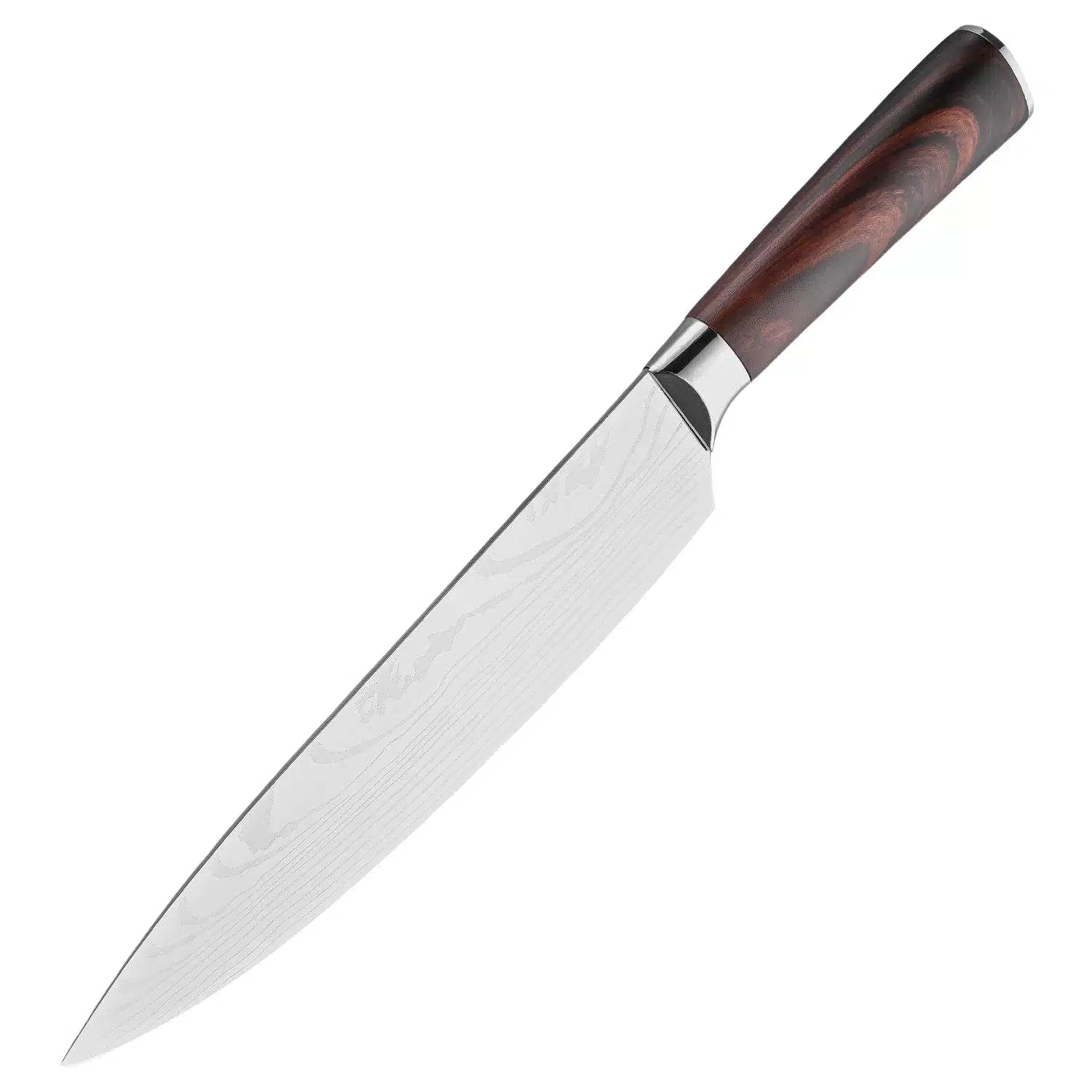
High Quality Stainless Steel Japanese Chef Knife Sharp 8 Inch Kitchen Santoku Knife
For a reliable, low-maintenance option, our High Quality Stainless Steel Japanese Chef Knife Sharp 8 Inch Kitchen Santoku Knife offers a balanced blend of sharpness and durability, perfect for daily use.
Frequently asked questions
What is the best Japanese chef knife for beginners?
For beginners, a stainless steel gyuto or santoku with a Western handle is a great start. These knives are versatile, easy to maintain, and forgiving of less-perfect technique.
How often should I sharpen my Japanese chef knife?
Depending on use, sharpen every 1-3 months with a whetstone. Regular honing with a ceramic rod between sharpenings can extend the edge life.
Can I use a Japanese chef knife on bones or frozen food?
No, Japanese chef knives are designed for soft ingredients. Using them on bones, frozen food, or hard squash can chip the blade. Use a cleaver or heavy Western knife for those tasks.
What is the difference between a gyuto and a santoku?
A gyuto is a general-purpose chef knife with a curved belly, ideal for rocking cuts. A santoku has a flatter edge and a sheepsfoot tip, making it better for chopping and push-cutting.
