
Blog
The Essential Guide to Japanese Kitchen Knives
Buying Guide
Mastering Japanese Kitchen Knives for Home Chefs
Japanese kitchen knives are revered worldwide for their sharpness and precision. Whether you’re a home cook or a professional, understanding these blades transforms your cooking experience.
Why Choose Japanese Kitchen Knives?
Japanese kitchen knives are crafted with a focus on edge geometry and hardness, often using high-carbon steel. This results in blades that stay sharp longer and cut with less effort. Unlike Western knives, they are typically lighter and thinner, allowing for precise slices through fish, vegetables, and meat. The artistry behind these knives elevates them from mere tools to cherished kitchen companions.
Types of Japanese Kitchen Knives
Understanding the different styles helps you pick the right blade for your tasks.
- Gyuto: A versatile chef’s knife for slicing, dicing, and chopping. It resembles a Western chef’s knife but with a thinner profile.
- Santoku: A multi-purpose knife with a flat edge and sheepsfoot tip, ideal for slicing, dicing, and mincing. It excels at vegetable prep and boneless meats.
- Nakiri: A double-bevel knife designed specifically for vegetables, with a straight blade that allows for clean, chopping motions.
- Deba: A heavy, single-bevel knife used for butchering fish and poultry, with a thick spine for cutting through bones.
- Yanagiba: A long, single-bevel slicer for raw fish, essential for sushi and sashimi.
Key Features to Consider When Buying Japanese Kitchen Knives
When shopping for japanese kitchen knives, pay attention to these factors:
- Steel Type: High-carbon steel (like Shirogami or Aogami) holds an edge well but requires care to prevent rust. Stainless steel is easier to maintain but may not get as sharp.
- Blade Geometry: Single-bevel knives (like Deba) are sharper but require skill; double-bevel knives are more forgiving.
- Handle: Traditional wa handles are octagonal or D-shaped, offering a balanced grip. Western handles are heavier and more familiar.
- Hardness (HRC): Hardness ratings of 60-63 are common; higher hardness means better edge retention but more brittleness.
How to Maintain Your Japanese Kitchen Knives
Proper care extends the life of your knives. Always hand wash and dry immediately—never put them in the dishwasher. Use a wooden or plastic cutting board to protect the edge. Regular honing with a ceramic rod keeps the edge aligned, while occasional sharpening with whetstones restores the blade. Store knives in a block, magnetic strip, or sheath to prevent damage.
Japanese Kitchen Knives vs. Western Knives
The main differences lie in steel hardness and blade geometry. Japanese knives are harder (60-63 HRC vs. 52-58 HRC) and thinner, allowing for sharper edges but less durability for heavy tasks like hacking bones. Western knives are thicker and more robust, better for rough work. For delicate prep, japanese kitchen knives offer unmatched precision. Many cooks own both types for different purposes.
Recommended Starter Set: The IOKO 3-Piece
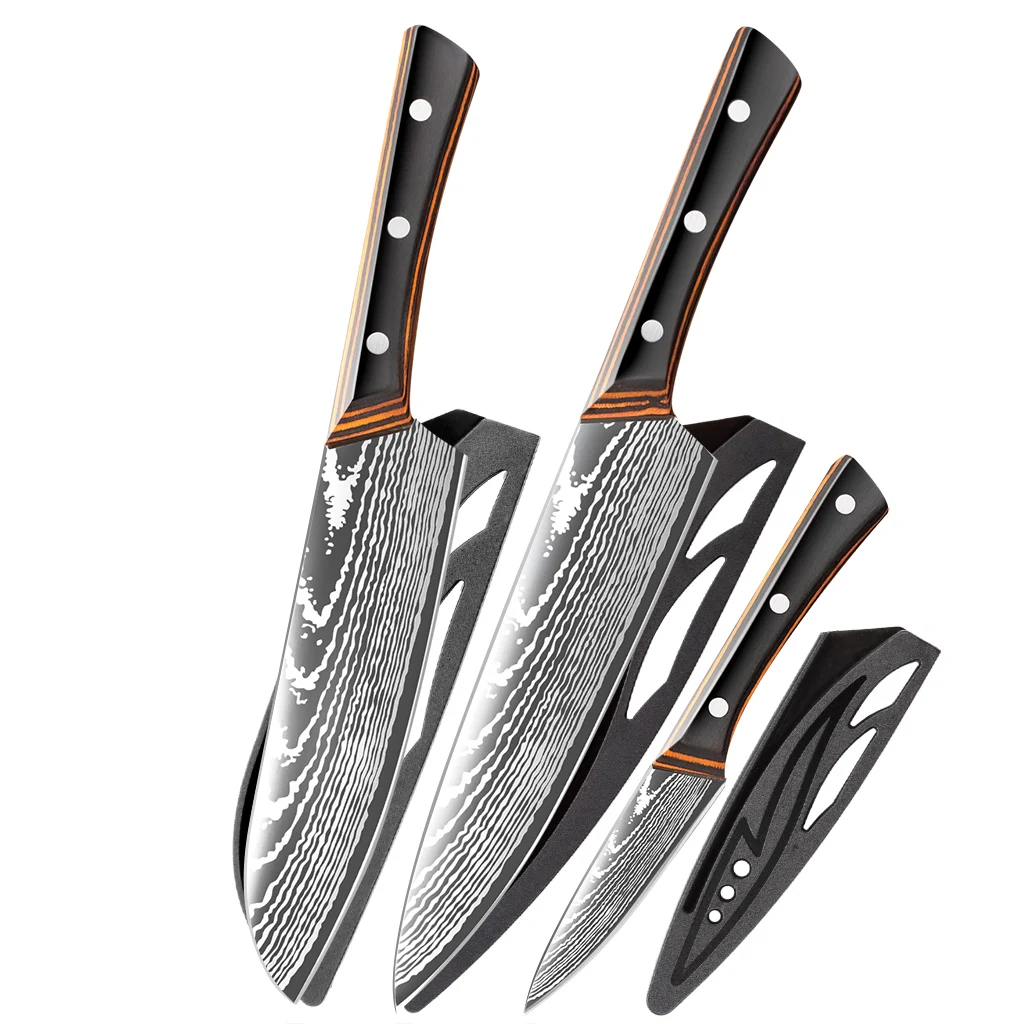
For those beginning their journey, the IOKO 3 PCS Stainless Steel Chef Kitchen Knife Set offers a santoku, butcher cleaver, and utility knife—all in a Japanese style. This set provides versatility for everyday tasks without overwhelming a new enthusiast. The stainless steel construction ensures easy maintenance, while the santoku blade excels at slicing and dicing.
Where to Learn More About Japanese Knife Craftsmanship
To dive deeper into the history and making of these blades, visit Wikipedia’s article on Japanese kitchen knives. It covers traditional forging methods and regional styles like Sakai and Seki.
IOKO 3 PCS Stainless Steel Chef Kitchen Knife Set Santoku Sushi Japanese Style Butcher Cleaver Chef Utility Kitchen Knife Set
For a reliable entry point, consider the IOKO 3 PCS Stainless Steel Chef Kitchen Knife Set, which includes a Santoku, butcher cleaver, and utility knife in a Japanese style.
Frequently asked questions
What is the best Japanese kitchen knife for beginners?
A Gyuto or Santoku is ideal for beginners due to their versatility and double-bevel edge, making them easier to use than single-bevel knives. Look for a stainless steel option for low maintenance.
How often should I sharpen my Japanese kitchen knives?
Depending on use, sharpen every 1-3 months with whetstones. Regular honing with a ceramic rod between sharpenings helps maintain the edge.
Can Japanese kitchen knives be used on all cutting boards?
Avoid glass, stone, or hard plastic boards as they dull the edge quickly. Opt for wood or soft plastic boards to preserve sharpness.
Are Japanese kitchen knives dishwasher safe?
No, they should never be put in the dishwasher. Hand wash and dry immediately to prevent rust and damage to the handle.
