
Blog
How to Style a Jute Pouf Ottoman in Your Home
Buying Guide
The Ultimate Jute Pouf Ottoman Buying Guide
A jute pouf ottoman can transform any room with its natural texture and versatility. Whether you need extra seating, a footrest, or a decorative accent, this guide will help you choose the perfect one.
Why Choose a Jute Pouf Ottoman?
Jute is a natural, biodegradable fiber that adds warmth and texture to interiors. A jute pouf ottoman is lightweight yet durable, making it easy to move around. It works well in bohemian, coastal, and modern farmhouse styles, offering a casual, earthy vibe. Plus, jute is sustainable—a great choice for eco-conscious shoppers.
Key Features to Look For
When shopping for a jute pouf ottoman, consider these factors:
- Material blend: Pure jute can be rough; a cotton-jute blend softens the texture.
- Filling: Look for high-density foam or recycled fiber fill for comfort and shape retention.
- Construction: Handwoven or machine-made? Handwoven adds artisanal charm but may have slight irregularities.
- Size and shape: Cube shapes (around 18 inches) are versatile; round poufs offer a softer look.
Top Styling Ideas for Your Jute Pouf Ottoman
Here are three ways to incorporate a jute pouf ottoman into your decor:
1. As a Footrest
Place it in front of an armchair or sofa for a comfortable footrest. The natural texture pairs well with leather or linen upholstery.
2. As Extra Seating
Pull it out when guests arrive. It’s perfect for casual seating around a coffee table. Add a small cushion on top for extra comfort.
3. As a Side Table
Top it with a tray and use it to hold drinks, books, or a plant. Its lightweight design makes it easy to move as needed.
Care and Maintenance
To keep your jute pouf ottoman looking fresh:
- Vacuum regularly with a brush attachment to remove dust.
- Spot clean spills immediately with a damp cloth; avoid soaking the jute.
- Rotate the pouf occasionally to ensure even wear.
- Keep out of direct sunlight to prevent fading.
Jute vs. Other Natural Fibers
How does jute compare to similar materials?
- Jute vs. Seagrass: Seagrass is more water-resistant but rougher. Jute is softer and more affordable.
- Jute vs. Wool: Wool is warmer and softer but pricier and less eco-friendly. Jute is better for warm climates.
- Jute vs. Cotton: Cotton is more comfortable but lacks the natural texture. A jute-cotton blend offers the best of both.
For more on natural fibers, check out this Wikipedia article on jute.
Sizing Guide: What Size Pouf Do You Need?
Standard pouf heights range from 14 to 20 inches. For footrests, choose a height that aligns with your seat cushion. For seating, 18-inch cubes work well. Consider your space: a large pouf can anchor a room, while a small one tucks neatly into a corner.
Where to Place a Jute Pouf Ottoman
These versatile pieces can go almost anywhere: in the living room as a coffee table accent, in the bedroom for a reading nook, or in a home office for a quick break. Their neutral tones blend with any color scheme.
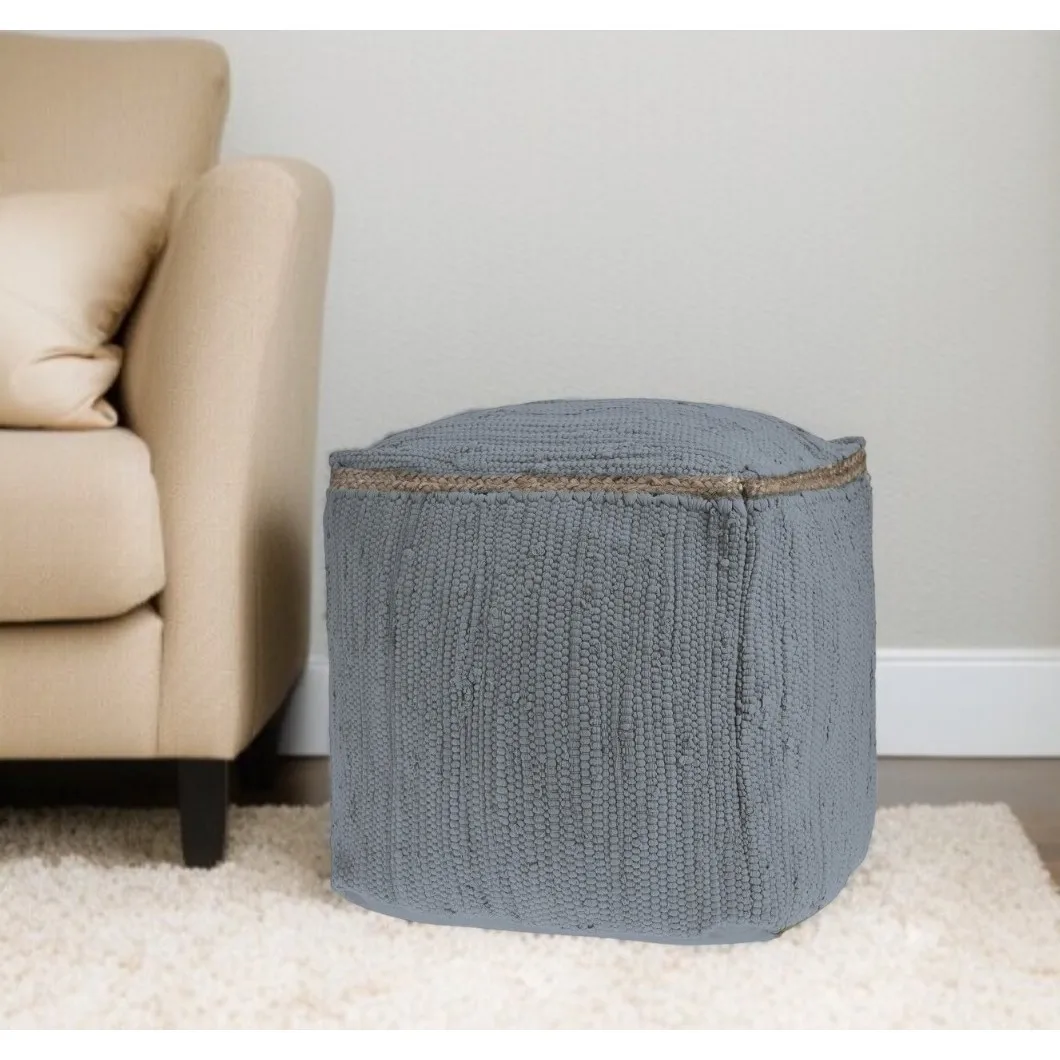
Goldoma 18″ Cotton and Jute Cube Pouf Ottoman – Gray Natural Foldable Stool for Living Room
For a durable and stylish option, consider the Goldoma 18″ Cotton and Jute Cube Pouf Ottoman – it’s foldable for easy storage and blends natural fibers with a neutral gray finish.
Frequently asked questions
Are jute pouf ottomans comfortable for sitting?
Yes, especially when filled with high-density foam or a soft fiber blend. Some models include a removable cushion for added comfort.
Can jute poufs be used outdoors?
Jute is not waterproof and can rot if exposed to moisture. It’s best used indoors or on covered patios.
How do I clean a jute pouf ottoman?
Vacuum regularly and spot clean with a mild detergent and damp cloth. Avoid machine washing or soaking.
What is the typical weight capacity of a jute pouf?
Most jute poufs support up to 250–300 pounds, but check the manufacturer’s specifications.