
Blog
The Ultimate Kitchen Drying Mat Guide: Absorb, Protect, Style
Buying Guide
Find Your Perfect Kitchen Drying Mat
A kitchen drying mat is an essential tool for protecting your countertops and keeping dishes dry. Whether you’re air drying delicate glassware or just need a spot for freshly washed mugs, the right mat makes all the difference.
Why You Need a Kitchen Drying Mat
Every kitchen benefits from a dedicated area to let dishes air dry. A kitchen drying mat not only absorbs excess water but also cushions your countertops from scratches and chips. Unlike a towel, which stays damp and can harbor bacteria, a well-designed mat wicks moisture away and dries quickly. Plus, it adds a touch of personality to your sink area—whether you prefer classic neutrals or festive patterns.
Key Features to Look For
When shopping for a kitchen drying mat, consider these factors:
- Absorbency: Look for microfiber or diatomaceous earth materials that soak up water fast.
- Non-Slip Backing: A rubber or silicone bottom keeps the mat in place, even when wet.
- Size: Make sure it fits your counter space and accommodates your largest dishes.
- Ease of Cleaning: Machine-washable mats save time and effort.
Material Matters
Microfiber mats are highly absorbent and soft, while diatomaceous earth offers a stone-like feel that dries almost instantly. Diatomaceous earth is a natural material known for its rapid water absorption. Choose based on your aesthetic and maintenance preferences.
How to Care for Your Mat
To extend the life of your kitchen drying mat, follow these tips:
- Shake off crumbs and rinse after each use.
- Machine wash on a gentle cycle with mild detergent (avoid fabric softener).
- Air dry or tumble dry on low heat—never high heat, which can damage the backing.
- Replace every 6–12 months or when absorbency decreases.
Styling Your Drying Mat
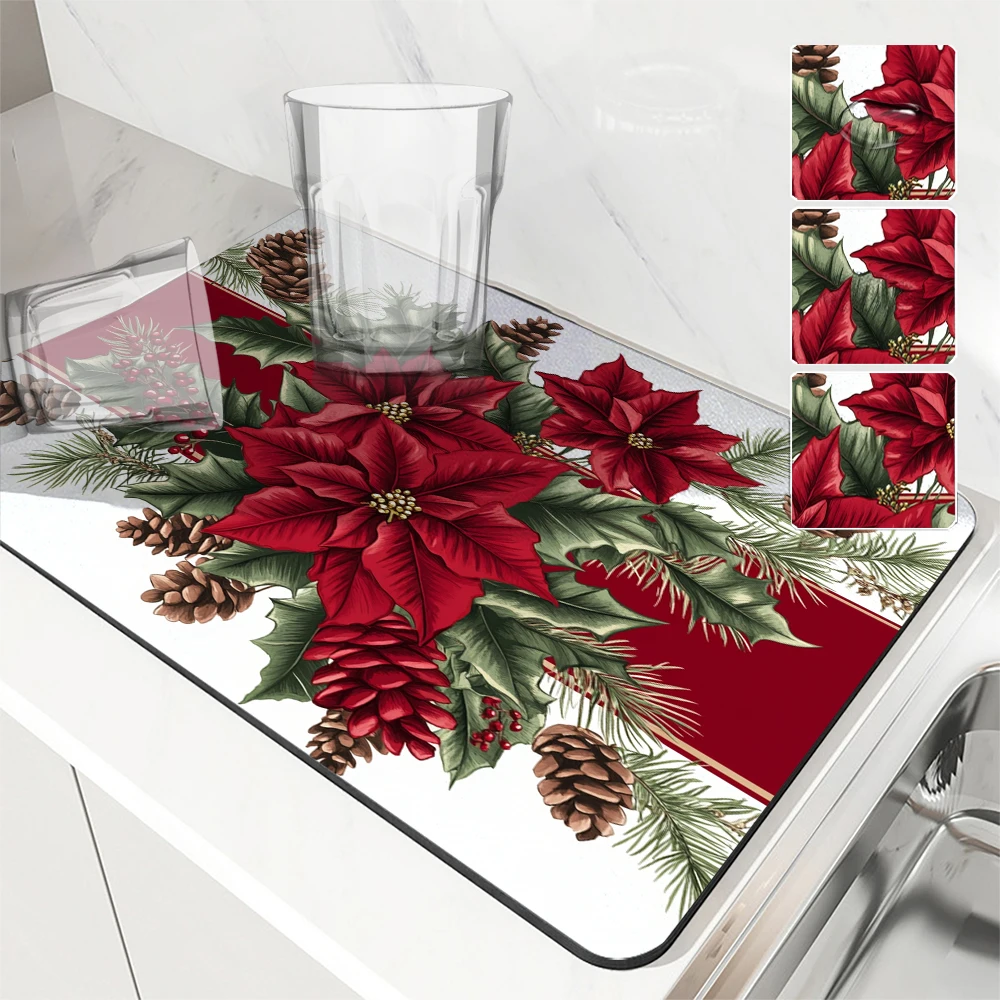
A kitchen drying mat can double as a decorative accent. Choose colors that complement your kitchen’s palette, or go seasonal with holly and pine motifs for Christmas. Place it next to the sink for a cohesive look that’s both functional and inviting.
Versatile Uses Beyond Dish Drying
Don’t limit your mat to just dishes. Use it as a bathroom drain pad, a protective surface for plants, or a trivet for hot pots. Its absorbent and non-slip properties make it handy in multiple rooms. A single kitchen drying mat can earn its keep in many ways.
Top Recommendations
After testing dozens of mats, our editors favor those that combine absorbency, durability, and style. For a festive option, the Absorbent Coffee Mat Dish Draining Mat Christmas Holly Pine Kitchen Drying Mat brings holiday cheer while efficiently drying your dishes. Its quick-drying fabric and non-slip base make it a reliable choice for daily use.
Absorbent Coffee Mat Dish Draining Mat Christmas Holly Pine Kitchen Drying Mat Quick Bathroom Drain Pad Kitchen Faucet Placemat
For a touch of festive charm and reliable performance, consider the Absorbent Coffee Mat Dish Draining Mat Christmas Holly Pine Kitchen Drying Mat Quick Bathroom Drain Pad Kitchen Faucet Placemat, which combines holiday spirit with everyday utility.
Frequently asked questions
How often should I replace my kitchen drying mat?
Replace your kitchen drying mat every 6 to 12 months, or sooner if you notice reduced absorbency, lingering odors, or visible wear. Regular washing can extend its lifespan.
Can I use a kitchen drying mat for hot pots and pans?
Most kitchen drying mats are not heat-resistant. Check the manufacturer’s instructions. If you need a trivet, look for mats specifically labeled as heat-safe or use a dedicated trivet.
What is the best material for a kitchen drying mat?
Microfiber and diatomaceous earth are top choices. Microfiber is soft and highly absorbent, while diatomaceous earth dries almost instantly. Both are easy to clean and durable.
How do I prevent mold on my kitchen drying mat?
To prevent mold, rinse the mat after each use and let it air dry completely. Machine wash weekly with hot water and dry thoroughly. Avoid leaving it in a damp pile.
