
Blog
The Ultimate Guide to Choosing a Kitchen Knife Set
Buying Guide
How to Choose the Best Kitchen Knife Set
Choosing the right kitchen knife set can transform your cooking experience. Whether you’re a home cook or a seasoned chef, the right blades make prep work faster, safer, and more enjoyable.
Why a Good Kitchen Knife Set Matters
A reliable kitchen knife set is the backbone of any well-equipped kitchen. Dull or poorly balanced knives not only slow you down but can also lead to accidents. Investing in a quality set ensures precision cuts, less effort, and better results whether you’re dicing onions or slicing a roast.
Key Features to Look For in a Kitchen Knife Set
Blade Material
Stainless steel is common for its rust resistance and ease of maintenance. High-carbon stainless steel offers better edge retention. Ceramic blades, like those in some modern sets, are incredibly sharp and stay sharp longer, though they are more brittle. Learn more about knife materials on Wikipedia.
Handle Comfort and Grip
Look for ergonomic handles that feel secure even when wet. Materials like rubberized plastic or wood provide good grip. The handle should be well-balanced with the blade to reduce wrist fatigue.
Knife Types Included
- Chef’s knife (8-10 inches) – the workhorse for chopping, slicing, and mincing.
- Paring knife (3-4 inches) – for peeling and intricate work.
- Utility knife – a mid-size option for tasks like cutting sandwiches.
- Bread knife – serrated for slicing bread without crushing.
- Santoku knife – a Japanese alternative with a flatter edge.
How to Choose a Kitchen Knife Set for Your Needs
Consider your cooking habits. If you cook daily, a comprehensive set with a chef’s knife, paring knife, and utility knife is ideal. For occasional use, a smaller set may suffice. Think about storage – a block keeps knives organized and safe, while magnetic strips save counter space.
Caring for Your Kitchen Knife Set
Proper care extends the life of your knives. Hand wash with mild soap and dry immediately – dishwashers can dull blades and damage handles. Store in a block or on a magnetic strip to protect edges. Regular honing with a steel and occasional sharpening maintain peak performance.
Common Mistakes to Avoid When Buying a Kitchen Knife Set
- Buying based on price alone – cheap sets often have poor steel and uncomfortable handles.
- Ignoring the number of knives you actually need – many sets include rarely used specialty knives.
- Overlooking blade hardness – very hard blades hold an edge but are harder to sharpen.
Ceramic vs. Steel: Which Kitchen Knife Set Is Right for You?
Steel knives are durable and can be sharpened many times. Ceramic knives are extremely sharp, lightweight, and resist rust, but they can chip if misused. For most home cooks, a mix of both offers versatility. If you prioritize low maintenance and sharpness, a ceramic option might be your pick.
Final Tips for Choosing a Kitchen Knife Set
Always hold a knife before buying if possible. Check the weight, balance, and how it feels in your hand. Read reviews from verified buyers to gauge real-world performance. A good kitchen knife set is an investment that pays off in every meal you prepare.
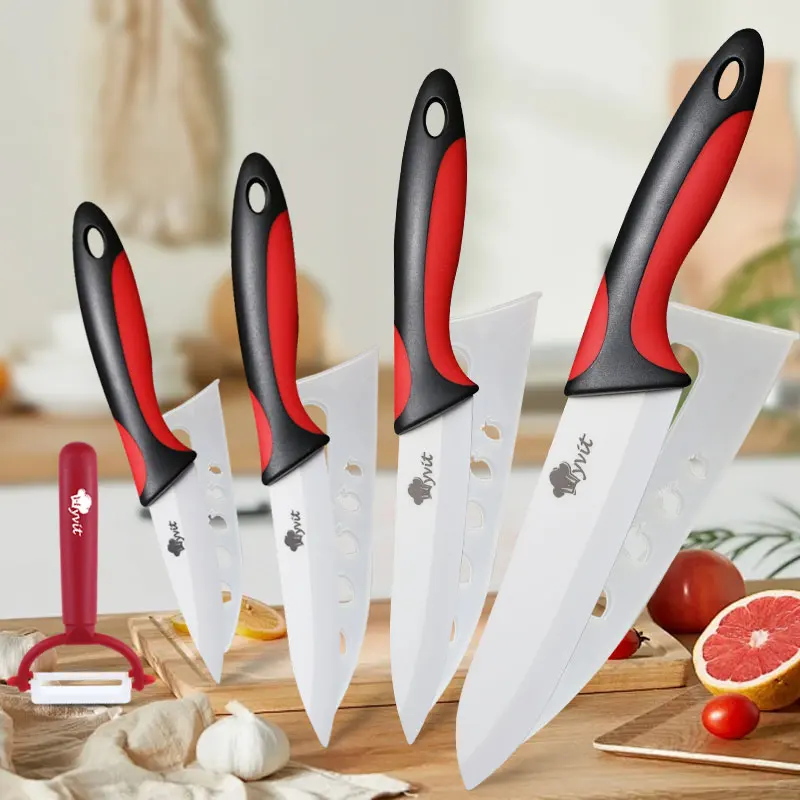
Ceramic Knife Set Household Utility Fruit Kitchen Knife Chef Knife for Paring Vegetable Tomato Rustproof White Blade with Sheath
For a reliable, low-maintenance option, consider a ceramic set like our Ceramic Knife Set Household Utility Fruit Kitchen Knife Chef Knife – it stays sharp and resists rust, perfect for everyday slicing.
Frequently asked questions
What is the best material for a kitchen knife set?
The best material depends on your needs. High-carbon stainless steel offers a good balance of sharpness and durability. Ceramic is very sharp and rust-proof but more brittle. For most home cooks, a quality stainless steel set is a safe choice.
How many knives do I need in a kitchen knife set?
A basic set of 3-5 knives covers most tasks: a chef’s knife, paring knife, utility knife, and bread knife. Larger sets include specialty knives like a boning or carving knife, but they may not be necessary for everyday cooking.
How should I maintain my kitchen knife set?
Hand wash with mild soap and dry immediately. Store in a knife block or on a magnetic strip. Hone regularly with a steel and sharpen as needed (every few months for home use). Avoid cutting on glass or stone surfaces.
Are ceramic knives better than steel?
Ceramic knives are sharper out of the box and stay sharp longer, plus they are rust-proof and lightweight. However, they are more brittle and can chip if used on hard surfaces or for tasks like cutting bones. Steel knives are more versatile and easier to sharpen.
